
Gulf and Western North America (1816–1827 CE): …
Years: 1816 - 1827
Gulf and Western North America (1816–1827 CE): Expansion, Conflict, and Economic Transformation
Economic and Industrial Shifts
The Asian trade significantly impacts the early United States, particularly New England, where the textile industry emerges as a dominant economic force by the early to mid-nineteenth century. As demand for cotton skyrockets, driven by the textile industry's expansion, the plantation economy in the Deep South expands rapidly, reinforcing and intensifying the institution of slavery. This shift leads to substantial capital accumulation and lays the groundwork for rapid industrial and manufacturing growth in America.
Exploration, Trapping, and the Frontier Economy
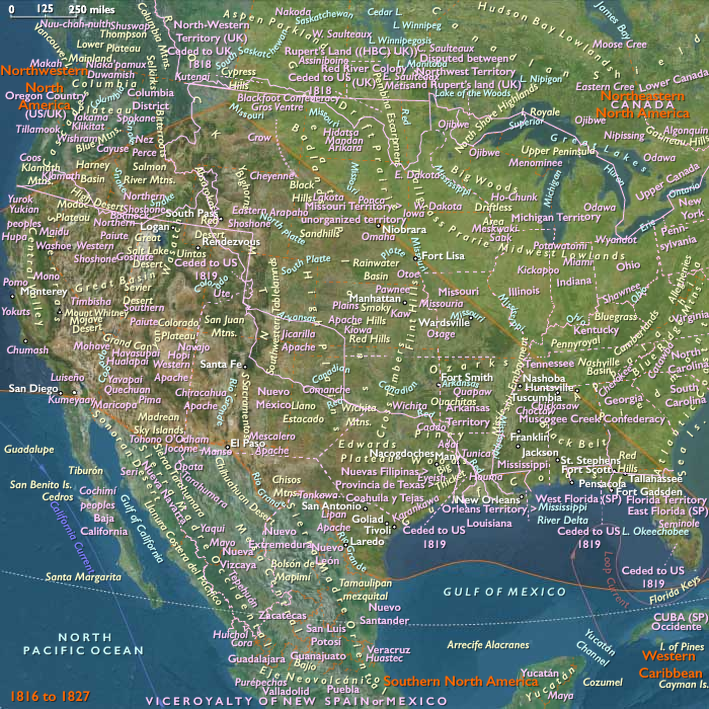
Trappers and hunters continue moving westward ahead of settlers, exploring and mapping the vast territories of the American West. These "mountain men," including figures such as Jedediah Smith, Hugh Glass, and Davy Crockett, establish important relationships with indigenous groups and gather essential geographic knowledge. Key routes such as South Pass in the central Rocky Mountains, discovered around 1812, become critical pathways for later settlers moving westward. The trapping industry evolves into a "brigade-rendezvous" system, streamlining trade and facilitating exploration, although by 1830 the fashion shift from beaver to silk hats signals the impending decline of the fur trade.
Infrastructure and Transportation Developments
Transportation becomes a pivotal issue as westward expansion continues. The introduction and improvement of steamboats revolutionize travel along major river systems, notably the Mississippi and Missouri Rivers. Army expeditions, particularly those led by Colonel Henry Atkinson and Major Stephen Harriman Long, help advance river navigation technologies, facilitating westward exploration and trade. Despite these advancements, Major Long's 1823 description of the Great Plains as the "Great American Desert" inadvertently discourages settlement of these regions for several decades.
Seminole Conflict and Territorial Changes in Florida
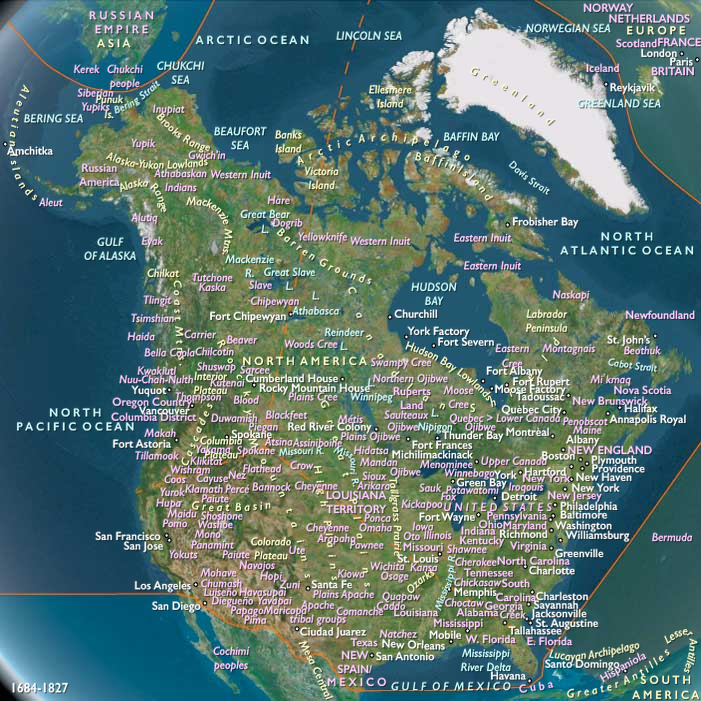
The First Seminole War, beginning in 1817 with General Andrew Jackson's incursions into Spanish-controlled Florida, marks a significant shift in the control and demographics of the region. Spain, unable to effectively manage its Florida territories amidst internal unrest and external pressures, cedes Florida to the United States in the 1819 Adams–Onís Treaty, finalized in 1821. Subsequently, the Treaty of Moultrie Creek (1823) forces the Seminole people into a reservation in central Florida, enforced by a series of forts and trading posts established along the coasts.
Key Historical Developments
-
Rapid expansion and transformation of the textile industry, fueling increased demand for cotton and expansion of slavery.
-
Continued exploration and trapping activities shaping geographic knowledge and trade relationships in the West.
-
Significant advancements in river-based transportation, facilitating economic expansion and westward migration.
-
The Seminole Wars resulting in the United States acquiring control over Florida and initiating significant demographic and territorial changes.
Long-Term Consequences and Historical Significance
From 1816 to 1827, Gulf and Western North America experiences profound economic transformations, territorial expansion, and complex interactions between settlers and indigenous peoples. The rapid industrialization of the Northeast, driven by global trade dynamics, significantly reshapes American society and economy, laying critical groundwork for future expansion and conflict across the American continent.
People
Groups
- Seminole (Amerind tribe)
- West Florida
- United States of America (US, USA) (Washington DC)
- Florida, Territory of (U.S.A.)
Topics
Commodoties
Subjects
Regions
Subregions
Related Events
Showing 10 events out of 20863 total
Years: 1816 - 1827
People
Groups
- Seminole (Amerind tribe)
- West Florida
- United States of America (US, USA) (Washington DC)
- Florida, Territory of (U.S.A.)
Topics
Commodoties
Subjects
Regions
Subregions