
Gulf and Western North America (1744–1755 CE): …
Years: 1744 - 1755
Gulf and Western North America (1744–1755 CE): Indigenous Dominance and Colonial Challenges
Osage Ascendancy and Regional Influence
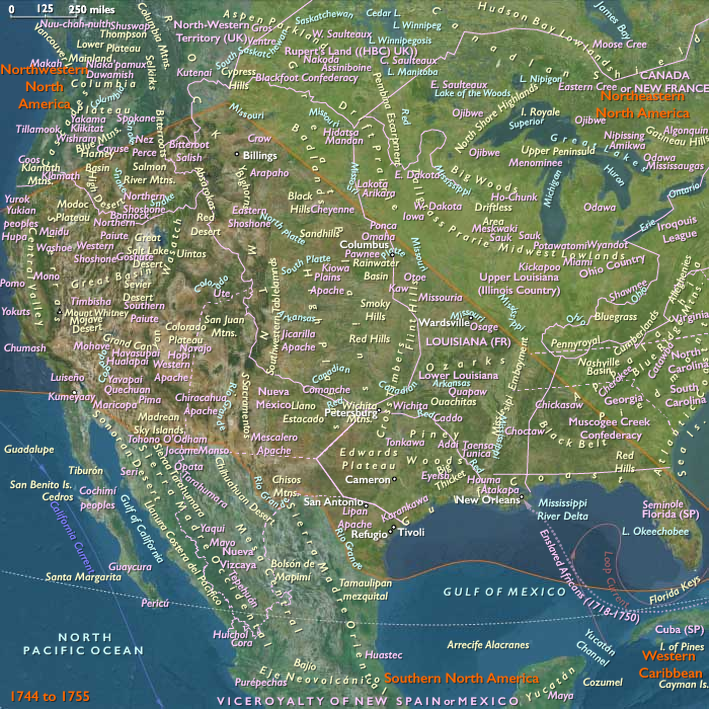
By 1750, the Osage people assert dominance across significant portions of the Plains region, including large parts of modern-day Missouri, Arkansas, Oklahoma, and Kansas. They maintain their powerful status through effective military actions, notably defeating indigenous Caddo tribes. Combining traits from both Woodland and Plains cultures, the Osage occupy strategic locations near the Missouri River and maintain extensive buffalo hunting grounds in the Great Plains. They become key trading partners in the regional trade networks facilitated by intermediary tribes like the Kaw.
Wichita and Taovaya Trade Networks
The Taovaya, a prominent sub-tribe of the Wichita people, establish influential trading villages along the Red River in Oklahoma and Texas. Their settlements become vibrant commercial centers, particularly after a French-brokered alliance with the Comanche in 1746. The village at Petersburg, Oklahoma, grows into a significant trading hub where Comanches exchange Apache slaves, horses, and mules for French manufactured goods and agricultural produce grown by the Taovaya.
African Influence and Cultural Complexity in Louisiana
Between 1718 and 1750, thousands of African slaves are brought to French Louisiana from regions including Senegambia, Benin, and Angola. These enslaved Africans bring diverse religious traditions, languages, and cultures, notably including Islamic practices from regions like Senegal. This influx significantly impacts Louisiana’s demographic composition, economy, and cultural complexity.
Apache-Spanish Relations and Regional Conflict
Various Apache groups, including the Lipan Apache, move into Texas after acquiring horses from Spaniards in New Mexico. Their presence creates tension with existing indigenous groups and Spanish colonizers. The Spanish negotiate temporary peace with the Apache in 1749 and establish a mission along the San Saba River. However, Apache enemies, particularly the Comanche, Tonkawa, and Hasinai, violently reject this alliance, destroying the mission and further complicating regional dynamics.
Tonkawa Settlement in Spanish Missions
During the 1740s, some Tonkawa people become involved in Spanish missionary activities, settling near San Gabriel Missions along the San Gabriel River in Texas. Their participation illustrates the complexity and variability of indigenous responses to colonial pressures.
Key Historical Developments
-
Osage dominance established through military success and extensive trade networks.
-
Wichita and Taovaya become key regional trading powers through alliances with the Comanche and the French.
-
Significant African slave trade to Louisiana, enriching cultural and demographic complexity.
-
Escalating regional conflicts involving the Apache, Comanche, and other indigenous groups against Spanish colonial interests.
-
Tonkawa involvement in Spanish missions highlighting varied indigenous adaptations.
Long-Term Consequences and Historical Significance
The years 1744 to 1755 underscore growing indigenous strength and complexity amid European colonial challenges in Gulf and Western North America. The Osage and Wichita notably consolidate their economic and military power, while Spanish colonial efforts increasingly face formidable indigenous resistance. Meanwhile, Louisiana’s African population significantly influences the colony’s cultural evolution, setting a foundation for future demographic and social dynamics.
Groups
- Islam
- Hasinai, or Teja (Amerind tribe)
- Wichita, or Kitikitish (Amerind tribe)
- Christians, Roman Catholic
- Osage Nation (Amerind tribe)
- Taovaya peoiple
- Apache (Na-Dené tribe)
- Kaw, or Kanza, people (Amerind tribe)
- Caddo (Amerind tribe)
- Tonkawa (Amerind tribe)
- Lipan Apache people (Amerind tribe)
- New France (French Colony)
- New Spain, Viceroyalty of
- Spain, Habsburg Kingdom of
- France, (Bourbon) Kingdom of
- Comanche (Amerind tribe)
- Illinois Country
- Louisiana (New France)
Topics
- Age of Discovery
- Colonization of the Americas, Spanish
- Colonization of the Americas, French
- Colonization of the Americas, English
- Natchez revolt
Commodoties
Subjects
Regions
Subregions
Related Events
Showing 10 events out of 27239 total
Years: 1744 - 1755
Groups
- Islam
- Hasinai, or Teja (Amerind tribe)
- Wichita, or Kitikitish (Amerind tribe)
- Christians, Roman Catholic
- Osage Nation (Amerind tribe)
- Taovaya peoiple
- Apache (Na-Dené tribe)
- Kaw, or Kanza, people (Amerind tribe)
- Caddo (Amerind tribe)
- Tonkawa (Amerind tribe)
- Lipan Apache people (Amerind tribe)
- New France (French Colony)
- New Spain, Viceroyalty of
- Spain, Habsburg Kingdom of
- France, (Bourbon) Kingdom of
- Comanche (Amerind tribe)
- Illinois Country
- Louisiana (New France)
Topics
- Age of Discovery
- Colonization of the Americas, Spanish
- Colonization of the Americas, French
- Colonization of the Americas, English
- Natchez revolt
Commodoties
Subjects
Regions
Subregions