
Gulf and Western North America (1720–1731 CE): …
Years: 1720 - 1731
Gulf and Western North America (1720–1731 CE): Indigenous Alliances, European Expansion, and Tribal Migrations
Indigenous Migrations and Cultural Transformations
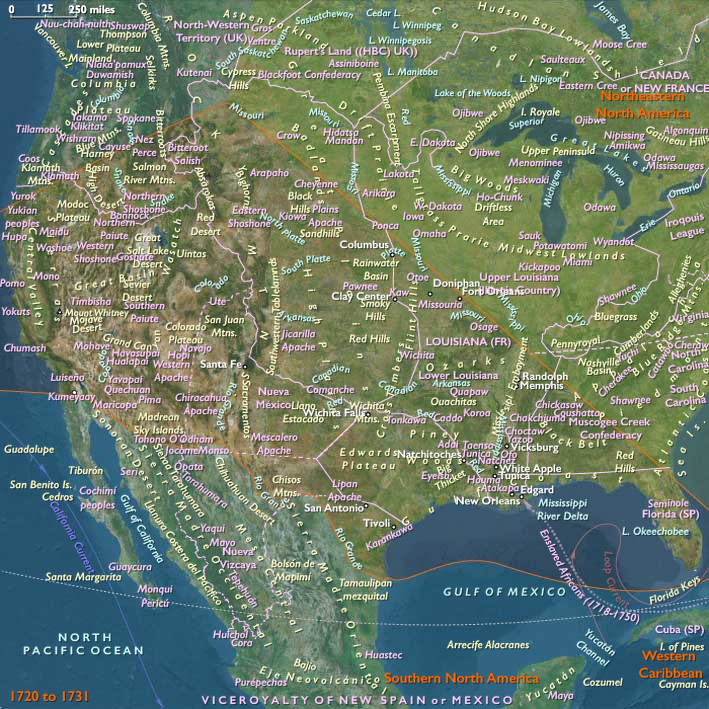
The Cheyenne become the first of the later Plains tribes to enter the Black Hills and Powder River Country, where they introduce horses to the Lakota around 1730. Pressure from migrating Lakota and Ojibwe pushes the Cheyenne further west, subsequently displacing the Kiowa further south.
The Arapaho, having moved farther south, split into Northern and Southern groups, establishing expansive territories across Montana, Wyoming, Colorado, Oklahoma, and Kansas. A significant faction of Arapaho separates, becoming known as the Gros Ventre (or Atsina). Despite linguistic and cultural similarities, the Gros Ventre are viewed as inferior by their Arapaho kin.
Expansion of European Colonial Influence
France intensifies its colonial efforts in Louisiana, spreading settlements along the Mississippi River and its tributaries from New Orleans northward to the Illinois Country. Recognizing the strategic importance of the Mississippi River, France formally designates New Orleans as the colony's capital in 1722. German settlers, brought by John Law's Company of the Indies, establish communities along the "German Coast" in the early 1720s. When the company collapses in 1731, these settlers transition to independent landowners.
The Spanish, meanwhile, reduce their military presence in East Texas in the late 1720s, relocating vulnerable missions to San Antonio and intensifying their conflict with the Lipan Apache, who transfer their enmity toward Spain. In response, the Spanish crown elevates Texas to provincial status in 1728 and begins repopulating the region by settling Canary Islanders (Isleños) in San Antonio by 1731.
Indigenous Alliances, Conflicts, and Diplomacy
The Osage actively ally with the French against the Illiniwek, deepening their diplomatic and trade relationships. French explorer Étienne de Veniard, Sieur de Bourgmont, establishes Fort Orleans in Osage territory, the first European fort on the Missouri River. In a notable diplomatic event in 1725, Bourgmont brings a delegation of Osage leaders to Paris, significantly reinforcing Franco-Osage relations.
In Texas, the establishment of the mission-presidio complex of La Bahía del Espiritu Santo near the San Antonio River in 1722 initially fosters peaceful relations with the Karankawa, though conflict erupts by 1723. By 1727, escalating hostility from the Karankawa compels the Spanish to relocate the complex inland to the Guadalupe River, effectively limiting Spanish influence along the Texas coast.
The Natchez Wars and Indigenous Slave Trade
Continued rivalry between pro-French and pro-English Natchez villages erupts in repeated conflicts known as the Natchez Wars, culminating in the devastating Natchez Rebellion of 1729. French retaliation, supported by the Choctaw, decimates the Natchez, Yazoo, and Koroa tribes. Many survivors flee to join the Chickasaw, while others are captured and sold into slavery by Carolina-based traders. This period highlights the destructive impact of European-induced indigenous conflicts and slave trading.
Key Historical Developments
-
Cheyenne migration into the Black Hills, introduction of horse culture to the Lakota, and subsequent displacement of Kiowa.
-
French colonial expansion along the Mississippi River, establishment of New Orleans as capital, and settlement of German communities on the "German Coast."
-
Spanish reduction of military presence in East Texas and relocation of missions to San Antonio, intensifying conflict with the Lipan Apache.
-
Diplomatic relations between Osage leaders and France, highlighted by their diplomatic mission to Paris in 1725.
-
Natchez Wars leading to significant tribal displacement, slavery, and the reconfiguration of indigenous power dynamics.
Long-Term Consequences and Historical Significance
The era from 1720 to 1731 significantly reshaped the cultural and political landscapes of Gulf and Western North America. Indigenous migrations and intertribal dynamics, driven by European colonization and conflicts, resulted in major territorial and demographic shifts. The expansion of European colonies intensified competition among European powers, reshaping alliances and fueling indigenous conflicts with lasting effects on regional stability and cultural survival.
People
Groups
- Chumash people
- Germans
- Wichita, or Kitikitish (Amerind tribe)
- Christians, Roman Catholic
- Natchez (Amerind tribe)
- Osage Nation (Amerind tribe)
- Tocobaga
- Karankawa (Amerind tribe)
- Apalachee (Amerind tribe)
- Leon-Jefferson culture
- Lipan Apache people (Amerind tribe)
- Plains Apache, or Kiowa Apache; also Kiowa-Apache, Naʼisha, Naisha (Amerind tribe)
- Yazoo (Amerind tribe)
- Koroa (Amerind tribe)
- Taensa (Amerind tribe)
- Houma people (Amerind tribe)
- Yavapai (Amerind tribe)
- Yokuts
- Mohave people
- Jicarilla Apache
- Mescalero
- Chiricahua
- Western Apache
- Luiseño
- Lakota, aka Teton Sioux (Amerind tribe)
- Acoma Pueblo
- Choctaw (Amerind tribe)
- Chickasaw (Amerind tribe)
- Mosopelea, or Ofo (Amerind tribe)
- Eight Northern Pueblos (Amerind tribal confederation)
- Apache (Na-Dené tribe)
- Navajo people (Na-Dené tribe)
- Quapaw, or Arkansas (Amerind tribe)
- Omaha (Amerind tribe)
- Pawnee (Amerind tribe)
- Caddo (Amerind tribe)
- Timucua (Amerind tribe)
- Tunica people
- Arikara people (Amerind tribe)
- Mandan (Amerind tribe)
- Hidatsa people (Amerind tribe)
- Shoshone, Shoshoni, or Snakes (Amerind tribe)
- Ute (Amerind tribe)
- Blackfoot Confederacy
- Crow people, aka Absaroka or Apsáalooke (Amerind tribe)
- Cheyenne people (Amerind tribe)
- Arapaho people (Amerind tribe)
- Gros Ventre or “Atsina” people (Amerind tribe)
- Nez Perce (Amerind tribe)
- Iowa (Amerind tribe)
- Ponca (Amerind tribe)
- Cayuse people (Amerind tribe)
- Kiowa people (Amerind tribe)
- Palus, or Palouse (Amerind tribe)
- Santo Domingo, Real Audiencia de
- Spanish Florida
- New France (French Colony)
- New Spain, Viceroyalty of
- Canary Islanders
- Spain, Habsburg Kingdom of
- Apalachee Province
- France, (Bourbon) Kingdom of
- Santa Fe de Nuevo México (Spanish Colony)
- England, (Stewart, Restored) Kingdom of
- Illinois Country
- England, (Orange and Stewart) Kingdom of
- Louisiana (New France)
- French Company of the Indies
Topics
- Age of Discovery
- Colonization of the Americas, Spanish
- Colonization of the Americas, French
- Colonization of the Americas, English
- Natchez revolt
Commodoties
Subjects
Regions
Subregions
Related Events
Showing 10 events out of 28131 total
Years: 1720 - 1731
People
Groups
- Chumash people
- Germans
- Wichita, or Kitikitish (Amerind tribe)
- Christians, Roman Catholic
- Natchez (Amerind tribe)
- Osage Nation (Amerind tribe)
- Tocobaga
- Karankawa (Amerind tribe)
- Apalachee (Amerind tribe)
- Leon-Jefferson culture
- Lipan Apache people (Amerind tribe)
- Plains Apache, or Kiowa Apache; also Kiowa-Apache, Naʼisha, Naisha (Amerind tribe)
- Yazoo (Amerind tribe)
- Koroa (Amerind tribe)
- Taensa (Amerind tribe)
- Houma people (Amerind tribe)
- Yavapai (Amerind tribe)
- Yokuts
- Mohave people
- Jicarilla Apache
- Mescalero
- Chiricahua
- Western Apache
- Luiseño
- Lakota, aka Teton Sioux (Amerind tribe)
- Acoma Pueblo
- Choctaw (Amerind tribe)
- Chickasaw (Amerind tribe)
- Mosopelea, or Ofo (Amerind tribe)
- Eight Northern Pueblos (Amerind tribal confederation)
- Apache (Na-Dené tribe)
- Navajo people (Na-Dené tribe)
- Quapaw, or Arkansas (Amerind tribe)
- Omaha (Amerind tribe)
- Pawnee (Amerind tribe)
- Caddo (Amerind tribe)
- Timucua (Amerind tribe)
- Tunica people
- Arikara people (Amerind tribe)
- Mandan (Amerind tribe)
- Hidatsa people (Amerind tribe)
- Shoshone, Shoshoni, or Snakes (Amerind tribe)
- Ute (Amerind tribe)
- Blackfoot Confederacy
- Crow people, aka Absaroka or Apsáalooke (Amerind tribe)
- Cheyenne people (Amerind tribe)
- Arapaho people (Amerind tribe)
- Gros Ventre or “Atsina” people (Amerind tribe)
- Nez Perce (Amerind tribe)
- Iowa (Amerind tribe)
- Ponca (Amerind tribe)
- Cayuse people (Amerind tribe)
- Kiowa people (Amerind tribe)
- Palus, or Palouse (Amerind tribe)
- Santo Domingo, Real Audiencia de
- Spanish Florida
- New France (French Colony)
- New Spain, Viceroyalty of
- Canary Islanders
- Spain, Habsburg Kingdom of
- Apalachee Province
- France, (Bourbon) Kingdom of
- Santa Fe de Nuevo México (Spanish Colony)
- England, (Stewart, Restored) Kingdom of
- Illinois Country
- England, (Orange and Stewart) Kingdom of
- Louisiana (New France)
- French Company of the Indies
Topics
- Age of Discovery
- Colonization of the Americas, Spanish
- Colonization of the Americas, French
- Colonization of the Americas, English
- Natchez revolt
Commodoties
Subjects
Regions
Subregions