
Northern North America (1684–1827 CE); Empires Contested, …
Years: 1684 - 1827
Northern North America (1684–1827 CE); Empires Contested, Nations Born, Frontiers Pushed
Geography & Environmental Context
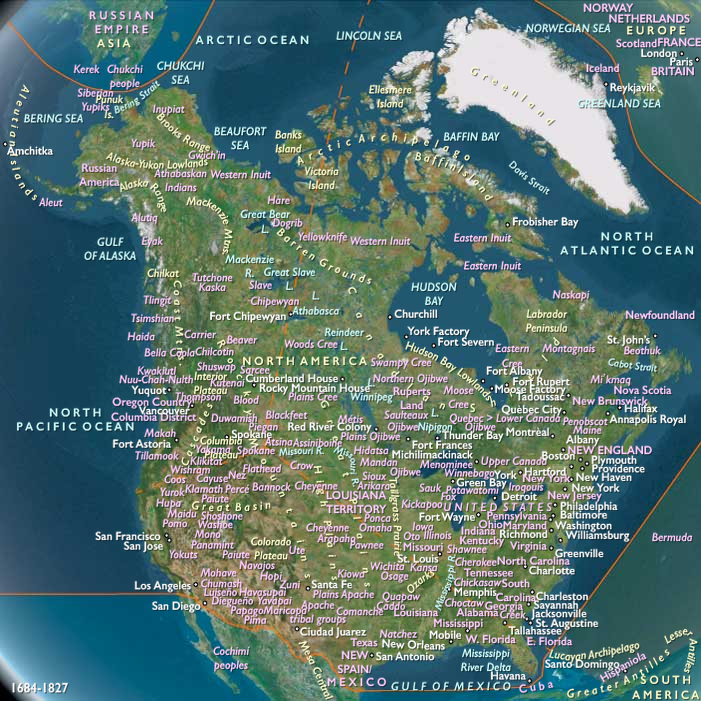
Northern North America includes the modern United States and Canada, excluding the West Indies. It is divided into three subregions:
-
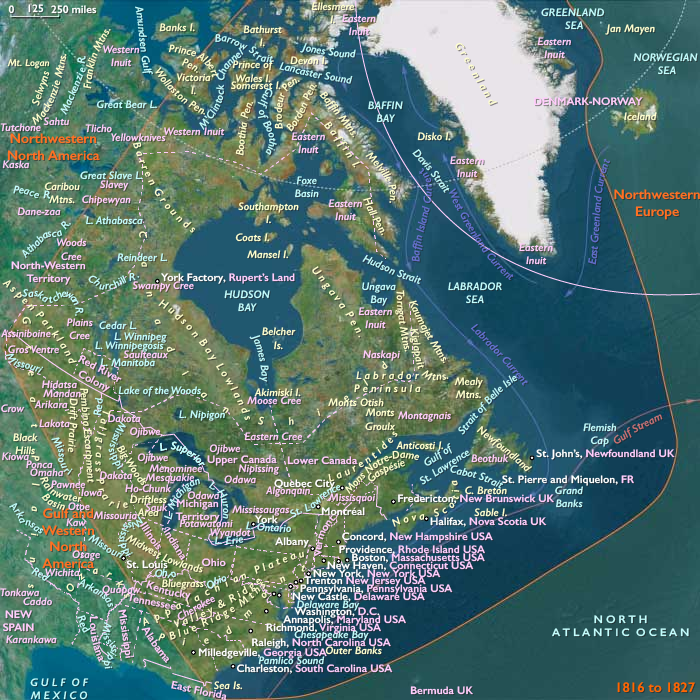
Northeastern North America: east of 110°W, from New England and the Maritimes through the Great Lakes and Hudson Bay to Virginia, the Carolinas, most of Georgia, and the Mississippi Valley above Little Egypt.
-
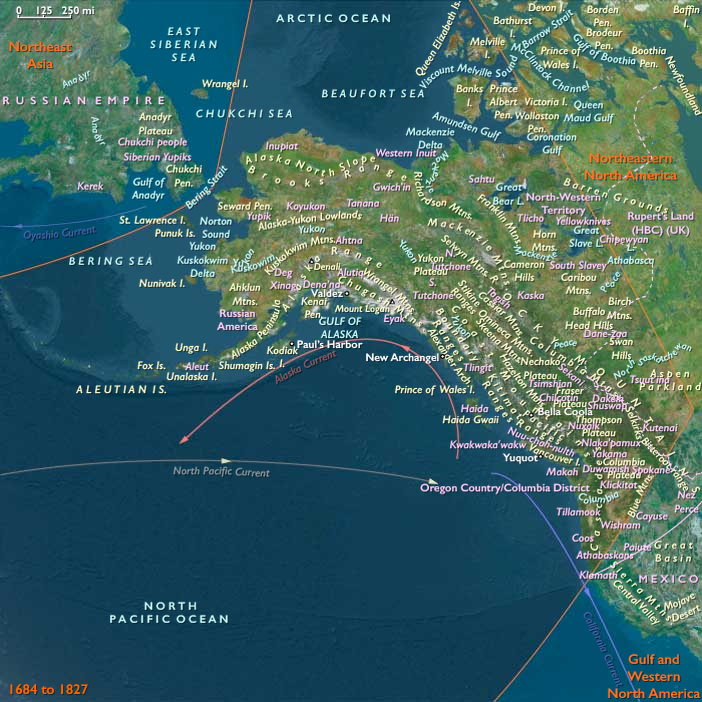
Northwestern North America: west of 110°W, from Alaska and the Yukon to the Pacific Northwest and northern California north of the Gulf line.
-
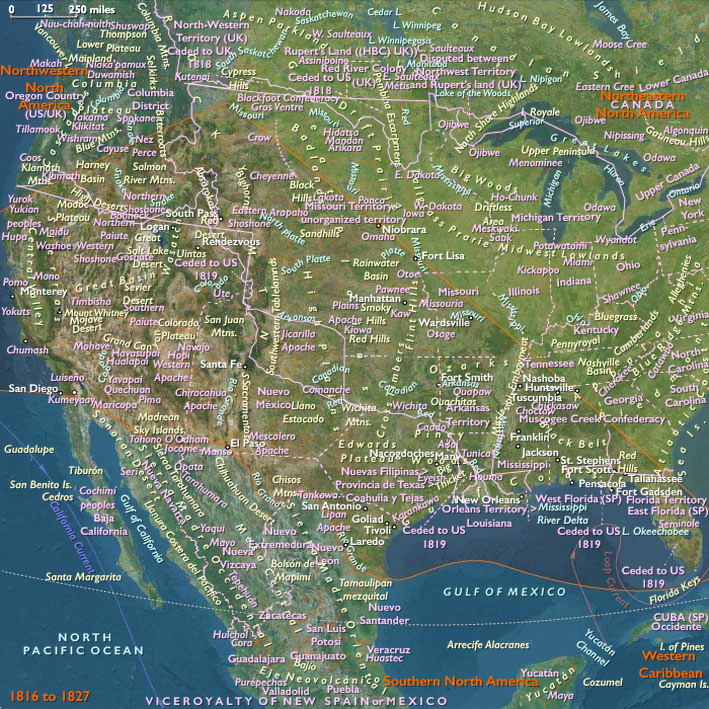
Gulf and Western North America: the wedge south of the Montana diagonal, encompassing the plantation South, the Mississippi Valley below Illinois’ Little Egypt, the Plains, the Southwest, and California south of the Oregon border.
Together, these lands embraced a mosaic of boreal forest, prairie, Appalachian highlands, arid plains, subtropical deltas, and Pacific fjords. Each subregion developed distinct lifeways, but all were drawn into the same imperial rivalries and revolutionary transformations.
Climate & Environmental Shifts
The Little Ice Age persisted into the 18th century, bringing harsh winters to the northeast, erratic salmon and root harvests in the northwest, and drought cycles to the Southwest. Hurricanes battered the Gulf coast, while floods shaped the Mississippi delta. Resource pressures mounted: beaver populations declined from overtrapping, forests receded around port towns and plantations, and horse herds spread across the Plains.
Subsistence & Settlement
-
Indigenous nations maintained diverse economies: maize horticulture in the northeast and southeast, bison hunting on the Plains, salmon fisheries along Pacific rivers, and seal and whale hunting in the Arctic.
-
Colonial settlements took different forms: French Canada and Louisiana, Spanish missions in the Southwest and California, British seaboard colonies, and Russian posts in Alaska.
-
The United States, born of revolution, expanded westward into Kentucky, Tennessee, and the Ohio Valley, while Loyalists and Acadians reshaped Canada’s demography.
Technology & Material Culture
Indigenous technologies — birchbark canoes, snowshoes, horse gear, cedar plankhouses, irrigation systems — persisted alongside European imports: muskets, iron tools, plows, mills, sailing ships, and missions. Hybrid cultures emerged, such as Métis in the fur trade, African-descended Gullah in the Carolinas, and Spanish-Indian ranching lifeways in the Southwest.
Movement & Interaction Corridors
-
Rivers: the St. Lawrence, Great Lakes, Mississippi, and Columbia were arteries of commerce and war.
-
Maritime networks: Atlantic ports linked to Europe, the Caribbean, and Africa; Gulf and Pacific ports tied into global markets.
-
Overland corridors: mission trails, fur brigades, and horse trade networks tied regions together.
-
Migration: enslaved Africans carried to the South, European immigrants to the seaboard and interior, Loyalist refugees to Canada, and Indigenous nations displaced westward.
Cultural & Symbolic Expressions
Indigenous diplomacy — wampum belts, council fires, potlatch ceremonies, and Green Corn rituals — remained central. European religions spread: Catholicism in French and Spanish zones, Protestantism in the British colonies, syncretic traditions among African and Native peoples. Symbols of sovereignty proliferated: forts, flags, treaties, missions, and plantations marked territorial claims.
Environmental Adaptation & Resilience
Indigenous nations diversified subsistence, shifting to fur trapping, mounted bison hunting, or blending ritual with Catholic observance. Colonists adapted to hurricanes, droughts, and floods with new architecture, irrigation, and crop rotations. Food storage, trade alliances, and hybrid practices allowed resilience in a volatile climate.
Political & Military Shocks
-
Imperial wars: Nine Years’ War, Queen Anne’s War, and the Seven Years’ War reshaped borders and alliances.
-
Revolutions: The American Revolution created the United States; the Haitian Revolution reverberated through the Gulf; Indigenous uprisings, from Tecumseh’s confederacy to Pueblo resistance, challenged colonial regimes.
-
Territorial transfers: Louisiana Purchase (1803), Florida cession (1821), Russian America consolidations in Alaska.
-
War of 1812: Britain and the U.S. contested Great Lakes and Gulf coasts, leaving Native confederacies weakened.
Transition
Between 1684 and 1827, Northern North America was transformed from a patchwork of Indigenous nations and rival empires into a continental stage of settler republics, expanding frontiers, and Indigenous dispossession. The fur trade, cod fisheries, plantations, and salmon runs tied its subregions into global markets, while revolution and war redrew its maps. By 1827, the United States was pushing across Appalachia, Canada remained in Britain’s orbit, Russian America and Spanish missions dotted the Pacific, and Native nations, though battered, continued to anchor economies and cultures from the Arctic to the Gulf.
People
Groups
- Christians, Roman Catholic
- Acoma Pueblo
- Eight Northern Pueblos (Amerind tribal confederation)
- Protestantism
- Pueblo V culture
- Ohio Country
- Métis in Canada
- Louisiana (New France)
- Texas, Spanish
- Louisiana (New France)
- Louisiana (New France)
- Russian Empire
- Louisiana (New France)
- Métis people
- Louisiana (British colony)
- Louisiana (Spanish colony)
- United States of America (US, USA) (Philadelphia PA)
- United States of Americs (US, USA) (Annapolis MD)
- United States of America (US, USA) (New York NY)
- United States of America (US, USA) (Philadelphia PA)
- Canada, Upper, (British province)
- Canada, Lower, (British province)
- Kentucky, Commonwealth of (U.S.A.)
- Tennessee, State of (U.S.A.)
- Canada, Upper, (British province)
- Russian America
- United States of America (US, USA) (Washington DC)
- Gullah
- Britain (United Kingdom of Great Britain and Ireland)
- Louisiana (French colony)
- Louisiana, District of (U.S.A.)
- Ohio, State of (U.S.A.)
- Louisiana, Territory of (U.S.A.)
- Louisiana, State of (U.S.A.)
- Texas, Mexican
- Florida, Territory of (U.S.A.)
- Coahuila y Tejas (Coahuila and Texas)
Topics
- Little Ice Age (LIA)
- Colonization of the Americas, Spanish
- North American Fur Trade
- Colonization of the Americas, French
- Colonization of the Americas, English
- Nine Years' War
- Queen Anne's War
- Colonization of the Americas, British
- Little Ice Age, Warm Phase III
- Seven Years' War
- American Revolution
- Haitian Revolution
- Tecumseh's War
- 1812, War of
- Seminole War, First
- Seminole Wars
Commodoties
Subjects
- Commerce
- Architecture
- Watercraft
- Environment
- Labor and Service
- Conflict
- Faith
- Government
- Custom and Law
- Human Migration
Regions
Subregions
Related Events
Showing 10 events out of 58 total
Years: 1684 - 1827
People
Groups
- Christians, Roman Catholic
- Acoma Pueblo
- Eight Northern Pueblos (Amerind tribal confederation)
- Protestantism
- Pueblo V culture
- Ohio Country
- Métis in Canada
- Louisiana (New France)
- Texas, Spanish
- Louisiana (New France)
- Louisiana (New France)
- Russian Empire
- Louisiana (New France)
- Métis people
- Louisiana (British colony)
- Louisiana (Spanish colony)
- United States of America (US, USA) (Philadelphia PA)
- United States of Americs (US, USA) (Annapolis MD)
- United States of America (US, USA) (New York NY)
- United States of America (US, USA) (Philadelphia PA)
- Canada, Upper, (British province)
- Canada, Lower, (British province)
- Kentucky, Commonwealth of (U.S.A.)
- Tennessee, State of (U.S.A.)
- Canada, Upper, (British province)
- Russian America
- United States of America (US, USA) (Washington DC)
- Gullah
- Britain (United Kingdom of Great Britain and Ireland)
- Louisiana (French colony)
- Louisiana, District of (U.S.A.)
- Ohio, State of (U.S.A.)
- Louisiana, Territory of (U.S.A.)
- Louisiana, State of (U.S.A.)
- Texas, Mexican
- Florida, Territory of (U.S.A.)
- Coahuila y Tejas (Coahuila and Texas)
Topics
- Little Ice Age (LIA)
- Colonization of the Americas, Spanish
- North American Fur Trade
- Colonization of the Americas, French
- Colonization of the Americas, English
- Nine Years' War
- Queen Anne's War
- Colonization of the Americas, British
- Little Ice Age, Warm Phase III
- Seven Years' War
- American Revolution
- Haitian Revolution
- Tecumseh's War
- 1812, War of
- Seminole War, First
- Seminole Wars
Commodoties
Subjects
- Commerce
- Architecture
- Watercraft
- Environment
- Labor and Service
- Conflict
- Faith
- Government
- Custom and Law
- Human Migration
Regions
Subregions