
Gulf and Western North America (1672–1683 CE): …
Years: 1672 - 1683
Gulf and Western North America (1672–1683 CE): Escalating Tensions and Pathways to Revolt
Intensifying Spanish Pressure in Santa Fe de Nuevo México
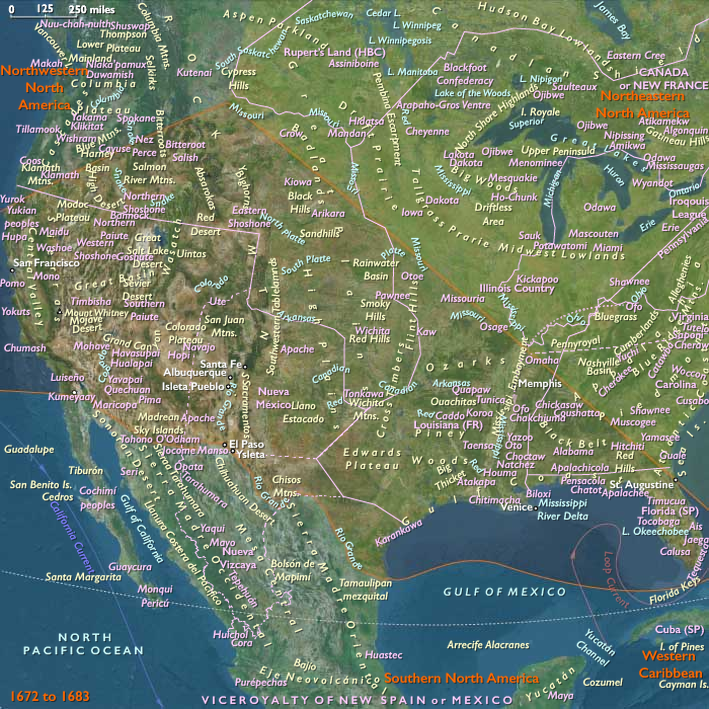
The Spanish colony of Santa Fe de Nuevo México further expanded its control over the upper Rio Grande (Río Bravo del Norte) valley. Colonists intensified demands for tribute and forced labor from Pueblo communities, heightening indigenous resentment. The harsh Spanish administration, combined with aggressive missionary activities aimed at suppressing traditional religious practices, created an environment ripe for organized indigenous resistance.
Prelude to the Pueblo Revolt
By the late 1670s, tensions between the Spanish and Pueblo peoples reached a boiling point. Pueblo spiritual leaders, particularly the medicine man Popé, began actively coordinating resistance among multiple Pueblo communities. Despite continued Spanish prohibitions, the Pueblo discreetly expanded their expertise in horse management and utilization, strengthening their potential for coordinated resistance.
Apache Ascendancy and the Expansion of Equestrian Culture
The Apache intensified horse raids during this period, further expanding their territory and military capabilities. These raids severely strained Spanish colonial resources and disrupted Pueblo agricultural production. By 1680, the Apache had firmly established themselves as dominant equestrian warriors, significantly altering regional dynamics and pressing upon the periphery of Spanish colonial settlements.
Ecological and Agricultural Adjustments in the Mississippi Valley
In the Mississippi Valley, indigenous agricultural communities adapted further to the persistent ecological disruptions caused by European-introduced livestock. Tribes like the Caddo continued to refine their methods, enhancing sustainability and food security despite pressures from pigs and cattle. Though impacted by European diseases, these societies maintained a degree of economic and ecological stability.
Indigenous Stability and Autonomy in California
California's coastal societies—the Chumash, Luiseño, and Yokuts—remained insulated from direct Spanish colonial influence, maintaining their maritime economies, trade networks, and cultural continuity. This stability provided a stark contrast to the growing tensions and conflicts occurring farther inland.
Missionary and Demographic Struggles in Florida
In Florida, Spanish missionary efforts among the Apalachee, Timucua, Calusa, and Tequesta continued to reshape indigenous communities profoundly. While these groups increasingly blended Christianity with traditional practices, they also faced demographic decline from disease and periodic raiding pressures from English-supported tribes and settlers north of Florida. The missions struggled to maintain adequate food supplies and native labor for Spanish settlements such as St. Augustine.
Navajo Diplomatic Adaptations and Regional Positioning
The Navajo maintained strategic adaptations, balancing selective livestock raiding with diplomatic engagements. Their careful maneuvering ensured relative stability and resource access, further strengthening their regional influence and preparing them to capitalize on future regional disruptions.
Key Historical Developments
-
Growing resistance among Pueblo communities under leaders like Popé, setting the stage for the imminent Pueblo Revolt.
-
Continued expansion of Apache equestrian capabilities, significantly disrupting Spanish and Pueblo societies.
-
Sustained stability and prosperity among coastal California tribes, notably the Chumash, Luiseño, and Yokuts.
-
Persistent indigenous agricultural and ecological innovations in the Mississippi Valley, particularly by the Caddo.
-
Intensified demographic and social struggles within Florida's indigenous communities, notably the Apalachee, Timucua, Calusa, and Tequesta.
-
Navajo strategic diplomacy and selective raiding maintaining regional stability.
Long-Term Consequences and Historical Significance
The era from 1672 to 1683 was marked by rising tensions and intensified indigenous strategies of resistance and adaptation across Gulf and Western North America. These dynamics culminated in significant historical events, most notably the Pueblo Revolt of 1680, which dramatically reshaped Spanish-indigenous relations and became a pivotal turning point in the history of indigenous resistance to colonial rule in the region. The period laid the groundwork for further indigenous assertiveness and set the stage for new political, economic, and cultural transformations throughout subsequent decades.
People
Groups
- Chumash people
- Christians, Roman Catholic
- Tocobaga
- Apalachee (Amerind tribe)
- Navajo people (Na-Dené tribe)
- Caddo (Amerind tribe)
- Timucua (Amerind tribe)
- Lipan Apache people (Amerind tribe)
- Plains Apache, or Kiowa Apache; also Kiowa-Apache, Naʼisha, Naisha (Amerind tribe)
- Yavapai (Amerind tribe)
- Leon-Jefferson culture
- Acoma Pueblo
- Eight Northern Pueblos (Amerind tribal confederation)
- Apache (Na-Dené tribe)
- Jicarilla Apache
- Mescalero
- Chiricahua
- Western Apache
- Luiseño
- Yokuts
- Mohave people
- Santo Domingo, Real Audiencia de
- Spanish Florida
- New Spain, Viceroyalty of
- Apalachee Province
- Santa Fe de Nuevo México (Spanish Colony)
Topics
Commodoties
Subjects
Regions
Subregions
Related Events
Showing 10 events out of 30765 total
Years: 1672 - 1683
People
Groups
- Chumash people
- Christians, Roman Catholic
- Tocobaga
- Apalachee (Amerind tribe)
- Navajo people (Na-Dené tribe)
- Caddo (Amerind tribe)
- Timucua (Amerind tribe)
- Lipan Apache people (Amerind tribe)
- Plains Apache, or Kiowa Apache; also Kiowa-Apache, Naʼisha, Naisha (Amerind tribe)
- Yavapai (Amerind tribe)
- Leon-Jefferson culture
- Acoma Pueblo
- Eight Northern Pueblos (Amerind tribal confederation)
- Apache (Na-Dené tribe)
- Jicarilla Apache
- Mescalero
- Chiricahua
- Western Apache
- Luiseño
- Yokuts
- Mohave people
- Santo Domingo, Real Audiencia de
- Spanish Florida
- New Spain, Viceroyalty of
- Apalachee Province
- Santa Fe de Nuevo México (Spanish Colony)
Topics
Commodoties
Subjects
Regions
Subregions