
Gulf and Western North America (1612–1623 CE): …
Years: 1612 - 1623
Gulf and Western North America (1612–1623 CE): Adaptation, Resistance, and Emerging Horse Cultures
Expansion of Indigenous Equestrian Practices
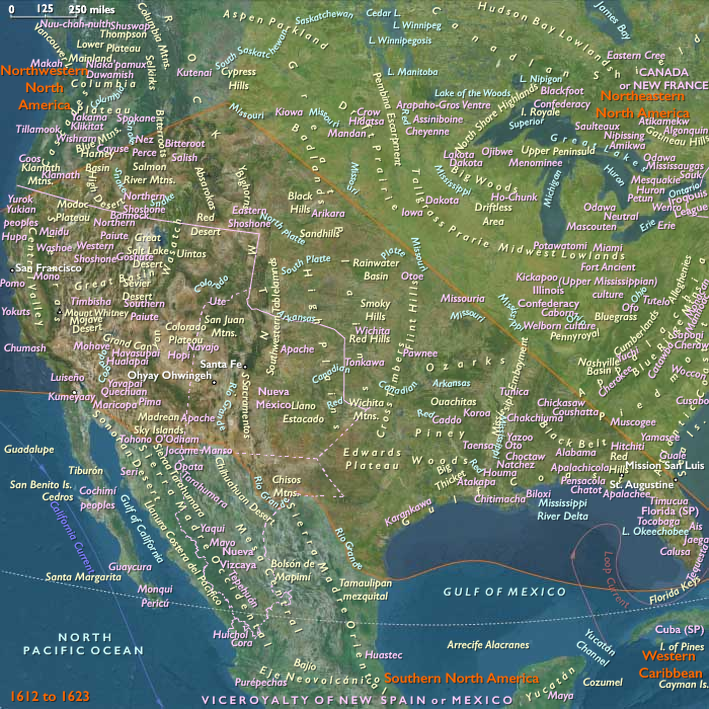
During this period, the Pueblo peoples continued discreetly acquiring skills in horse management despite strict Spanish prohibitions on indigenous horse ownership. Tending livestock for the Spanish colonists, the Pueblo developed crucial expertise in breeding and caring for horses. Simultaneously, the Apache engaged increasingly in horse raiding, significantly enhancing their mobility, territorial reach, and military capabilities, though widespread equestrian culture among other tribes, such as the Kiowa, remained limited and would not fully develop until later eras.
Spanish Colonial Consolidation and Indigenous Reactions
The Spanish colony at Santa Fe, founded in 1598, solidified its status as a center of regional trade, governance, and missionary activity. While Spanish settlers introduced new farming techniques and livestock management practices to the area, tensions with local indigenous communities, especially the Pueblo, continued to intensify. The Pueblo peoples' resistance grew subtly but steadily, evidenced by their clandestine expansion of horse management practices.
Apache and Navajo Strategies
The Apache and Navajo strategically adapted to the growing Spanish presence by refining their trade networks and territorial strategies. The Apache, in particular, began more active raiding of Spanish and Pueblo livestock, which provided critical resources for their subsistence and future mobility. The Navajo, although less aggressive during this era, enhanced their regional position through diplomacy and selective raiding.
Stability and Autonomy of California Coastal Tribes
Coastal societies like the Chumash, Luiseño, and Yokuts maintained their relative isolation from Spanish colonial influence. They continued thriving through maritime trade, fishing, and stable internal economies. These tribes upheld robust cultural traditions and regional stability, largely unaffected by European incursions during this period.
Indigenous Agricultural and Ecological Innovations
Indigenous groups in the Mississippi Valley and nearby regions further adapted agricultural practices to counteract ecological disruptions from European livestock. Communities employed innovative land management strategies and crop diversification to ensure sustainable food production and ecological balance despite ongoing disruptions caused by Spanish-introduced pigs and cattle.
Florida Indigenous Communities and Missionary Influence
In Florida, the Spanish intensified missionary efforts among indigenous groups such as the Apalachee, Timucua, Calusa, and Tequesta. The Apalachee, having requested missions as early as 1607, received more systematic attention with formal missions beginning in the early 1620s. Spanish influence brought significant social and cultural changes, notably through religious conversion and new agricultural practices. However, epidemics introduced by European contact continued to devastate these communities, drastically altering their demographic and social fabric.
Territorial Strengthening of the Yavapai and Mohave
The Yavapai and Mohave along the Colorado River consolidated their territories through advanced agricultural techniques and strategic resource management, reinforcing their regional strength. These groups' effective adaptations to arid conditions allowed continued population growth and maintained their prominent regional roles.
Key Historical Developments
-
Continued discreet development of horse management expertise among the Pueblo peoples.
-
Increased Apache horse-raiding, enhancing their mobility and territorial control.
-
Consolidation and growth of the Spanish colony at Santa Fe, prompting heightened indigenous resistance.
-
Ongoing stability and autonomy of California coastal tribes, including the Chumash, Luiseño, and Yokuts.
-
Further indigenous agricultural innovations and ecological adaptations in response to European livestock disruptions.
-
Intensified Spanish missionary activity and demographic shifts among Florida indigenous communities such as the Apalachee, Timucua, Calusa, and Tequesta.
-
Strengthening territorial positions and resource management by the Yavapai and Mohave.
Long-Term Consequences and Historical Significance
The period from 1612 to 1623 CE marked significant developments in indigenous resistance and adaptation strategies in Gulf and Western North America. The Pueblo peoples' quiet advancement in horse management foreshadowed the profound transformations in equestrian culture that would soon reshape indigenous societies. Concurrently, Apacheraiding activities hinted at the emergence of a more dynamic equestrian culture, poised to alter regional power balances dramatically.
People
Groups
- Chumash people
- Calusa
- Tequesta
- Mississippian culture
- Christians, Roman Catholic
- Atakapa
- Karankawa (Amerind tribe)
- Apalachee (Amerind tribe)
- Spanish Empire
- Kiowa people (Amerind tribe)
- Lipan Apache people (Amerind tribe)
- Yavapai (Amerind tribe)
- Yokuts
- Mohave people
- Plains Apache, or Kiowa Apache; also Kiowa-Apache, Naʼisha, Naisha (Amerind tribe)
- Acoma Pueblo
- Eight Northern Pueblos (Amerind tribal confederation)
- Apache (Na-Dené tribe)
- Navajo people (Na-Dené tribe)
- Caddo (Amerind tribe)
- Timucua (Amerind tribe)
- Paiute, Northern (Amerind tribe)
- Paiute, Southern (Amerind tribe)
- Chiricahua
- Western Apache
- Luiseño
- Jicarilla Apache
- Mescalero
- Spanish Florida
- Apalachee Province
- Santa Fe de Nuevo México (Spanish Colony)
Topics
Commodoties
Subjects
Regions
Subregions
Related Events
Showing 10 events out of 33331 total
Years: 1612 - 1623
People
Groups
- Chumash people
- Calusa
- Tequesta
- Mississippian culture
- Christians, Roman Catholic
- Atakapa
- Karankawa (Amerind tribe)
- Apalachee (Amerind tribe)
- Spanish Empire
- Kiowa people (Amerind tribe)
- Lipan Apache people (Amerind tribe)
- Yavapai (Amerind tribe)
- Yokuts
- Mohave people
- Plains Apache, or Kiowa Apache; also Kiowa-Apache, Naʼisha, Naisha (Amerind tribe)
- Acoma Pueblo
- Eight Northern Pueblos (Amerind tribal confederation)
- Apache (Na-Dené tribe)
- Navajo people (Na-Dené tribe)
- Caddo (Amerind tribe)
- Timucua (Amerind tribe)
- Paiute, Northern (Amerind tribe)
- Paiute, Southern (Amerind tribe)
- Chiricahua
- Western Apache
- Luiseño
- Jicarilla Apache
- Mescalero
- Spanish Florida
- Apalachee Province
- Santa Fe de Nuevo México (Spanish Colony)
Topics
Commodoties
Subjects
Regions
Subregions