
Gulf and Western North America (1600–1611 CE): …
Years: 1600 - 1611
Gulf and Western North America (1600–1611 CE): Cultural Interactions and Emerging Tensions
Consolidation and Expansion of Santa Fe
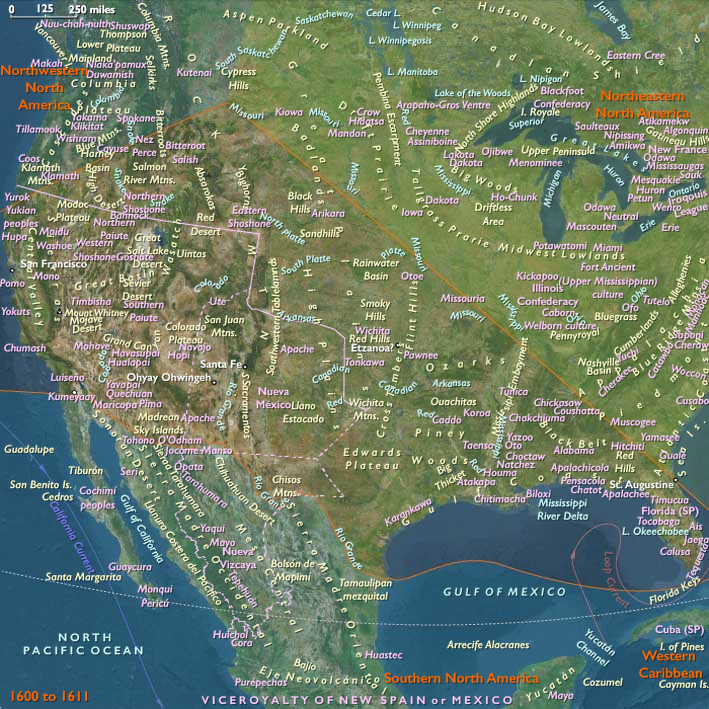
In the early 1600s, the Spanish colony at Santa Fe continued its expansion, solidifying its position as the central hub for Spanish governance, trade, and missionary activities in the American Southwest. The colony's growth increased interactions—and tensions—between Spanish colonists and surrounding indigenous groups, particularly the Pueblo communities. The Spanish introduced new agricultural techniques and livestock management practices, substantially influencing regional economies and ecological balances.
Apache and Navajo Responses to Spanish Colonization
The expanding Spanish presence triggered adaptive responses from the Apache and Navajo peoples. Though still without widespread access to horses, these groups increasingly engaged in trade, diplomacy, and intermittent raiding as mechanisms for managing their relationships with both Spanish settlers and neighboring Pueblo communities. Their territorial strategies evolved significantly, reflecting heightened competition for resources and trade routes.
Pueblo Communities: Adaptation and Resistance
Pueblo peoples faced intensified pressures due to ongoing Spanish encroachments, leading them to further fortify their communities and strengthen intra-tribal alliances. Despite Spanish prohibitions, some Pueblo communities discreetly expanded their expertise in horse care and breeding, skills acquired through enforced labor and direct interactions with Spanish settlers. The Pueblo increasingly viewed these animals as valuable assets for future economic and defensive strategies.
Stability and Continuity among California Coastal Tribes
The Chumash, Luiseño, Yokuts, and related coastal peoples of California continued to flourish during this period, largely insulated from direct Spanish intervention. These societies maintained their sophisticated maritime economies and robust internal trade networks, thereby preserving social stability, cultural traditions, and economic prosperity.
Indigenous Agricultural Innovation and Ecological Adaptation
In the Mississippi Valley and surrounding regions, indigenous communities continued refining agricultural and ecological practices to mitigate the disruptive impacts of European livestock, particularly pigs. Crop diversification and innovative land management techniques were increasingly employed to maintain food security and ecological balance in the face of ongoing European influence.
Florida Indigenous Communities and Spanish Influence
During this period, Spanish influence in Florida expanded, impacting tribes such as the Timucua, Apalachee, Calusa, and Tequesta. The Spanish introduced new agricultural practices and continued missionary efforts, resulting in significant cultural transformations. The introduction of European diseases severely impacted these populations, further reshaping demographic and social structures. Despite ongoing resistance and adaptation, indigenous communities increasingly found themselves navigating complex interactions and pressures from expanding Spanish settlements.
Yavapai and Mohave Territorial Strengthening
Along the Colorado River, the Yavapai and Mohave peoples consolidated their territories and strengthened community cohesion through agricultural innovation and strategic resource management. Their adaptation to arid environmental conditions contributed to sustained population growth and reinforced their regional presence.
Key Historical Developments
-
Expansion and consolidation of the Spanish colony at Santa Fe, intensifying interactions and conflicts with indigenous groups.
-
Strategic adaptations by the Apache and Navajo in response to increased Spanish presence.
-
Pueblo communities enhancing defensive strategies and quietly gaining expertise in horse management despite Spanish prohibitions.
-
Continued stability and prosperity of coastal California tribes such as the Chumash, Luiseño, and Yokuts.
-
Ongoing indigenous agricultural innovation and ecological management in response to European livestock impacts.
-
Expanding Spanish influence and resulting demographic changes among Florida indigenous communities, including the Timucua, Apalachee, Calusa, and Tequesta.
-
Yavapai and Mohave territorial consolidation and successful adaptation to arid conditions.
Long-Term Consequences and Historical Significance
The period from 1600 to 1611 CE saw significant adaptations among indigenous groups as Spanish colonization expanded its influence in Gulf and Western North America. While the Pueblo quietly developed skills in horse management, setting the stage for future transformations in indigenous equestrian cultures, other groups further refined their agricultural and ecological strategies, laying critical foundations for long-term survival and cultural resilience in the face of mounting external pressures.
Groups
- Chumash people
- Calusa
- Tequesta
- Mississippian culture
- Christians, Roman Catholic
- Atakapa
- Tocobaga
- Karankawa (Amerind tribe)
- Apalachee (Amerind tribe)
- Spanish Empire
- Paiute, Northern (Amerind tribe)
- Paiute, Southern (Amerind tribe)
- Caddo (Amerind tribe)
- Lipan Apache people (Amerind tribe)
- Plains Apache, or Kiowa Apache; also Kiowa-Apache, Naʼisha, Naisha (Amerind tribe)
- Navajo people (Na-Dené tribe)
- Yavapai (Amerind tribe)
- Apache (Na-Dené tribe)
- Eight Northern Pueblos (Amerind tribal confederation)
- Acoma Pueblo
- Timucua (Amerind tribe)
- Yokuts
- Mohave people
- Jicarilla Apache
- Mescalero
- Chiricahua
- Luiseño
- Western Apache
- Spanish Florida
- Apalachee Province
- Santa Fe de Nuevo México (Spanish Colony)
Topics
Commodoties
Subjects
Regions
Subregions
Related Events
Showing 10 events out of 34015 total
Years: 1600 - 1611
Groups
- Chumash people
- Calusa
- Tequesta
- Mississippian culture
- Christians, Roman Catholic
- Atakapa
- Tocobaga
- Karankawa (Amerind tribe)
- Apalachee (Amerind tribe)
- Spanish Empire
- Paiute, Northern (Amerind tribe)
- Paiute, Southern (Amerind tribe)
- Caddo (Amerind tribe)
- Lipan Apache people (Amerind tribe)
- Plains Apache, or Kiowa Apache; also Kiowa-Apache, Naʼisha, Naisha (Amerind tribe)
- Navajo people (Na-Dené tribe)
- Yavapai (Amerind tribe)
- Apache (Na-Dené tribe)
- Eight Northern Pueblos (Amerind tribal confederation)
- Acoma Pueblo
- Timucua (Amerind tribe)
- Yokuts
- Mohave people
- Jicarilla Apache
- Mescalero
- Chiricahua
- Luiseño
- Western Apache
- Spanish Florida
- Apalachee Province
- Santa Fe de Nuevo México (Spanish Colony)
Topics
Commodoties
Subjects
Regions
Subregions