
Gulf and Western North America (1588–1599 CE): …
Years: 1588 - 1599
Gulf and Western North America (1588–1599 CE): Spanish Expansion and Indigenous Realignments
Expansion of Spanish Influence
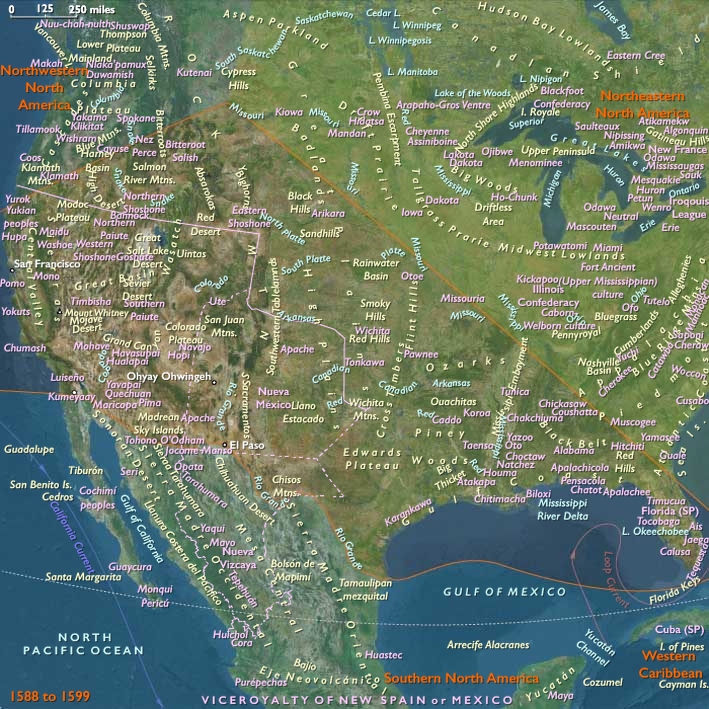
During 1588–1599, the Spanish further solidify their control over strategic locations in Gulf and Western North America. The colony of Santa Fe, formally established in 1598 by Juan de Oñate in northern New Mexico, becomes a pivotal base for Spanish governance, trade, and missionary activity. This new colony enhances Spain’s presence in the Southwest and serves as a center for religious conversion and administration, fundamentally influencing regional indigenous cultures.
Southeastern Cultural Dynamics
In Florida, indigenous societies continue experiencing transformative pressures due to sustained Spanish colonization. Tribes like the Apalachee, Timucua, and Calusa navigate complex relations with the Spanish, ranging from resistance to cautious cooperation. Despite persistent demographic losses due to diseases, these groups maintain significant cultural resilience. The Leon-Jefferson culture (1500–1704), succeeding the Fort Walton culture, continues to adapt agricultural and social systems amid increasing European contact.
Indigenous Adaptations and Challenges
Groups such as the Tequesta, Jaega, and Ais, who had long-established tribal structures, face significant disruptions but continue to thrive by leveraging coastal and marine resources effectively. These indigenous societies show notable resilience, maintaining political autonomy through carefully managed interactions with the Spanish and other indigenous groups.
Early Equestrian Integration in the Southwest
In the Southwest, early integration of horses continues at a modest pace among indigenous groups. The Apache and Navajo enhance their mobility and economic capabilities through gradual equestrian adoption, primarily through trade and occasional raiding of Spanish settlements. The emerging equestrian culture begins to reshape traditional hunting, trade, and warfare practices.
Ecological and Social Stability
Despite ongoing Spanish incursions, indigenous communities across the region demonstrate considerable adaptability. Agricultural systems are maintained and adjusted to changing ecological conditions, while intertribal trade networks remain robust, connecting disparate groups such as the Pensacola, Apalachee, and Timucua.
Key Historical Developments
-
Establishment of Santa Fe colony in 1598, bolstering Spanish administrative and missionary influence in the Southwest.
-
Persistent resilience and adaptation of indigenous groups (Tequesta, Jaega, Ais, Calusa) in Florida despite severe demographic and ecological pressures.
-
Continued incremental adoption and integration of horses by indigenous groups (Apache, Navajo) in the Southwest.
-
Maintenance of agricultural productivity and cultural continuity by indigenous Gulf Coast societies (Leon-Jefferson, Apalachee, Timucua).
Long-Term Consequences and Historical Significance
The establishment of Santa Fe marks a significant expansion of Spanish influence in the Southwest, introducing lasting changes in indigenous political and cultural landscapes. In Florida, sustained Spanish presence reinforces a pattern of cautious interaction and selective cultural adaptation among indigenous societies, setting the stage for future demographic and ecological transformations. The slow but steady adoption of equestrian practices by Southwestern indigenous groups begins reshaping regional dynamics, anticipating future social and military shifts.
People
Groups
- Chumash people
- Ais people
- Tequesta
- Calusa
- Mississippian culture
- Pensacola culture
- Natchez (Amerind tribe)
- Apalachee (Amerind tribe)
- Spanish Empire
- Lipan Apache people (Amerind tribe)
- Plains Apache, or Kiowa Apache; also Kiowa-Apache, Naʼisha, Naisha (Amerind tribe)
- Maricopa people (Amerind tribe)
- Yavapai (Amerind tribe)
- Leon-Jefferson culture
- Acoma Pueblo
- Eight Northern Pueblos (Amerind tribal confederation)
- Apache (Na-Dené tribe)
- Navajo people (Na-Dené tribe)
- Caddo (Amerind tribe)
- Timucua (Amerind tribe)
- Paiute, Northern (Amerind tribe)
- Paiute, Southern (Amerind tribe)
- Mohave people
- Jicarilla Apache
- Mescalero
- Chiricahua
- Western Apache
- Luiseño
- Yokuts
- Spanish Florida
- Spaniards (Latins)
- New Spain, Viceroyalty of
- Spain, Habsburg Kingdom of
- Apalachee Province
- Santa Fe de Nuevo México (Spanish Colony)
Topics
Commodoties
Subjects
Regions
Subregions
Related Events
Showing 10 events out of 34560 total
Years: 1588 - 1599
People
Groups
- Chumash people
- Ais people
- Tequesta
- Calusa
- Mississippian culture
- Pensacola culture
- Natchez (Amerind tribe)
- Apalachee (Amerind tribe)
- Spanish Empire
- Lipan Apache people (Amerind tribe)
- Plains Apache, or Kiowa Apache; also Kiowa-Apache, Naʼisha, Naisha (Amerind tribe)
- Maricopa people (Amerind tribe)
- Yavapai (Amerind tribe)
- Leon-Jefferson culture
- Acoma Pueblo
- Eight Northern Pueblos (Amerind tribal confederation)
- Apache (Na-Dené tribe)
- Navajo people (Na-Dené tribe)
- Caddo (Amerind tribe)
- Timucua (Amerind tribe)
- Paiute, Northern (Amerind tribe)
- Paiute, Southern (Amerind tribe)
- Mohave people
- Jicarilla Apache
- Mescalero
- Chiricahua
- Western Apache
- Luiseño
- Yokuts
- Spanish Florida
- Spaniards (Latins)
- New Spain, Viceroyalty of
- Spain, Habsburg Kingdom of
- Apalachee Province
- Santa Fe de Nuevo México (Spanish Colony)
Topics
Commodoties
Subjects
Regions
Subregions