
Gulf and Western North America (1540–1683 CE) …
Years: 1540 - 1683
Gulf and Western North America (1540–1683 CE)
Spanish Entradas and Enduring Societies
Geography & Environmental Context
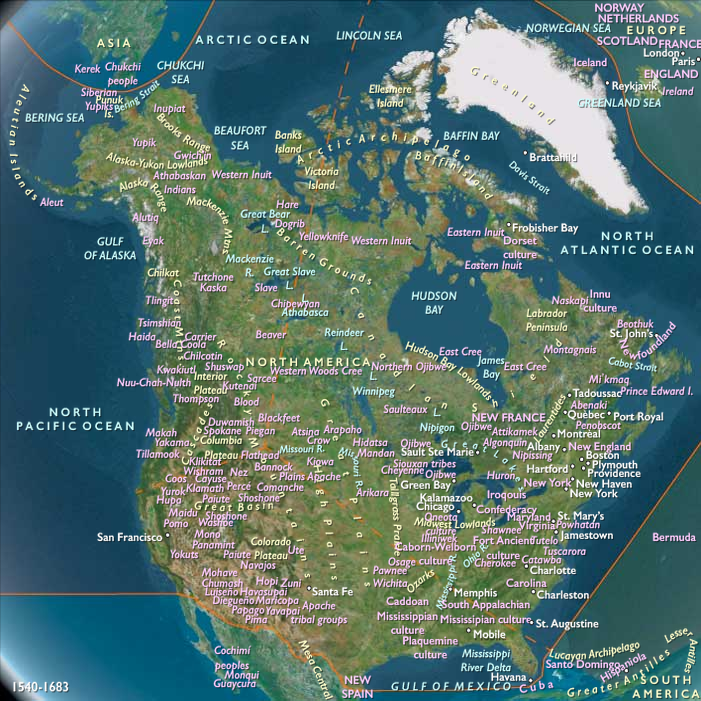
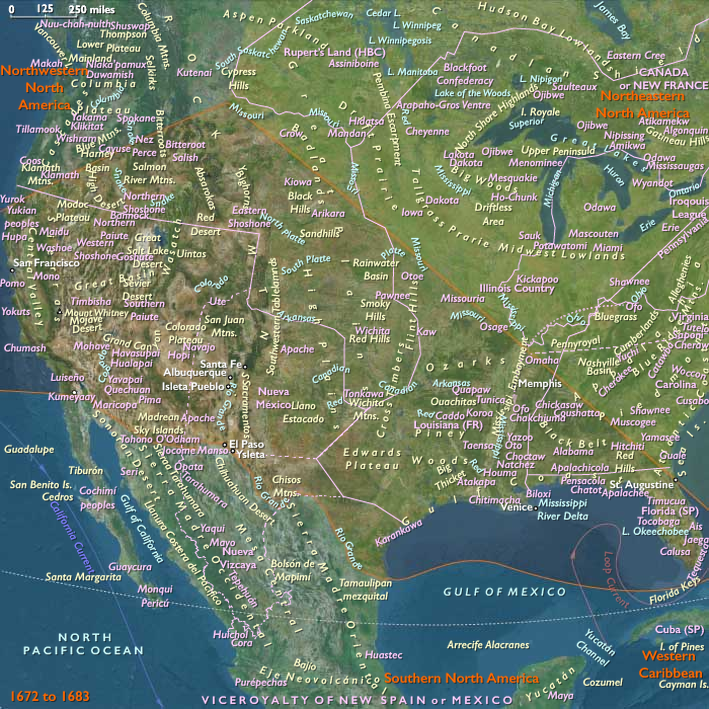
The subregion of Gulf and Western North America includes Mississippi, Louisiana, Arkansas, Texas, Oklahoma, Kansas, New Mexico, Colorado, Wyoming, Arizona, Utah, Nevada, nearly all of California (except the far northwest), nearly all of Florida (except the extreme northeast), southwestern Georgia, most of Alabama, southwestern Tennessee, southern Illinois, southwestern Missouri, most of Nebraska, southeastern South Dakota, southern Montana, southern Idaho, and southeastern Oregon. Anchors included the lower Mississippi valley, the Gulf Coast, the Rio Grande valley, and the California littoral.
Climate & Environmental Shifts
The Little Ice Age shaped environments with harsher winters, episodic droughts, and occasional floods. The Southwest endured extended dry spells, stressing Pueblo agriculture. The Gulf Coast remained humid, with hurricanes periodically devastating villages and colonies. California’s maritime climate sustained oak groves and fisheries despite drought cycles inland.
Subsistence & Settlement
-
Puebloans farmed maize, beans, and squash in irrigated fields; multi-storied pueblos and kivas anchored communities. Revolts and migrations reshaped settlement after Spanish intrusions.
-
Navajo and Apache expanded raiding and herding economies across plateaus.
-
Mississippian remnants persisted in the southeast, though large mound centers had declined; farming villages continued.
-
California tribes (Chumash, Tongva, Miwok, and others) relied on acorns, fish, shellfish, and trade; plank canoes (tomols) facilitated coastal exchange.
-
Spanish colonists attempted missions and forts in Florida, Texas, and New Mexico; most early settlements were fragile and dependent on Indigenous alliances.
Technology & Material Culture
Pueblo irrigation and adobe architecture remained central. California societies crafted baskets, shell ornaments, and tomols. The Spanish introduced horses, cattle, sheep, iron tools, and firearms. Mounted horse culture spread rapidly on the southern Plains, transforming hunting and warfare.
Movement & Interaction Corridors
Spanish entradas included Hernando de Soto (1539–1542) through the southeast and lower Mississippi, and Francisco Vásquez de Coronado (1540–1542) into the Southwest and Plains. The Rio Grande valley became a corridor of Spanish–Pueblo interaction. California’s coasts remained Indigenous, tied together by canoe and trade networks. Horses diffused northward from Spanish settlements into Plains societies.
Cultural & Symbolic Expressions
Pueblo rituals of kachina dances and sipapu renewal persisted despite missionary suppression. Southeastern groups maintained Green Corn ceremonies. California communities celebrated shamanic dances, stories, and feasts. Spanish missionaries introduced Catholic sacraments and saints’ festivals, often blending with Indigenous ritual.
Environmental Adaptation & Resilience
Communities shifted settlement to buffer droughts; storage pits and diversified crops cushioned shortfalls. Horse adoption enhanced resilience on Plains margins. Spanish colonists struggled to adapt without Indigenous assistance.
Transition
By 1683 CE, Gulf and Western North America was contested: Spanish entradas had failed to fully conquer vast regions, but horses, diseases, and missions had begun reshaping Indigenous worlds. Pueblo and coastal peoples remained strong, while colonists clung to fragile outposts in Florida and New Mexico.
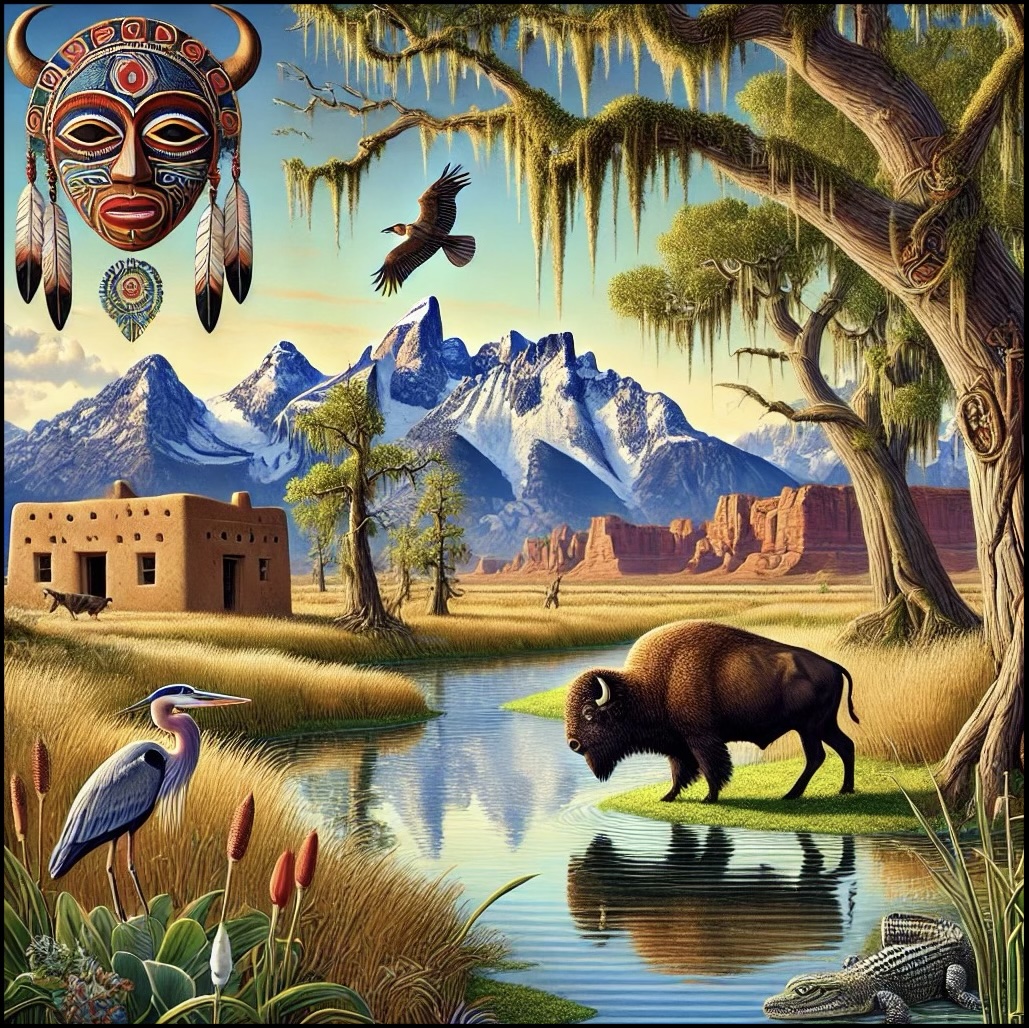
Gulf and Western North America (with civilization) ©2024-25 Electric Prism, Inc. All rights reserved.
People
Groups
- Chumash people
- Washoe
- Zuni people (Amerind tribe)
- Hohokam
- Mogollon culture
- Sinagua
- Ancestral Puebloans
- Caddoan Mississippian culture
- Mississippian culture
- Wichita, or Kitikitish (Amerind tribe)
- Hupa
- Timbisha
- Yurok people
- Hopi (Amerind tribe)
- Havasupai people
- Karankawa (Amerind tribe)
- Pima people (Amerind tribe)
- Tohono O'Odham, or Papago (Amerind tribe)
- Plains Apache, or Kiowa Apache; also Kiowa-Apache, Naʼisha, Naisha (Amerind tribe)
- Maricopa people (Amerind tribe)
- Yavapai (Amerind tribe)
- Shoshone, Shoshoni, or Snakes (Amerind tribe)
- Yokuts
- Pomo
- Ute (Amerind tribe)
- Jicarilla Apache
- Mescalero
- Chiricahua
- Western Apache
- Luiseño
- Navajo people (Na-Dené tribe)
- Apache (Na-Dené tribe)
- Caddo (Amerind tribe)
- Salish, or ”Flatheads” (Amerind tribe)
- Tonkawa (Amerind tribe)
- Lipan Apache people (Amerind tribe)
Commodoties
- Rocks, sand, and gravel
- Fish and game
- Water
- Gem materials
- Glass
- Grains and produce
- Fibers
- Ceramics
- Strategic metals
Subjects
Regions
Subregions
Related Events
Showing 10 events out of 37475 total
Years: 1540 - 1683
Gulf and Western North America (with civilization) ©2024-25 Electric Prism, Inc. All rights reserved.
People
Groups
- Chumash people
- Washoe
- Zuni people (Amerind tribe)
- Hohokam
- Mogollon culture
- Sinagua
- Ancestral Puebloans
- Caddoan Mississippian culture
- Mississippian culture
- Wichita, or Kitikitish (Amerind tribe)
- Hupa
- Timbisha
- Yurok people
- Hopi (Amerind tribe)
- Havasupai people
- Karankawa (Amerind tribe)
- Pima people (Amerind tribe)
- Tohono O'Odham, or Papago (Amerind tribe)
- Plains Apache, or Kiowa Apache; also Kiowa-Apache, Naʼisha, Naisha (Amerind tribe)
- Maricopa people (Amerind tribe)
- Yavapai (Amerind tribe)
- Shoshone, Shoshoni, or Snakes (Amerind tribe)
- Yokuts
- Pomo
- Ute (Amerind tribe)
- Jicarilla Apache
- Mescalero
- Chiricahua
- Western Apache
- Luiseño
- Navajo people (Na-Dené tribe)
- Apache (Na-Dené tribe)
- Caddo (Amerind tribe)
- Salish, or ”Flatheads” (Amerind tribe)
- Tonkawa (Amerind tribe)
- Lipan Apache people (Amerind tribe)
Commodoties
- Rocks, sand, and gravel
- Fish and game
- Water
- Gem materials
- Glass
- Grains and produce
- Fibers
- Ceramics
- Strategic metals
Subjects
Regions
Subregions