
Gulf and Western North America (1396–1539 CE) …
Years: 1396 - 1539
Gulf and Western North America (1396–1539 CE)
Mound Centers, Pueblos, and Coastal Gardens
Geography & Environmental Context
From the Mississippi Delta to California’s valleys, this vast region spanned wetlands, plains, deserts, and Pacific shores. Anchors included the Gulf Coast, Rio Grande, Colorado Plateau, Great Basin, and Sacramento Valley—a panorama of climatic and cultural extremes.
Climate & Environmental Shifts
The Little Ice Age brought alternating droughts and floods. Hurricanes reshaped Gulf deltas; aridity challenged maize fields in the Southwest; Pacific upwelling sustained rich fisheries despite inland dryness.
Subsistence & Settlement
-
Mississippi Valley & Gulf States: Descendant chiefdoms of the Mississippian tradition farmed maize, beans, and squash, supplemented by fish and waterfowl around mound-centered towns.
-
Plains & Prairies: Semi-sedentary communities mixed horticulture with bison hunting.
-
Southwest (Pueblo worlds): Stone and adobe towns along the Rio Grande irrigated maize, cotton, and chili peppers.
-
Great Basin: Numic foragers pursued seeds, roots, and game across dry basins.
-
California & Oregon coasts: Villages of Chumash, Miwok, and Pomo peoples relied on acorns, salmon, and shellfish, storing surpluses in granaries.
-
Florida & Lower Southeast: Timucua and Muskogean groups combined maize farming with fishing and hunting in rich estuaries.
Technology & Material Culture
Mississippian artisans crafted shell gorgets and copper ornaments; Pueblo masons perfected multistory architecture and canal irrigation; Californians built plank canoes (tomols) for open-sea voyaging. Bison traps, acorn mortars, and intricate basketry displayed ecological range.
Movement & Interaction Corridors
The Mississippi, Rio Grande, and Colorado rivers carried goods and pilgrims between plains, deserts, and coasts. Plains trails linked obsidian and bison hides; Pacific canoes moved fish oil and beads between villages. Early Spanish entradas—Ponce de León, Narváez, Cabeza de Vaca—touched Florida and Texas, opening fragile corridors of contact and contagion.
Cultural & Symbolic Expressions
Green Corn ceremonies renewed fertility in the Southeast; kachina dances governed rain and harvest in Pueblo towns; California rock art and oral epics depicted spirits and ancestors. Ritual and agriculture merged across ecological zones.
Environmental Adaptation & Resilience
Floodplain farmers rebuilt fields after inundation; Pueblos shared water through communal rights; Plains peoples diversified mobility and diet; foragers rotated harvest sites. Storage and exchange made societies robust amid climatic flux.
Transition
By 1539 CE, from the Gulf to California, Indigenous nations sustained populous towns and networks independent of Europe. Spanish explorers brought horses, iron, and disease but little control. North America’s western and southern arc remained wholly Indigenous—diverse, adaptive, and interconnected.
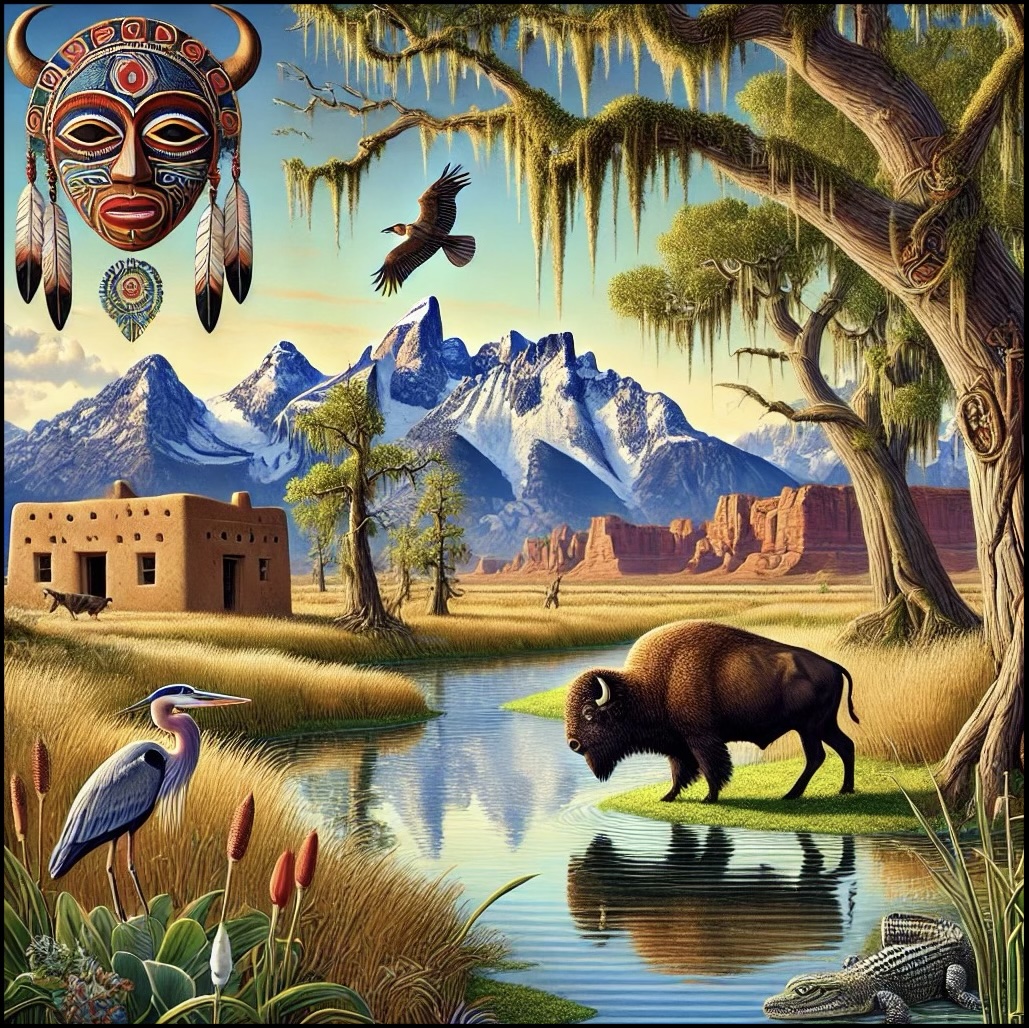
Gulf and Western North America (with civilization) ©2024-25 Electric Prism, Inc. All rights reserved.
Groups
- Chumash people
- Washoe
- Zuni people (Amerind tribe)
- Hohokam
- Mogollon culture
- Sinagua
- Ancestral Puebloans
- Caddoan Mississippian culture
- Mississippian culture
- Wichita, or Kitikitish (Amerind tribe)
- Hupa
- Timbisha
- Yurok people
- Hopi (Amerind tribe)
- Havasupai people
- Karankawa (Amerind tribe)
- Pima people (Amerind tribe)
- Tohono O'Odham, or Papago (Amerind tribe)
- Plains Apache, or Kiowa Apache; also Kiowa-Apache, Naʼisha, Naisha (Amerind tribe)
- Maricopa people (Amerind tribe)
- Yavapai (Amerind tribe)
- Shoshone, Shoshoni, or Snakes (Amerind tribe)
- Yokuts
- Pomo
- Ute (Amerind tribe)
- Jicarilla Apache
- Mescalero
- Chiricahua
- Western Apache
- Luiseño
- Navajo people (Na-Dené tribe)
- Apache (Na-Dené tribe)
- Caddo (Amerind tribe)
- Salish, or ”Flatheads” (Amerind tribe)
- Tonkawa (Amerind tribe)
- Lipan Apache people (Amerind tribe)
Commodoties
- Rocks, sand, and gravel
- Fish and game
- Water
- Gem materials
- Glass
- Grains and produce
- Fibers
- Ceramics
- Strategic metals
Subjects
Regions
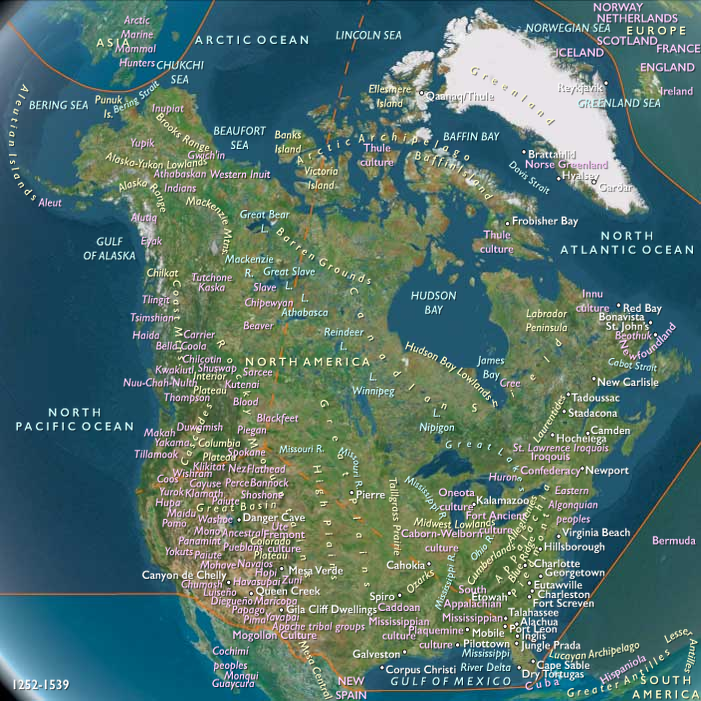
Subregions
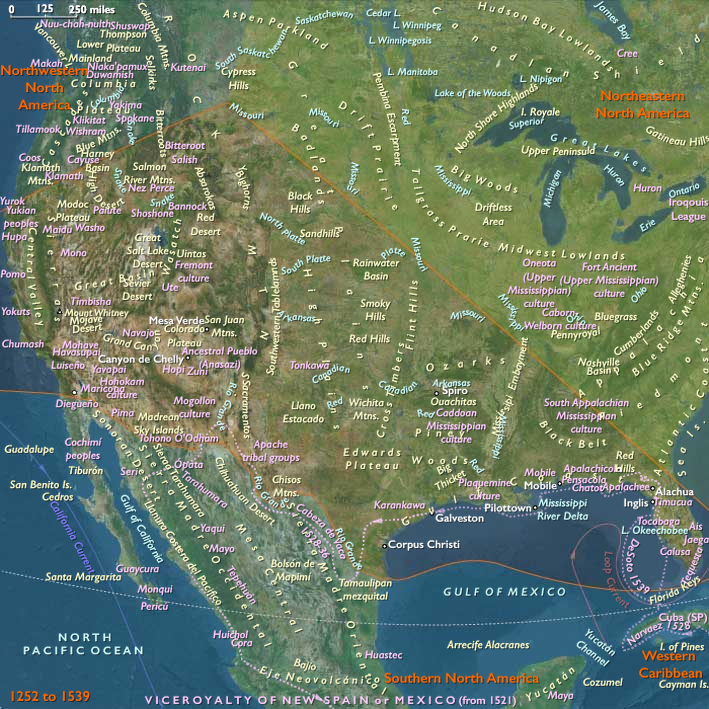
Related Events
Showing 10 events out of 43406 total
Years: 1396 - 1539
Gulf and Western North America (with civilization) ©2024-25 Electric Prism, Inc. All rights reserved.
Groups
- Chumash people
- Washoe
- Zuni people (Amerind tribe)
- Hohokam
- Mogollon culture
- Sinagua
- Ancestral Puebloans
- Caddoan Mississippian culture
- Mississippian culture
- Wichita, or Kitikitish (Amerind tribe)
- Hupa
- Timbisha
- Yurok people
- Hopi (Amerind tribe)
- Havasupai people
- Karankawa (Amerind tribe)
- Pima people (Amerind tribe)
- Tohono O'Odham, or Papago (Amerind tribe)
- Plains Apache, or Kiowa Apache; also Kiowa-Apache, Naʼisha, Naisha (Amerind tribe)
- Maricopa people (Amerind tribe)
- Yavapai (Amerind tribe)
- Shoshone, Shoshoni, or Snakes (Amerind tribe)
- Yokuts
- Pomo
- Ute (Amerind tribe)
- Jicarilla Apache
- Mescalero
- Chiricahua
- Western Apache
- Luiseño
- Navajo people (Na-Dené tribe)
- Apache (Na-Dené tribe)
- Caddo (Amerind tribe)
- Salish, or ”Flatheads” (Amerind tribe)
- Tonkawa (Amerind tribe)
- Lipan Apache people (Amerind tribe)
Commodoties
- Rocks, sand, and gravel
- Fish and game
- Water
- Gem materials
- Glass
- Grains and produce
- Fibers
- Ceramics
- Strategic metals
Subjects
Regions
Subregions