
Gulf and Western North America (1252 – …
Years: 1252 - 1395
Gulf and Western North America (1252 – 1395 CE): Mississippian Chiefdoms, Pueblo IV Transformations, and Pacific Networks
Geographic and Environmental Context
Gulf and Western North America includes: Mississippi, Louisiana, Arkansas, Texas, Oklahoma, Kansas, New Mexico, Colorado, Wyoming, Arizona, Utah, Nevada, nearly all of California (except far northwest), Florida (except the Jacksonville corridor), southwestern Georgia, most of Alabama (except Huntsville corner), southwestern Tennessee, southern Illinois (Little Egypt), southwestern Missouri, most of Nebraska (except northeast around Omaha), southeastern South Dakota, southern Montana, southern Idaho, southeastern Oregon.
-
Anchors: the Lower Mississippi mound towns (Natchez, Plaquemine, Lower Yazoo), the Gulf Coast plain (Mobile Bay, Pensacola, Calusa in Florida), the Southern Plains (Texas–Oklahoma–Kansas grasslands), the Southwest cultural areas (Pueblo IV towns in New Mexico/Arizona, Hohokam canal villages in the Salt/Gila valleys, Mogollon Rim, Sinagua in central Arizona), the Great Basin (Utah–Nevada), the Rocky Mountain fringes (Colorado Plateau), and the California coast and valleys (Sacramento–San Joaquin, Chumash coast, Channel Islands).
Climate and Environmental Shifts
-
Onset of the Little Ice Age (~1300) brought drier conditions in the Southwest and Great Basin, contributing to Puebloan migrations and reorganization.
-
The Mississippi valley experienced periodic flooding, shaping mound-town settlement cycles.
-
California’s diverse microclimates supported acorn economies, salmon fisheries, and shell bead industries.
Societies and Political Developments
-
Mississippian chiefdoms:
-
Cahokia’s decline left successor towns along the Lower Mississippi and Gulf; Natchez and Plaquemine peoples maintained mound-centered polities.
-
Chiefdoms at Etowah (Georgia) and Spiro (Oklahoma) thrived into this period as ritual and trade hubs.
-
-
Gulf Coast: Calusa in southwest Florida dominated coastal estuaries through fishing and tribute.
-
Southwest:
-
Ancestral Puebloans entered the Pueblo IV era: aggregation into larger towns (Zuni, Hopi mesas, Rio Grande pueblos).
-
Hohokam continued large-scale irrigation in the Salt and Gila basins, though drought and salinization strained systems.
-
Mogollon and Sinagua reorganized into fewer, larger settlements with walled plazas and kivas.
-
-
Great Basin & Rockies: mobile foraging groups adapted to aridity, with intensified seed gathering and pinyon nut use.
-
California:
-
Chumash maintained complex chiefdoms on the Santa Barbara Channel coast, with plank canoes (tomols) connecting Channel Islands to the mainland.
-
Central Valley and Bay Area groups (Miwok, Ohlone ancestors) organized into tribal confederacies supported by salmon runs and acorn harvests.
-
Economy and Trade
-
Mississippian exchange networks circulated shell gorgets, copper plates, stone pipes, and maize surpluses across the Southeast and Plains.
-
Spiro mound (Oklahoma) acted as a ceremonial redistribution hub linking Plains bison products with Mississippian prestige goods.
-
Southwest: turquoise, obsidian, macaws, cotton cloth moved through trade networks reaching into Mesoamerica.
-
California: shell beads (especially Olivella) from the Channel Islands became a pan-regional currency; tomolcanoe trade expanded.
-
Great Basin: salt, obsidian, and rabbit-skin textiles moved between foraging bands and Puebloan centers.
Belief and Symbolism
-
Mississippian Southeastern Ceremonial Complex persisted: birdman, falcon dancer, underworld serpent imagery linked to elite regalia.
-
Pueblo IV ritual life centered on kiva ceremonies, katsina cults, and painted murals.
-
Chumash cosmology tied canoe voyaging and bead exchange to the celestial order.
-
Calusa ritual chiefs wielded power through ancestor shrines and sacred war bundles.
Adaptation and Resilience
-
Mississippian chiefdoms shifted centers frequently to adapt to flooding, soil depletion, or factional conflict.
-
Puebloans aggregated for defense and water management, creating plazas and mesa-top towns.
-
California economies diversified: acorn granaries, salmon fisheries, and shell currency insulated against shocks.
-
Great Basin foragers broadened subsistence with pine nuts and small-game hunting.
Long-Term Significance
By 1395, Gulf & Western North America had diversified political landscapes:
-
Mississippian mound towns anchored the Southeast and lower Mississippi.
-
Spiro and Etowah linked Plains to Mississippian ritual economies.
-
Pueblo IV communities and Hohokam canal towns restructured the Southwest.
-
Chumash chiefdoms and California bead economies integrated Pacific coastal peoples.
-
Across all zones, the subregion acted as a continental hinge: maize, turquoise, copper, shells, and ritual ideologies flowed between Mesoamerica, the Plains, the Mississippi world, and the Pacific coast.
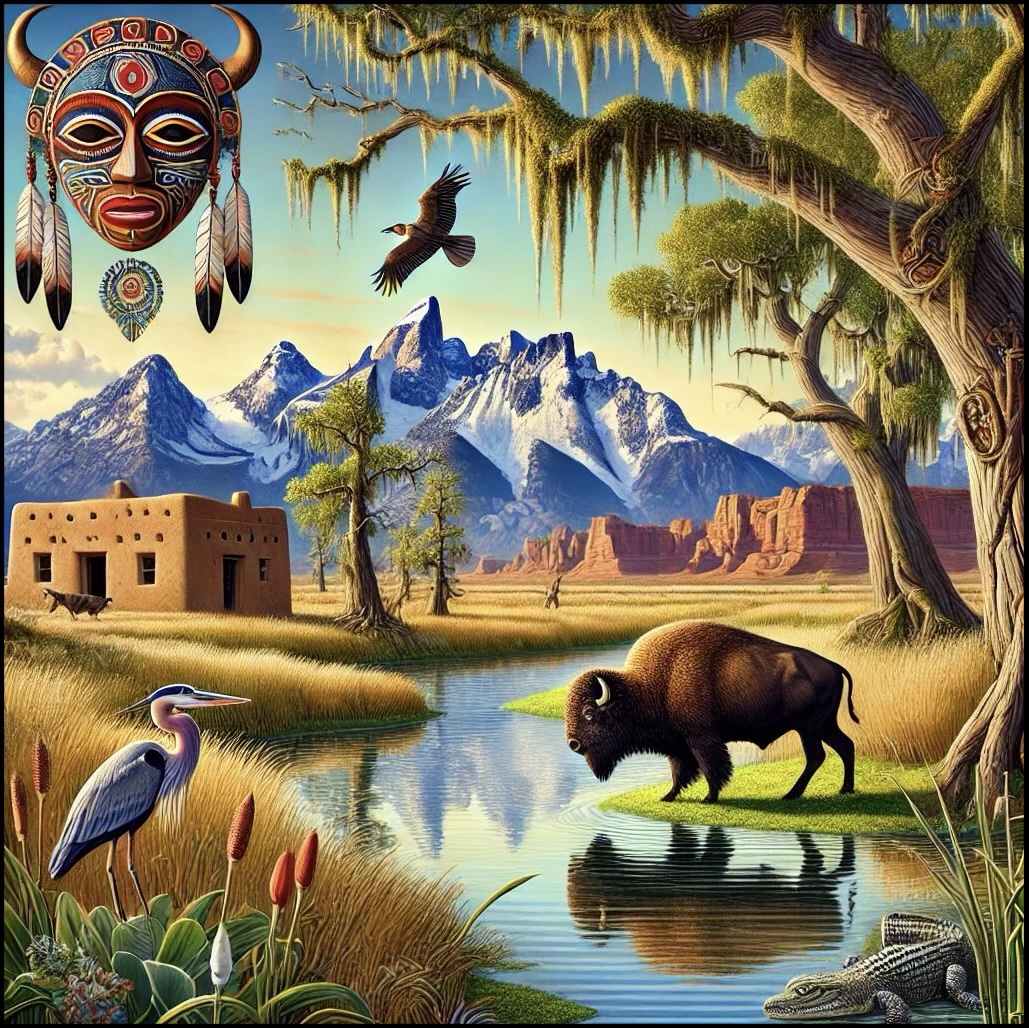
Gulf and Western North America (with civilization) ©2024-25 Electric Prism, Inc. All rights reserved.
Groups
- Chumash people
- Zuni people (Amerind tribe)
- Miwok
- Hohokam
- Calusa
- Mogollon culture
- Sinagua
- Ohlone
- Caddoan Mississippian culture
- Mississippian culture
- Hopi (Amerind tribe)
- Pueblo III culture
- Plaquemine culture
- Natchez (Amerind tribe)
- Pueblo IV culture
Topics
Commodoties
- Rocks, sand, and gravel
- Fish and game
- Water
- Hides and feathers
- Gem materials
- Glass
- Grains and produce
- Textiles
- Fibers
- Ceramics
- Strategic metals
- Salt
Subjects
- Commerce
- Symbols
- Architecture
- Decorative arts
- Games and Sports
- Faith
- Government
- Custom and Law
- Human Migration
Regions
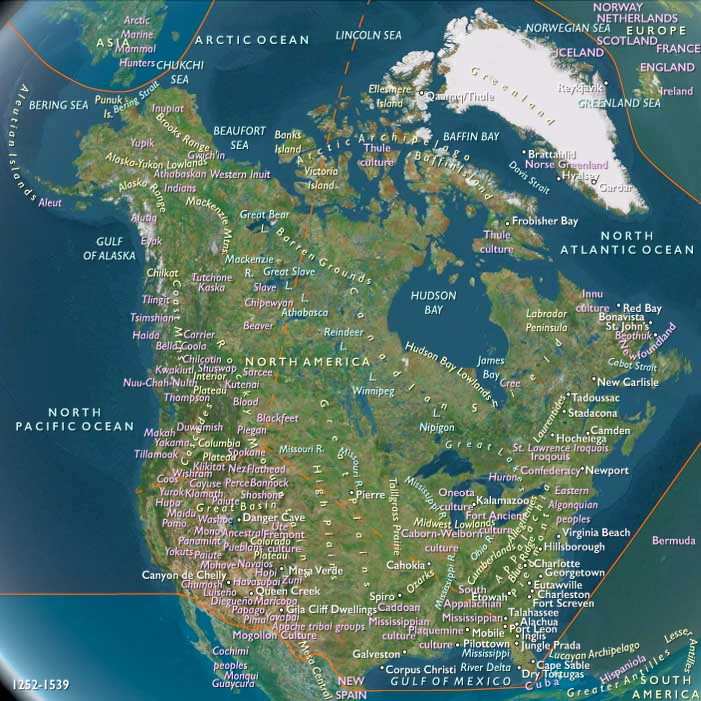
Subregions
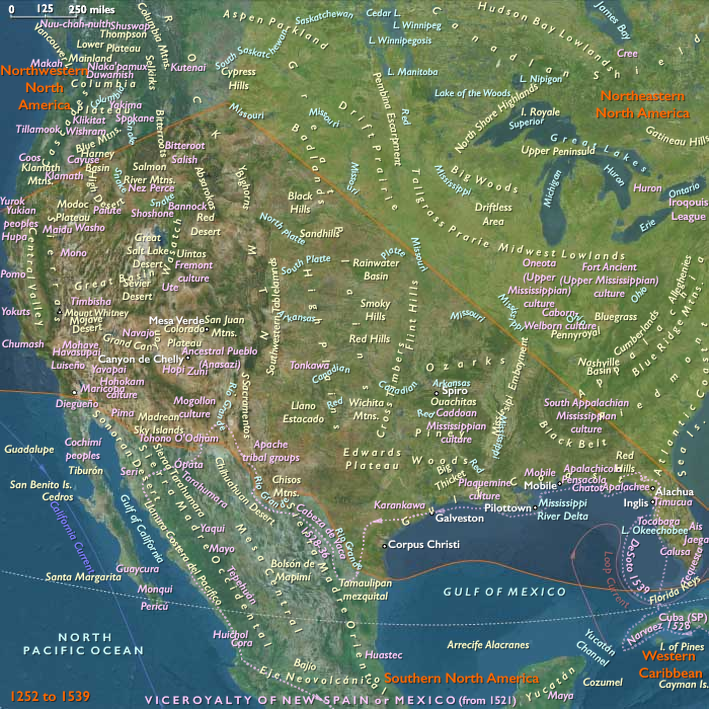
Related Events
Showing 10 events out of 46611 total
Years: 1252 - 1395
Gulf and Western North America (with civilization) ©2024-25 Electric Prism, Inc. All rights reserved.
Groups
- Chumash people
- Zuni people (Amerind tribe)
- Miwok
- Hohokam
- Calusa
- Mogollon culture
- Sinagua
- Ohlone
- Caddoan Mississippian culture
- Mississippian culture
- Hopi (Amerind tribe)
- Pueblo III culture
- Plaquemine culture
- Natchez (Amerind tribe)
- Pueblo IV culture
Topics
Commodoties
- Rocks, sand, and gravel
- Fish and game
- Water
- Hides and feathers
- Gem materials
- Glass
- Grains and produce
- Textiles
- Fibers
- Ceramics
- Strategic metals
- Salt
Subjects
- Commerce
- Symbols
- Architecture
- Decorative arts
- Games and Sports
- Faith
- Government
- Custom and Law
- Human Migration
Regions
Subregions