
Filters:
… Guimarães …
Years: 1385 - 1385
…
-
- Guimarães (one of Portugal’s oldest and most symbolic cities).
- His forces also secured other strongholds throughout northern Portugal, ensuring that Castilian loyalists lost territorial control.
-
Castile’s Response: A Renewed Invasion
- John I of Castile refused to accept the loss of Portuguese territory and saw John of Aviz’s actions as a direct challenge to his claim.
- He launched a new invasion of Portugal, his army reinforced by French soldiers, likely members of the free companies that had fought in the Hundred Years’ War.
- This invasion set the stage for the decisive confrontation that would determine the fate of Portugal’s independence—the Battle of Aljubarrota (August 14, 1385).
The Road to Aljubarrota
- John I of Portugal and his commander, Nuno Álvares Pereira, mobilized their forces, preparing for a final battleagainst Castile.
- The English alliance, already in negotiation, began to provide military assistance in the form of troops and tactical support.
- The Castilian army, significantly larger and supported by French heavy cavalry, entered Portugal in the summer of 1385, leading to the climactic Battle of Aljubarrota, which would ultimately secure Portugal’s sovereignty.
John I’s swift military actions in annexing key cities forced Castile’s hand, leading to the final struggle that would determine whether Portugal remained an independent kingdom or was absorbed into Castile.
Locations
People
Groups
- England, (Plantagenet, Angevin) Kingdom of
- Castile, Crown of
- France, (Valois) Kingdom of
- Portugal, Kingdom of
- Portugal, Avizan (Joannine) Kingdom of
Topics
- Hundred Years' War
- Portuguese-Castilian Wars of 1369-88
- Hundred Years' War: Caroline phase
- 1383–1385 Portuguese interregnum
- Aljubarrota, Battle of
Commodoties
Subjects
Regions
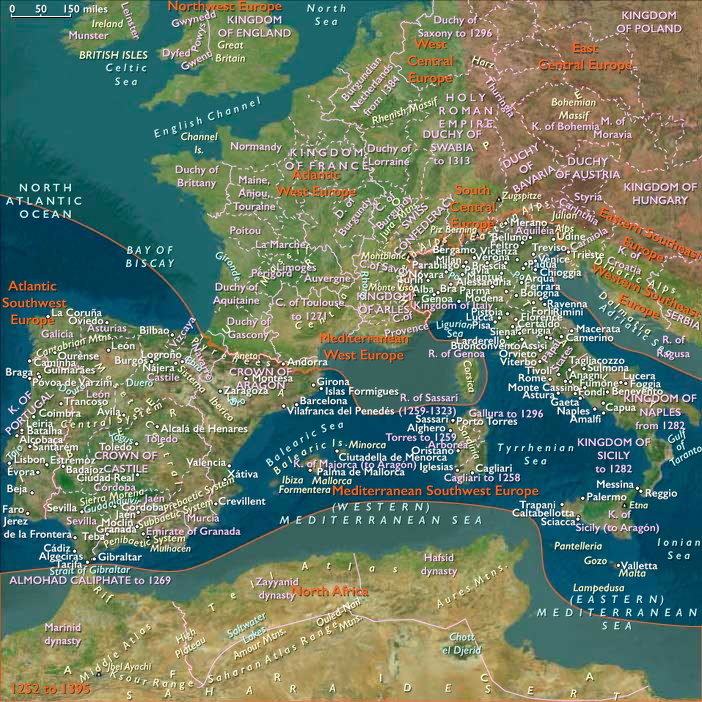
Subregions

Years: 1385 - 1385
Locations
People
Groups
- England, (Plantagenet, Angevin) Kingdom of
- Castile, Crown of
- France, (Valois) Kingdom of
- Portugal, Kingdom of
- Portugal, Avizan (Joannine) Kingdom of
Topics
- Hundred Years' War
- Portuguese-Castilian Wars of 1369-88
- Hundred Years' War: Caroline phase
- 1383–1385 Portuguese interregnum
- Aljubarrota, Battle of
Commodoties
Subjects
Regions
Subregions