
Atlantic West Europe: Dynastic Struggles and Shifting …
Years: 1420 - 1431
Atlantic West Europe: Dynastic Struggles and Shifting Alliances (1420–1431)
The period 1420–1431 of the Upper Late Medieval Age (1396–1539) in Atlantic West Europe is dominated by intensified warfare, shifting political alliances, and deepening economic disruption. Yet, amid these crises, cultural and technological innovation continue, reflecting both resilience and adaptation within the region.
Political and Military Developments
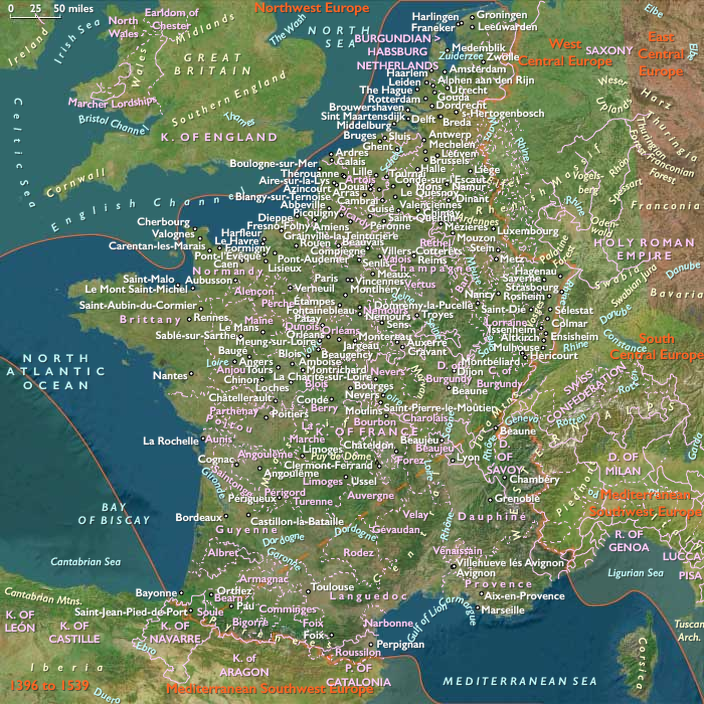
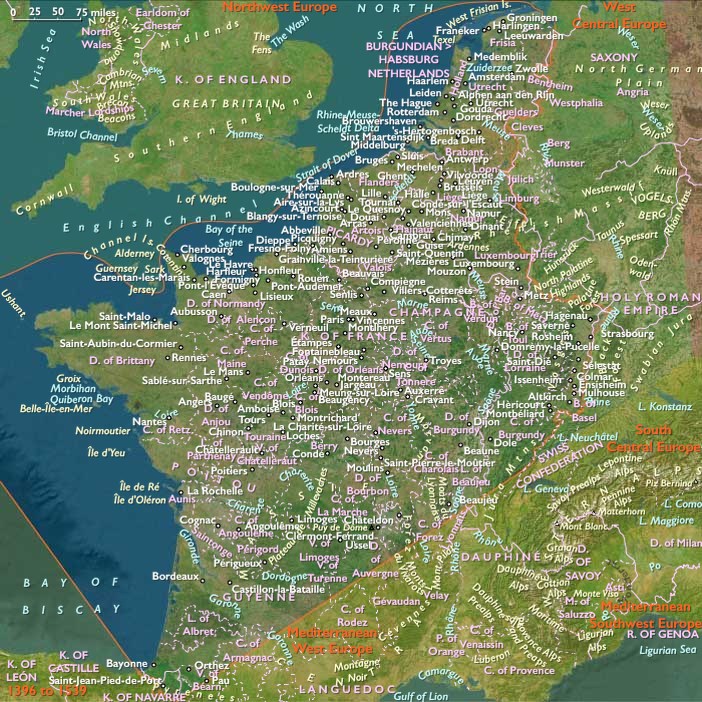
The years 1420–1431 witness some of the most severe phases of the Hundred Years' War and the ongoing Armagnac–Burgundian Civil War. The Treaty of Troyes (1420) drastically alters the political landscape, designating Henry V of England as heir to the French crown, and effectively disinheriting the Dauphin Charles (later Charles VII). This agreement escalates conflict, solidifying English dominance over northern France, including Paris. The pivotal event is the rise of Joan of Arc (1429), whose intervention at the Siege of Orléans significantly shifts momentum back to the French side. Joan’s capture (1430) and subsequent execution (1431) by pro-English authorities further inflame the conflict but also galvanize French national sentiment.
Economic Developments
Continuous warfare severely disrupts economic stability, with trade routes frequently obstructed and agricultural productivity hampered by conflict. Nevertheless, the Atlantic coastal cities—particularly Bruges, Ghent, and increasingly, Antwerp—adapt to wartime conditions by diversifying trade and strengthening their local markets. Efforts to circumvent the economic impact of war lead merchants to seek alternate trade networks, notably deepening relations with Italian city-states and northern German towns within the Hanseatic League.
Cultural and Artistic Trends
Despite political turmoil, the region experiences significant cultural growth. Burgundian patronage remains robust, further enriching court life and stimulating artistic innovations. Flemish masters, such as Jan van Eyck, elevate panel painting to new artistic heights, exemplified by masterpieces like the Ghent Altarpiece (1432, begun earlier), which introduces unprecedented realism and technical mastery. Simultaneously, literary culture continues to flourish, with notable advances in chronicles and historical writing, capturing the era's complex political narratives.
Technological and Societal Changes
Technological innovation in this period centers primarily around warfare, including advancements in artillery and fortifications. Such military developments significantly alter siege warfare strategies. Meanwhile, society grows increasingly stratified between urban elites—who consolidate wealth and political influence—and rural populations who disproportionately bear the hardships of prolonged conflict. Yet, the struggles also encourage the growth of civic governance in cities such as Ghent and Bruges, further solidifying urban autonomy.
Long-term Consequences and Significance
This era solidifies critical shifts in the power dynamics of Atlantic West Europe. Joan of Arc’s brief yet impactful intervention dramatically reorients French national identity and morale, while English ambitions reach their territorial high point before beginning a gradual decline. The cultural and artistic achievements of the Burgundian Netherlands, exemplified by Jan van Eyck, set the stage for a flourishing Flemish Renaissance.
Ultimately, 1420–1431 underscores Atlantic West Europe's resilience amid profound dynastic and military struggles, laying foundations for future political, cultural, and economic recovery and advancement.
Locations
People
Groups
- Flanders, County of
- Burgundy, Duchy of
- Christians, Roman Catholic
- France, (Valois) Kingdom of
- Hanseatic League
- Netherlands, Burgundian
- England, (Plantagenet, Lancastrian) Kingdom of
Topics
- Hundred Years' War
- Armagnac-Burgundian Civil War
- Hundred Years' War: Resumption of the war under Henry V
- Western Art: 1420 to 1432
- Northern Renaissance
- Hundred Years' War: French Victory
Commodoties
Subjects
Regions
Subregions
Years: 1420 - 1431
Locations
People
Groups
- Flanders, County of
- Burgundy, Duchy of
- Christians, Roman Catholic
- France, (Valois) Kingdom of
- Hanseatic League
- Netherlands, Burgundian
- England, (Plantagenet, Lancastrian) Kingdom of
Topics
- Hundred Years' War
- Armagnac-Burgundian Civil War
- Hundred Years' War: Resumption of the war under Henry V
- Western Art: 1420 to 1432
- Northern Renaissance
- Hundred Years' War: French Victory
Commodoties
Subjects
Regions
Subregions