
Merchants in Grenoble close down their shops …
Years: 1788 - 1788
June
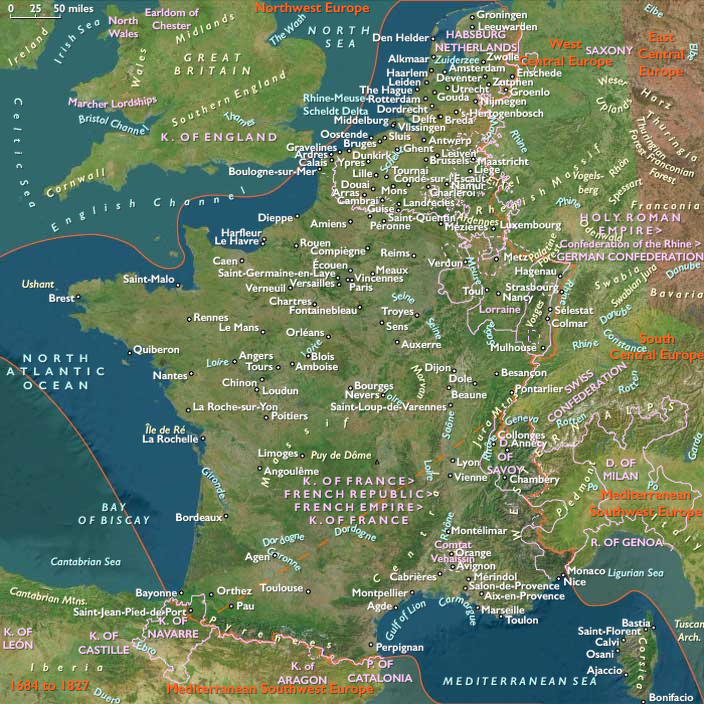
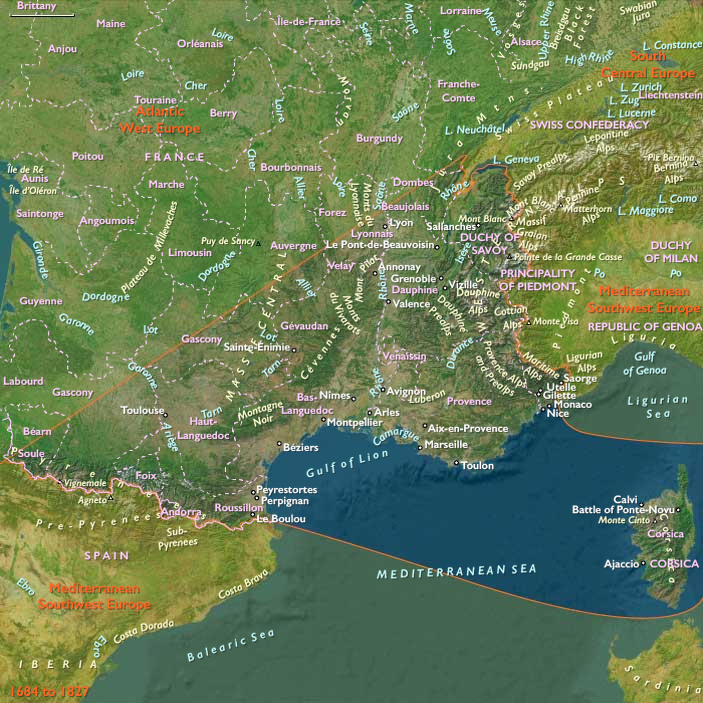
Merchants in Grenoble close down their shops at roughly ten in the morning of Saturday, June 7, as groups of three hundred to four hundred men and women form, armed with stones, sticks, axes, and bars.
They rush to the city gates to prevent the departure of judges who had taken part in the Grenoble meeting.
Some rioters attempt to cross the Isère but face a picket of fifty soldiers at the St. Lawrence bridge, while others head to the Rue Neuve.
The cathedral’s bells are seized by French peasants at noon.
The crowd swiftly grows, as the bells provoke the influx of neighboring peasants to creep in the city, climbing the walls, using boats on the Isere and for some, pushing open the city gates.
Other insurgents board the ramparts and rush to the hotel (L'hôtel de la Première présidence) the Duke of Clermont-Tonnerre is staying in at this time.
The Duke has two elite regiments in Grenoble, the Regiment of the Royal Navy (Régiment Royal-La-Marine) whose colonel is Marquis d'Ambert, and the regiment of Australasia (Régiment d'Austrasie) which is commanded by Colonel Count Chabord.
The Royal Navy is the first to respond to the growing crowds, and are given the order to quell the rioting without the use of arms.
However, as the mob storms the hotel entrance, the situation escalates.
Soldiers sent to quell the disturbances force the townspeople off the streets.
Some sources say that the soldiers were sent to disperse parliamentarians who were attempting to assemble a parlement.
During an attack, Royal Navy soldiers injure a seventy-five year old man with a bayonet.
At the sight of blood, the people become angry and start to tear up the streets.
Townspeople climb onto the roofs of buildings around the Jesuit College to hurl down a rain of roof-tiles on the soldiers in the streets below, hence the episode's name.
Many soldiers take refuge in a building to shoot through the windows, while the crowd continues to rush inside and ravage everything.
A non-commissioned officer of the Royal Navy, commanding a patrol of four soldiers, gives the order to open fire into the mob.
One civilian is killed and a boy of twelve wounded.
To the east of the city, the Royal Navy soldiers are forced to open fire in order to protect the city's arsenal, fearing that the rioters will seize the weapons and ammunition.
Meanwhile, Colonel Count Chabord begins deploying the regiment of Australasia to aid and relieve the Royal Navy soldiers.
Three of the four city councilors gather at the City Hall and attempt to reason with the crowd.
However, their words are silenced amid the clamor of the mob.
Through great difficulty, the councilors make their way through the crowds and eventually take refuge with the officers of the local garrison.
Later this evening, the Duke of Clermont-Tonnerre withdraws his troops from the streets and hotel to prevent further violence from escalating the situation.
The Duke manages to narrowly escape the hotel before the crowd completely loots the inside.
With control of the hotel lost, the Royal Navy troops are ordered to return to their quarters.
At six, a crowd estimated at ten thousand people shouting "Long live the parliament" forces the judges to return to the Palace of the Parliament of Dauphiné (Palais du Parlement du Dauphiné) by flooding them with flowers.
Throughout the night, carillons sound triumphantly and a large bonfire crackles on Saint-André square surrounded by a crowd that dances and sings "Long live forever our parliament! May God preserve the King and the devil take Brienne and Lamoignon."
They rush to the city gates to prevent the departure of judges who had taken part in the Grenoble meeting.
Some rioters attempt to cross the Isère but face a picket of fifty soldiers at the St. Lawrence bridge, while others head to the Rue Neuve.
The cathedral’s bells are seized by French peasants at noon.
The crowd swiftly grows, as the bells provoke the influx of neighboring peasants to creep in the city, climbing the walls, using boats on the Isere and for some, pushing open the city gates.
Other insurgents board the ramparts and rush to the hotel (L'hôtel de la Première présidence) the Duke of Clermont-Tonnerre is staying in at this time.
The Duke has two elite regiments in Grenoble, the Regiment of the Royal Navy (Régiment Royal-La-Marine) whose colonel is Marquis d'Ambert, and the regiment of Australasia (Régiment d'Austrasie) which is commanded by Colonel Count Chabord.
The Royal Navy is the first to respond to the growing crowds, and are given the order to quell the rioting without the use of arms.
However, as the mob storms the hotel entrance, the situation escalates.
Soldiers sent to quell the disturbances force the townspeople off the streets.
Some sources say that the soldiers were sent to disperse parliamentarians who were attempting to assemble a parlement.
During an attack, Royal Navy soldiers injure a seventy-five year old man with a bayonet.
At the sight of blood, the people become angry and start to tear up the streets.
Townspeople climb onto the roofs of buildings around the Jesuit College to hurl down a rain of roof-tiles on the soldiers in the streets below, hence the episode's name.
Many soldiers take refuge in a building to shoot through the windows, while the crowd continues to rush inside and ravage everything.
A non-commissioned officer of the Royal Navy, commanding a patrol of four soldiers, gives the order to open fire into the mob.
One civilian is killed and a boy of twelve wounded.
To the east of the city, the Royal Navy soldiers are forced to open fire in order to protect the city's arsenal, fearing that the rioters will seize the weapons and ammunition.
Meanwhile, Colonel Count Chabord begins deploying the regiment of Australasia to aid and relieve the Royal Navy soldiers.
Three of the four city councilors gather at the City Hall and attempt to reason with the crowd.
However, their words are silenced amid the clamor of the mob.
Through great difficulty, the councilors make their way through the crowds and eventually take refuge with the officers of the local garrison.
Later this evening, the Duke of Clermont-Tonnerre withdraws his troops from the streets and hotel to prevent further violence from escalating the situation.
The Duke manages to narrowly escape the hotel before the crowd completely loots the inside.
With control of the hotel lost, the Royal Navy troops are ordered to return to their quarters.
At six, a crowd estimated at ten thousand people shouting "Long live the parliament" forces the judges to return to the Palace of the Parliament of Dauphiné (Palais du Parlement du Dauphiné) by flooding them with flowers.
Throughout the night, carillons sound triumphantly and a large bonfire crackles on Saint-André square surrounded by a crowd that dances and sings "Long live forever our parliament! May God preserve the King and the devil take Brienne and Lamoignon."
Locations
People
Groups
Topics
Subjects
Regions
Subregions
Related Events
Showing 10 events out of 24474 total
Years: 1788 - 1788
June
Locations
People
Groups
Topics
Subjects
Regions
Subregions