
Gothelo I of Lorraine: The Unification of …
Years: 1037 - 1037
Gothelo I of Lorraine: The Unification of Upper and Lower Lorraine (1023–1044)
Gothelo I ("the Great"), the youngest son of Godfrey I of Verdun and Matilda Billung of Saxony, rose to prominence as Duke of Lower Lorraine (1023–1044) and later as Duke of Upper Lorraine (1033–1044). His strategic importance in the Holy Roman Empire grew as he secured both Lorrainian duchies and played a key role in defending imperial interests against Odo II of Blois.
Early Rule and the Lower Lorraine Succession (1023–1025)
- Upon his father’s death, Gothelo inherited the March of Antwerp, becoming a vassal to his brother, Godfrey II, who ruled as Duke of Lower Lorraine from 1012.
- In 1023, after Godfrey II’s death, Emperor Henry II granted Gothelo the Duchy of Lower Lorraine, recognizing his loyalty and military capability.
- However, Gothelo’s succession was contested by rebellious nobles, leading to internal conflict.
- The rebellion persisted until Emperor Conrad II, who succeeded Henry II in 1024, suppressed the opposition in 1025, securing Gothelo’s unquestioned rule.
Unification of Upper and Lower Lorraine (1033)
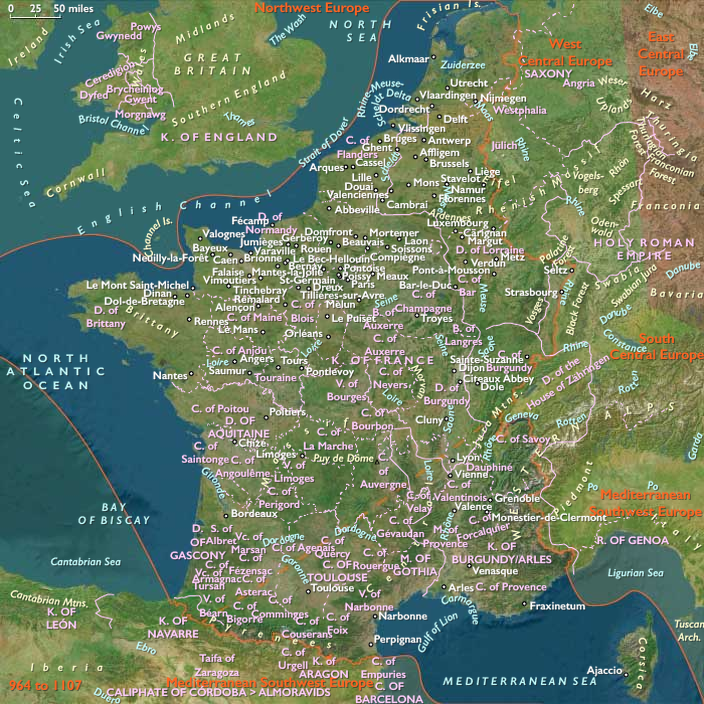
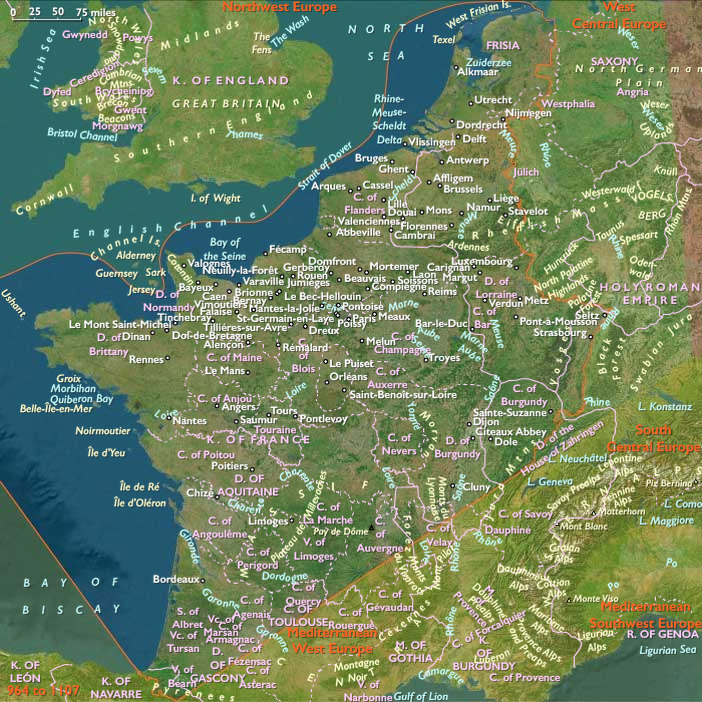
- In 1033, the House of Bar, which ruled Upper Lorraine, became extinct with the death of Duke Frederick III.
- Emperor Conrad II, seeking to consolidate imperial authority in the region, appointed Gothelo as Duke of Upper Lorraine, uniting both duchies under one ruler for the first time.
- The double duchy strengthened the empire’s defenses against Odo II of Blois, a powerful and ambitious noble seeking to expand into Lorraine and Burgundy.
Conflict with Odo II of Blois and His Death (1037)
- Odo II of Blois, Meaux, Chartres, and Troyes was a persistent rival of the Holy Roman Empire.
- In 1033, after the death of Rudolph III of Burgundy, Odo invaded Burgundy, seeking to claim the kingdom for himself.
- He was forced to retreat when faced with a coalition led by Emperor Conrad II and King Henry I of France.
- In 1037, Odo launched another campaign into Lorraine, attempting to expand his influence.
- On November 15, 1037, Gothelo’s forces clashed with Odo’s army near Bar-le-Duc.
- The battle ended in Odo’s death, securing Gothelo’s control over Lorraine and its strategic position within the empire.
Legacy and Importance
- Gothelo united Upper and Lower Lorraine, making the region a key part of the Holy Roman Empire’s northern defenses.
- His victory over Odo II reinforced imperial authority in Lotharingia, preventing further Capetian or Blois expansion into imperial territory.
- His death in 1044 led to the division of the two Lorraines under his sons, Godfrey III (Lower Lorraine) and Gothelo II (Upper Lorraine), weakening the region’s political unity.
Gothelo’s reign marked a critical moment in the history of Lorraine, as his military leadership and political consolidation helped shape the region’s role in medieval European power struggles.
Locations
People
Groups
- Lombards (West Germanic tribe)
- Germans
- German, or Ottonian (Roman) Empire
- French people (Latins)
- Lorraine, (second) Duchy of
Commodoties
Subjects
Regions
Subregions
Related Events
Showing 10 events out of 51453 total
Years: 1037 - 1037
Locations
People
Groups
- Lombards (West Germanic tribe)
- Germans
- German, or Ottonian (Roman) Empire
- French people (Latins)
- Lorraine, (second) Duchy of
Commodoties
Subjects
Regions
Subregions