
Filters:
The Death of Gothelo I and the …
Years: 1044 - 1044
The Death of Gothelo I and the Outbreak of the Lotharingian Rebellion (1044–1045)
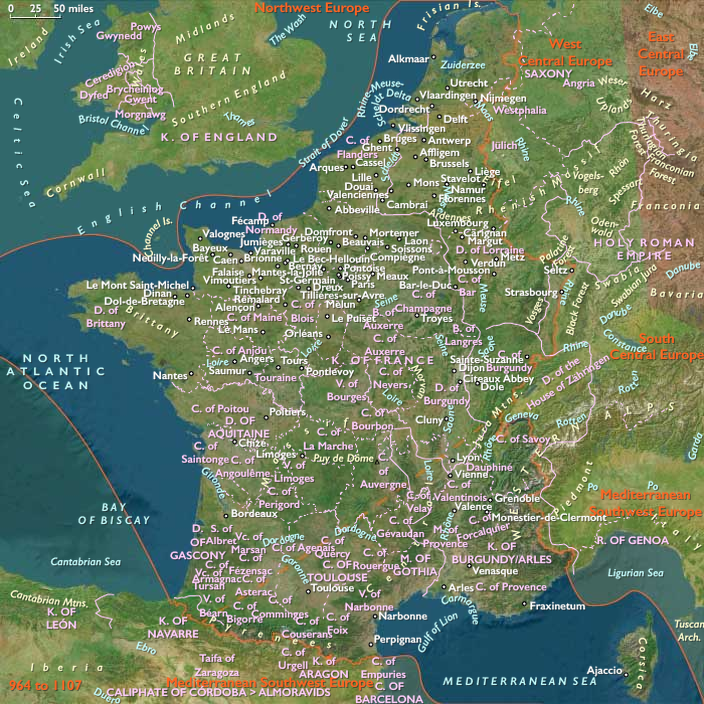
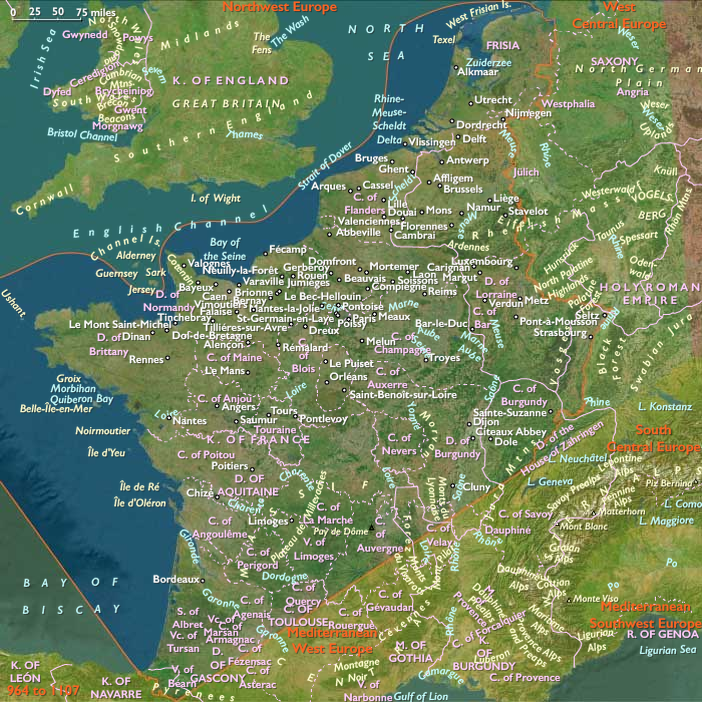
On April 19, 1044, Gothelo I ("the Great"), Duke of Upper and Lower Lorraine, passed away and was buried at the Abbey Church of Bilzen. His death triggered a major succession crisis, as Emperor Henry III refused to allow Gothelo’s son, Godfrey II ("the Bearded"), to inherit both duchies. This imperial intervention led to a twelve-year rebellion in Lotharingia, as Godfrey, supported by the Counts of Flanders and Leuven, resisted Henry III’s authority.
The Succession Crisis: Imperial Intervention
- Upon Gothelo I’s death, his son Godfrey II succeeded in Upper Lorraine.
- However, Emperor Henry III refused to allow him to inherit Lower Lorraine, breaking the precedent set by his father’s unification of both duchies in 1033.
- Instead, Henry III threatened to pass Lower Lorraine to Godfrey’s younger brother, Gothelo II, who was seen as incompetent and unfit for rule.
- Godfrey, displeased with this decision, began to gather allies to challenge imperial authority.
The Brewing Conflict (1044–1045)
- As tensions escalated, Godfrey II turned to King Henry I of France, seeking his support for a possible insurrection.
- Aware of Godfrey’s ambitions, Emperor Henry III summoned him to Aachen, where he was put on trial by his peers in Lower Lorraine.
- He was condemned, and his holdings, including the Duchy of Lower Lorraine and the County of Verdun, were confiscated.
- Facing imminent arrest or worse, Godfrey fled Aachen and immediately began arming for revolt.
Imperial Retaliation and the Road to Civil War
- Henry III, fresh from his victory over the Hungarians, wintered in Speyer in 1045, preparing for what was now an inevitable civil war in Lotharingia.
- The rebellion would pit Godfrey and his Flemish and Lotharingian allies against imperial forces loyal to Henry III, leading to twelve years of conflict.
- This Lotharingian revolt would be one of the longest and most dangerous challenges to Henry III’s reign, requiring multiple military campaigns to subdue.
Legacy and Consequences
- The division of Upper and Lower Lorraine by Henry III ensured that the two duchies would never again be ruled together, weakening Lotharingia as a political unit within the empire.
- The conflict between Godfrey and the emperor marked a major struggle between imperial authority and regional autonomy, a recurring theme in Holy Roman imperial history.
- The rebellion laid the groundwork for ongoing instability in the Low Countries, shaping the future political landscape of medieval Lotharingia.
The Lotharingian War (1044–1056) was one of the most significant feudal revolts of the 11th century, illustrating the fragility of imperial rule over powerful regional lords like Godfrey the Bearded.
Locations
People
- Godfrey III, Duke of Lower Lorraine
- Gothelo I
- Henry I of France
- Henry III, Holy Roman Emperor
- Peter, King of Hungary
Groups
- Germans
- Hungarian people
- Flanders, County of
- German, or Ottonian (Roman) Empire
- France, (Capetian) Kingdom of
- Lorraine, (second) Duchy of
- Lorraine (Lothier), Lower, (second) Duchy of
Commodoties
Subjects
Regions
Subregions
Years: 1044 - 1044
Locations
People
- Godfrey III, Duke of Lower Lorraine
- Gothelo I
- Henry I of France
- Henry III, Holy Roman Emperor
- Peter, King of Hungary
Groups
- Germans
- Hungarian people
- Flanders, County of
- German, or Ottonian (Roman) Empire
- France, (Capetian) Kingdom of
- Lorraine, (second) Duchy of
- Lorraine (Lothier), Lower, (second) Duchy of
Commodoties
Subjects
Regions
Subregions