
…Goguryeo's capital Pyongyang. However, contrary to …
Years: 612 - 612
…Goguryeo's capital Pyongyang.
However, contrary to the desires of the generals, Emperor Yang orders that their tactical decisions must first be submitted to and approved by him before they can be carried out.
Thus all the Goguryeo forts and cities are able to withstand Sui forces and thus Manchuria does not have much of a chance to be conquered.
Emperor Yang, however, makes a new plan to keep the Goguryeo forts at bay while sending another army of three hundred and fifty thousand troops, alongside the navy, to siege the Goguryeo capital.
The navy arrives first and under a hastily given order, the navy attacks the capital but is defeated by ambush.
The navy then waits for the land army to arrive.
The supply of food has also been delayed much and many Sui soldiers die of famine.
Then the Goguryeo General Eulji Meundeok rallies Goguryeo forces and constantly ambushes Sui forces while feigning retreat.
The Sui army reaches the Salsu (Chongchon River), but Eulji and the Goguryeo forces are waiting in ambush.
A dam had been made at the Salsu River to make the river seem it is shallow.
When the Sui army is in the middle of the River, the dam is opened and many Sui soldiers drown.
Out of the three hundred and five thousand men that had entered the river, only twenty-seven hundred soldiers escape death.
Thus the Sui army, or what is left of it, makes a speedy retreat retreats back to the Liaodong Peninsula.
This war, which Gorguryeo eventually wins, leaves the Sui dynasty with devastating losses in soldiers, money and support from the people.
Crippled by the enormous loss of manpower and resources as a result of its Korean campaigns, the Sui dynasty soon starts to crumble from within and will finally be brought down by internal strife, to be replaced soon thereafter by the Tang.
Locations
People
Groups
- Korean people
- Chinese (Han) people
- Goguryeo (Koguryo), Kingdom of
- Sui Dynasty (Imperial Chinese dynasty)
- Eastern (Göktürk) Qaghans
- Western Turkic Khaganate
Topics
Commodoties
Subjects
Regions
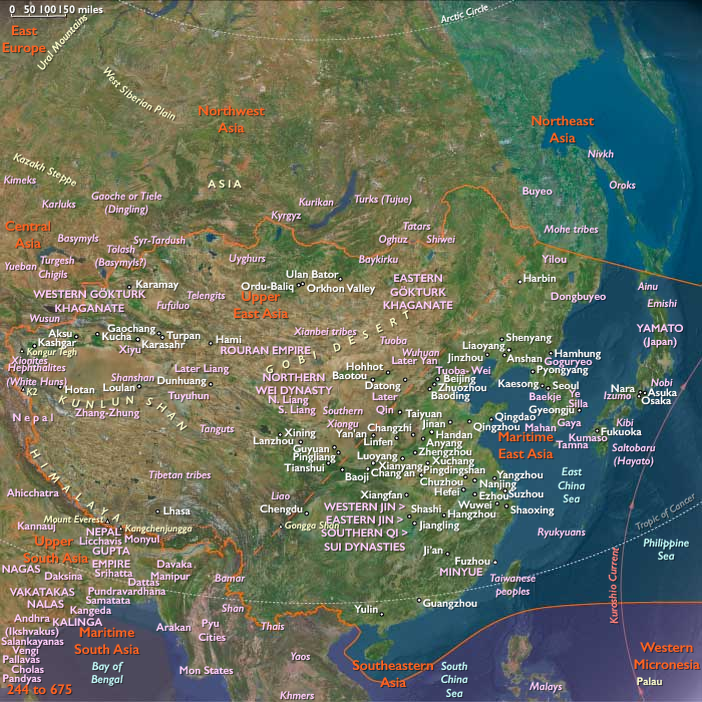
Subregions
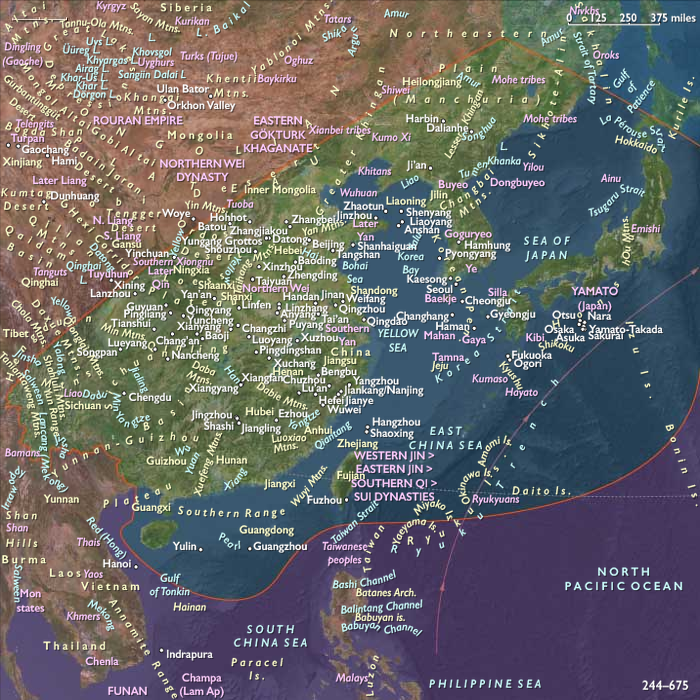
Years: 612 - 612
Locations
People
Groups
- Korean people
- Chinese (Han) people
- Goguryeo (Koguryo), Kingdom of
- Sui Dynasty (Imperial Chinese dynasty)
- Eastern (Göktürk) Qaghans
- Western Turkic Khaganate
Topics
Commodoties
Subjects
Regions
Subregions