
According to South Korean historiography, however, it …
Years: 244 - 387
According to South Korean historiography, however, it is the glories of a third kingdom that are most important in founding the nation.
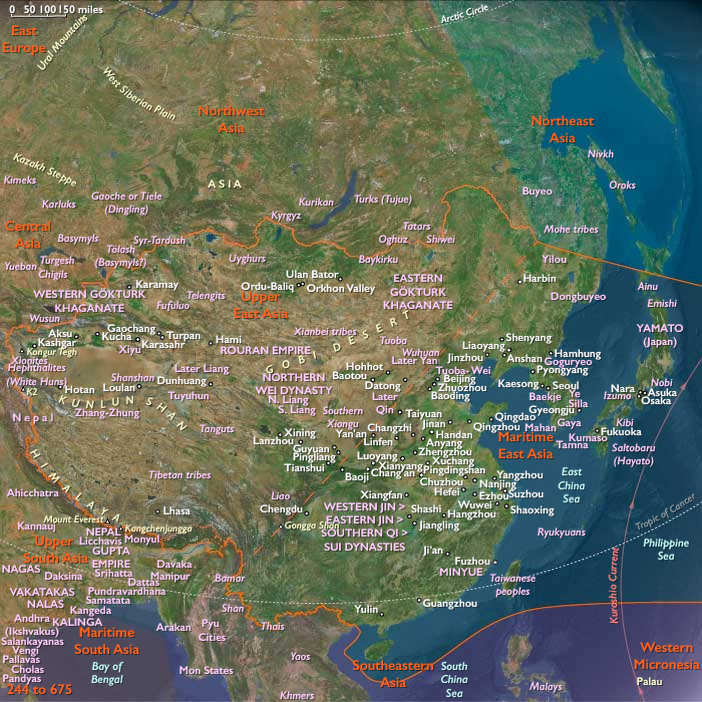
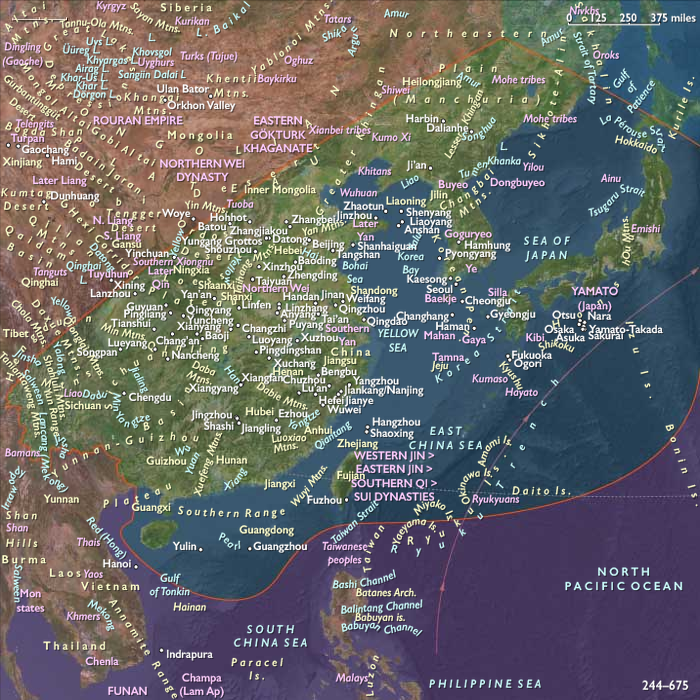
Silla eventually becomes the repository of a rich and cultured ruling elite, with its capital at Kyongju in the southeast, north of the modern port of Pusan.
The military men who will rule South Korea, either as dictators or elected leaders beginning in 1961, will all come from this region, and most South Korean historians will consider Silla's historical lineage as predominant.
It is the Baekje legacy that will suffer in divided Korea, as Koreans of other regions and historians in both North Korea and South Korea discriminate against the people of the Cholla provinces in the southwest of the peninsula, but taken together, the Three Kingdoms will continue to influence Korean history and political culture.
Koreans will often assume that regional traits that they like or dislike have their origins in the Three Kingdoms period.
Locations
Groups
- Korean people
- Buddhism
- Han Dynasty (Western)
- Buyeo, Kingdom of
- Mahan Confederacy
- Jinhan confederacy
- Byeonhan Confederacy
- Silla, Kingdom of
- Goguryeo (Koguryo), Kingdom of
- Baekje (or Paekche), Kingdom of
- Chinese (Han) people
- Chinese Empire, Tung (Eastern) Han Dynasty
Topics
Commodoties
Subjects
Regions
Subregions
Years: 244 - 387
Locations
Groups
- Korean people
- Buddhism
- Han Dynasty (Western)
- Buyeo, Kingdom of
- Mahan Confederacy
- Jinhan confederacy
- Byeonhan Confederacy
- Silla, Kingdom of
- Goguryeo (Koguryo), Kingdom of
- Baekje (or Paekche), Kingdom of
- Chinese (Han) people
- Chinese Empire, Tung (Eastern) Han Dynasty
Topics
Commodoties
Subjects
Regions
Subregions