
Christopher Marlowe had used the German legend …
Years: 1808 - 1808
Christopher Marlowe had used the German legend of the historical Johann Georg Faust and his pact with the Devil, exchanging his soul for unlimited knowledge and worldly pleasures, as the basis for his more ambitious play, The Tragical History of Doctor Faustus (published around 1604 but possibly written as early as 1587).
Another important version of the incredible legend is the play Faust, written by the German author Johann Wolfgang von Goethe.
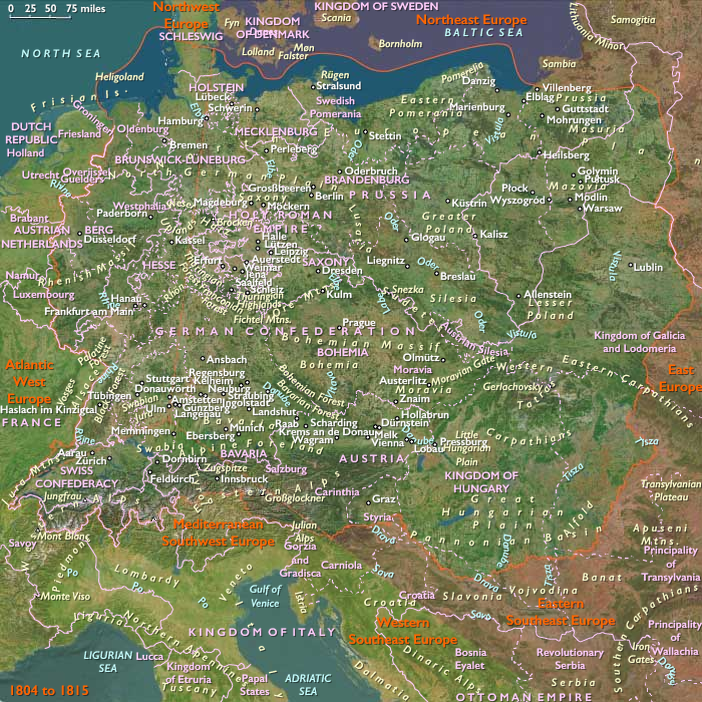
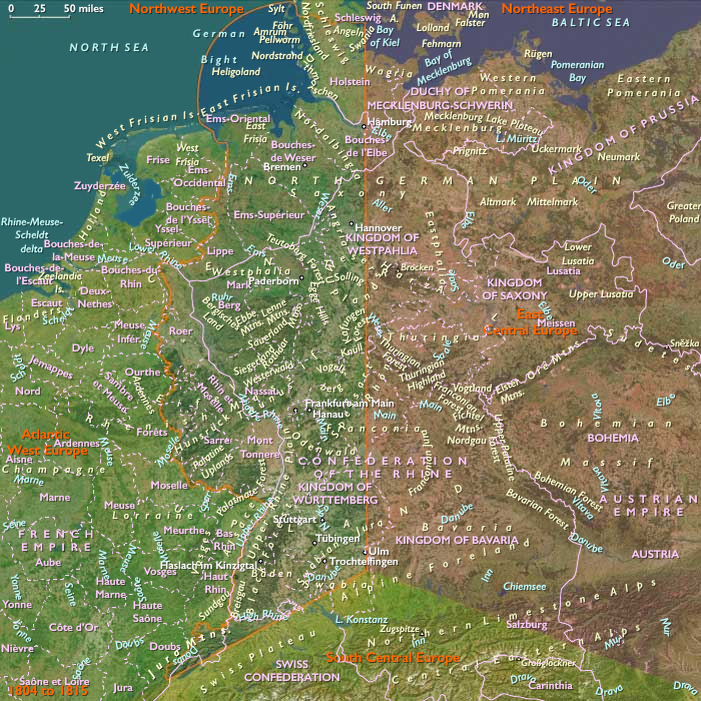
The first part, which is the one more closely connected to the earlier legend, is published in Tübingen in 1808.
Goethe's Faust complicates the simple Christian moral of the original legend.
A hybrid between a play and an extended poem, Goethe's two-part "closet drama" is epic in scope.
It gathers together references from Christian, medieval, Roman, eastern, and Hellenic poetry, philosophy, and literature.
The composition and refinement of Goethe's own version of the legend will occupy him for over sixty years (though not continuously).
The final version, published after his death, will be recognized as a great work of German literature.
The story concerns the fate of Faust in his quest for the true essence of life ("was die Welt im Innersten zusammenhält").
Frustrated with learning and the limits to his knowledge, power, and enjoyment of life, he attracts the attention of the Devil (represented by Mephistopheles), who makes a bet with Faust that he will be able to satisfy him; a notion that Faust is incredibly reluctant towards, as he believes this happy zenith will never come.
This is a significant difference between Goethe's "Faust" and Marlowe's; Faust is not the one who suggests the wager.
In the first part, Mephistopheles leads Faust through experiences that culminate in a lustful relationship with Gretchen, an innocent young woman.
Gretchen and her family are destroyed by Mephistopheles' deceptions and Faust's desires.
Part one of the story ends in tragedy for Faust, as Gretchen is saved but Faust is left to grieve in shame.
Locations
People
Groups
Topics
Subjects
Regions
Subregions
Years: 1808 - 1808
Locations
People
Groups
Topics
Subjects
Regions
Subregions