
Godfrey, once in Germany again, makes his …
Years: 1056 - 1056
October
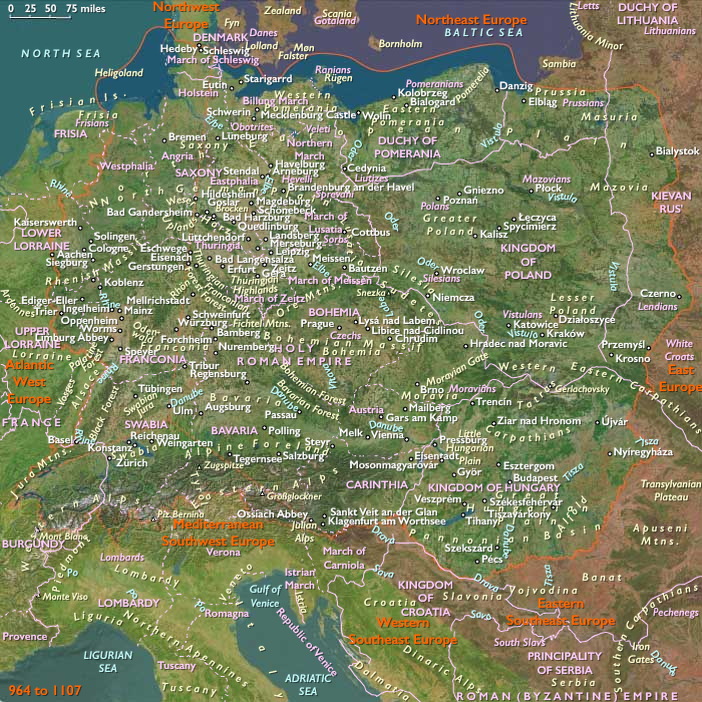
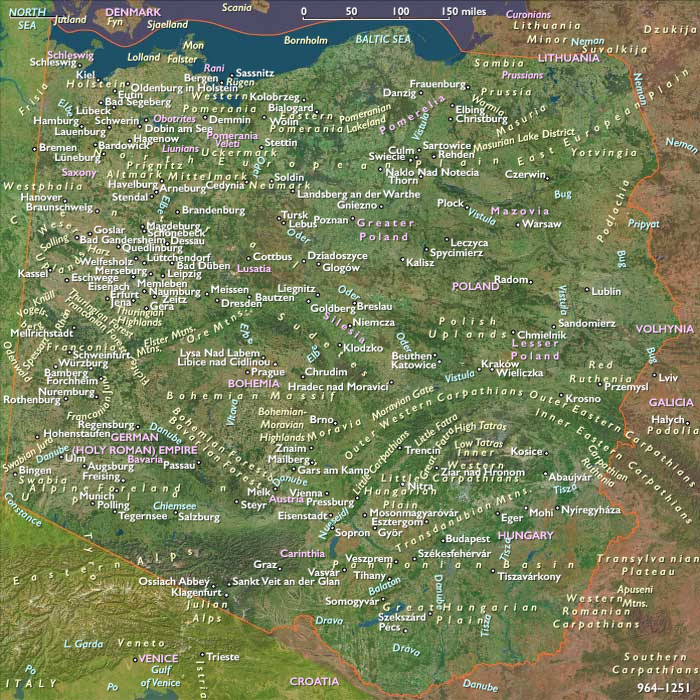
Godfrey, once in Germany again, makes his final peace, and Henry goes to the northeast to deal with a Slav uprising after the death of William of Meissen.
He falls ill on the way and takes to bed.
He frees Beatrice and Matilda and has those with him swear allegiance to the young Henry, whom he commends the pope, present.
Henry, not yet forty, dies on October 5 at Bodfeld, the imperial hunting lodge in the Harz Mountains.
His heart goes to Goslar, his body to Speyer, to lie next to his father's in the family vault in the cathedral of Speyer.
He has been one of the most powerful of the Holy Roman Emperors: his authority as king in Burgundy, Germany, and Italy had only rarely been questioned, his power over the church is at the root of what the reformers had sponsored will later fight against in his son, and his achievement in binding to the empire her tributaries is clear.
Nevertheless, his reign is often pronounced a failure in that he apparently left problems far beyond the capacities of his successors to handle.
The Investiture Controversy is largely the result of his church politics, though his popemaking had given the Roman diocese to the reform party.
He had united all the great duchies save Saxony to himself at one point or another but gave them all away.
His most enduring and concrete monument may be the impressive palace (kaiserpfalz) at Goslar.
Locations
People
- Agnes of Poitou
- Andrew I of Hungary
- Baldwin V of Flanders
- Beatrice of Bar
- Bernard II
- Casimir I the Restorer
- Godfrey III, Duke of Lower Lorraine
- Henry III, Holy Roman Emperor
- Henry IV, Holy Roman Emperor
- Matilda of Tuscany
Groups
- Saxony, Duchy of
- Hamburg, Archbishopric of, and Bremen, Bishopric of
- Flanders, County of
- Bohemia, Duchy of
- Cologne, Electorate of
- German, or Ottonian (Roman) Empire
- Hungary, Kingdom of
- Poland of the first Piasts, Kingdom of
- Lorraine (Lothier), Lower, (second) Duchy of
- Christians, Roman Catholic
Topics
Commodoties
Subjects
Regions
Subregions
Years: 1056 - 1056
October
Locations
People
- Agnes of Poitou
- Andrew I of Hungary
- Baldwin V of Flanders
- Beatrice of Bar
- Bernard II
- Casimir I the Restorer
- Godfrey III, Duke of Lower Lorraine
- Henry III, Holy Roman Emperor
- Henry IV, Holy Roman Emperor
- Matilda of Tuscany
Groups
- Saxony, Duchy of
- Hamburg, Archbishopric of, and Bremen, Bishopric of
- Flanders, County of
- Bohemia, Duchy of
- Cologne, Electorate of
- German, or Ottonian (Roman) Empire
- Hungary, Kingdom of
- Poland of the first Piasts, Kingdom of
- Lorraine (Lothier), Lower, (second) Duchy of
- Christians, Roman Catholic
Topics
Commodoties
Subjects
Regions
Subregions