
Filters:
Upon his appointment as Duke of …
Years: 1012 - 1012
Upon his appointment as Duke of Lower Lorraine in 1012, Godfrey II of Verdun relinquished his previous holdings in Verdun, transferring them to his brother Frederick. This strategic decision was likely made to ensure continued family control over the city while allowing Godfrey to focus on the stabilization of Lower Lorraine.
Reasons for the Transfer
- Imperial Service: As Duke of Lower Lorraine, Godfrey II’s primary duty was to secure the imperial border and suppress feudal unrest in the region. By entrusting Verdun to his brother, he could fully commit to governing Lower Lorraine.
- Strengthening Family Influence: The House of Ardennes-Verdun already held substantial influence in Upper and Lower Lorraine. By keeping Verdun within the family, Godfrey ensured continued imperial support and local loyalty.
- Frederick’s Capability: Frederick, likely experienced in military and administrative matters, was a natural choice to assume authority over Verdun, a city of key economic and strategic importance.
Impact and Legacy
- The transfer allowed Godfrey II to consolidate his power in Lower Lorraine, while Verdun remained in trusted hands.
- The move reinforced the House of Ardennes-Verdun's hold over Lotharingia, ensuring that its members continued to dominate imperial politics in the region.
- Verdun’s control under Frederick further strengthened the imperial presence along the Meuse River, a key artery for trade and military movements between France and the Holy Roman Empire.
This redistribution of power within the Ardennes-Verdun family reflected the pragmatic feudal governance strategies of the period, ensuring that imperial loyalists held strategic strongholds while preventing internal conflicts.
Locations
People
Groups
- Frisians
- Lorraine (Lothier), Upper, Duchy of
- Lorraine (Lotharingia), Lower, (first) Duchy of
- German, or Ottonian (Roman) Empire
- France, (Capetian) Kingdom of
Subjects
Regions
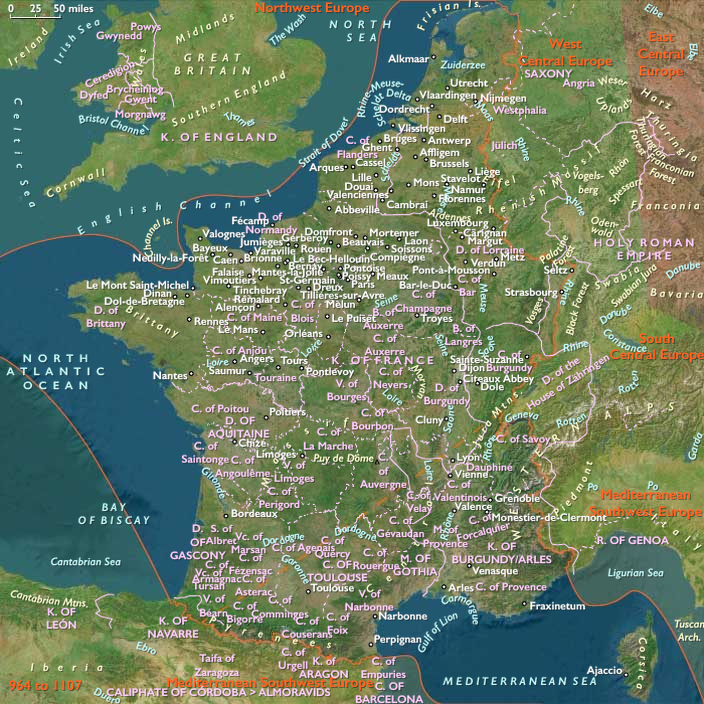
Subregions
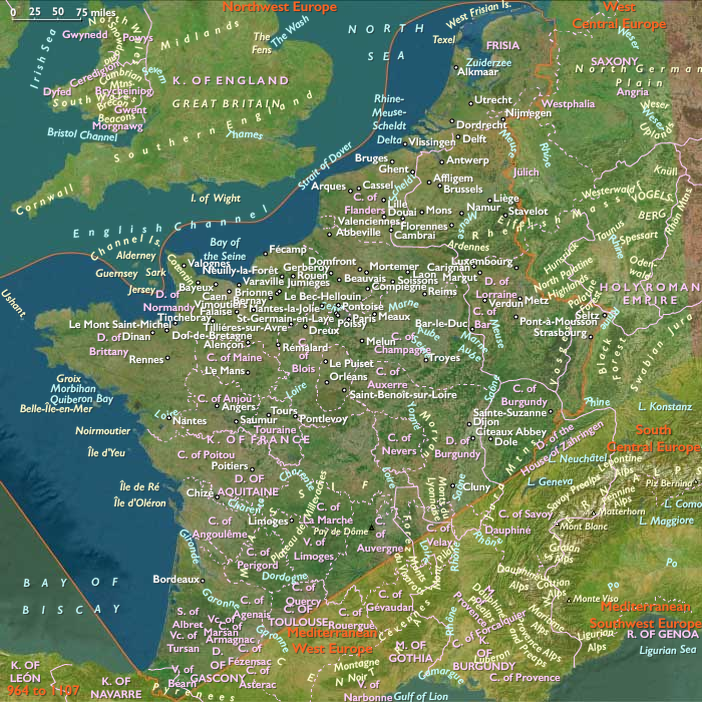
Related Events
Showing 4 events out of 4 total
Years: 1012 - 1012
Locations
People
Groups
- Frisians
- Lorraine (Lothier), Upper, Duchy of
- Lorraine (Lotharingia), Lower, (first) Duchy of
- German, or Ottonian (Roman) Empire
- France, (Capetian) Kingdom of
Subjects
Regions
Subregions