
Given the Persians’ return to Greece after …
Years: 479BCE - 479BCE
Given the Persians’ return to Greece after the small-scale humiliation of Marathon in 490, there can be no immediate certainty that they will abandon their plans to conquer Greece after the far greater humiliations of 480 and 479.
A leader is required in the event of another Persian return.
The eastern Greeks of the islands and mainland feel themselves particularly vulnerable and appeal to the natural leader, Sparta.
The Spartans' proposed solution, a plan to evacuate Ionia and resettle its Greek inhabitants elsewhere, is unacceptable; this would be a remarkable usurpation of Athens' colonial or pseudocolonial role as well as a traumatic upheaval for the victims.
Samos, Chios, Lesbos, and other islanders are received into the Hellenic League.
With the Persian menace removed, however, petty squabbling begins among the members of the Greek alliance.
Sparta, feeling that its job is completed, leaves the association, and Athens assumes domination of the league.
As Sparta is as much a prisoner of the helot problem as ever, she cannot rely on the loyalty of Arcadia or the Peloponnese generally: Mantineia and Elis had sent their contingents to the Battle of Plataea suspiciously late.
Spartan worries about Arcadia are relevant to this “Great Refusal” of leadership in 479, which makes possible the coming Athenian empire.
Locations
Groups
- Athens, City-State of
- Lesbos, Greek City-State of
- Greece, classical
- Persian people
- Samos, Ionian Greek city-state of
- Chios, City-State of
- Sparta, Kingdom of
- Peloponnesian League (Spartan Alliance)
- Boeotian League
- Achaemenid, or First Persian, Empire
Topics
- Younger Subboreal Period
- Iron Age Europe
- Greek colonization
- Iron Age Cold Epoch
- Classical antiquity
- Greco-Persian Wars, Early
- Persian Invasion of Greece, Second
- Plataea, Battle of
Commodoties
Subjects
Regions
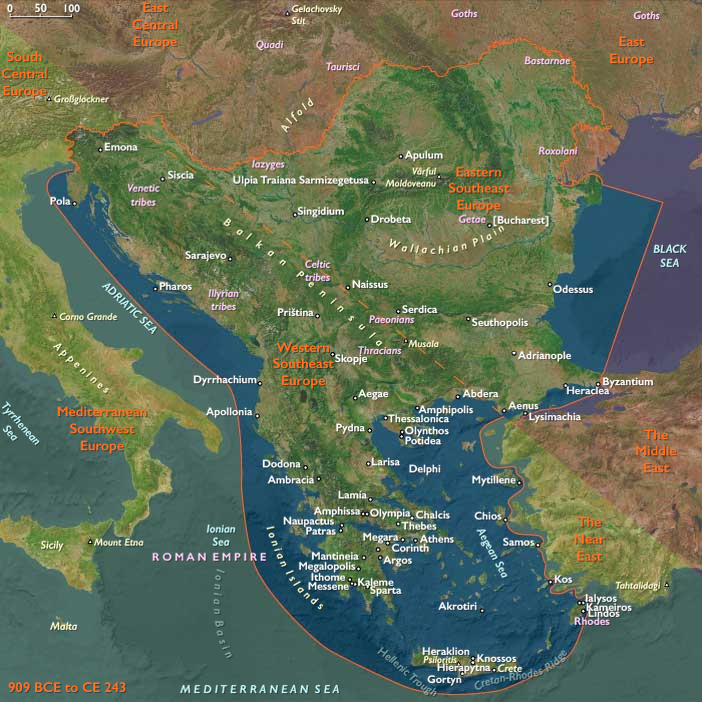
Subregions
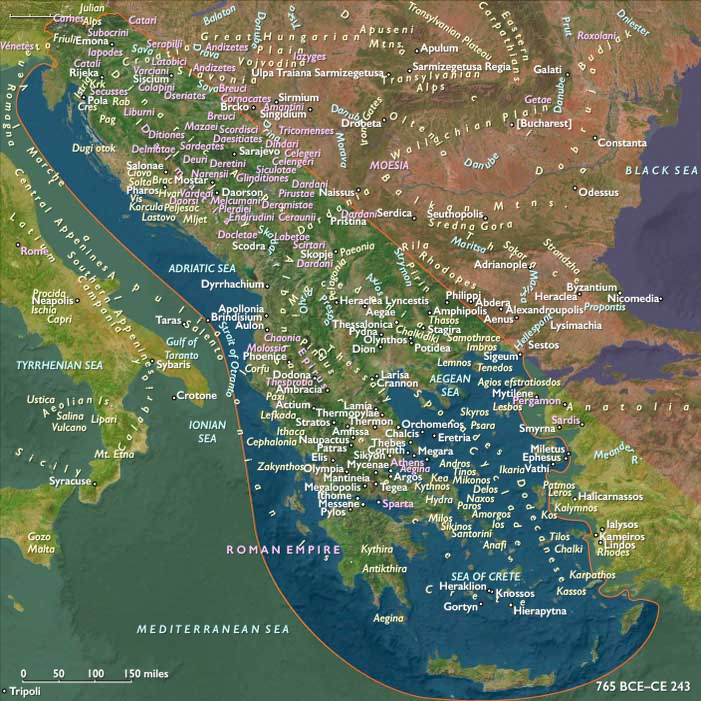
Related Events
Showing 10 events out of 65565 total
Years: 479BCE - 479BCE
Locations
Groups
- Athens, City-State of
- Lesbos, Greek City-State of
- Greece, classical
- Persian people
- Samos, Ionian Greek city-state of
- Chios, City-State of
- Sparta, Kingdom of
- Peloponnesian League (Spartan Alliance)
- Boeotian League
- Achaemenid, or First Persian, Empire
Topics
- Younger Subboreal Period
- Iron Age Europe
- Greek colonization
- Iron Age Cold Epoch
- Classical antiquity
- Greco-Persian Wars, Early
- Persian Invasion of Greece, Second
- Plataea, Battle of
Commodoties
Subjects
Regions
Subregions