
Filters:
The Roman-Veneti War and the Naval Battle …
Years: 56BCE - 56BCE
The Roman-Veneti War and the Naval Battle of Quiberon Bay (56 BCE)
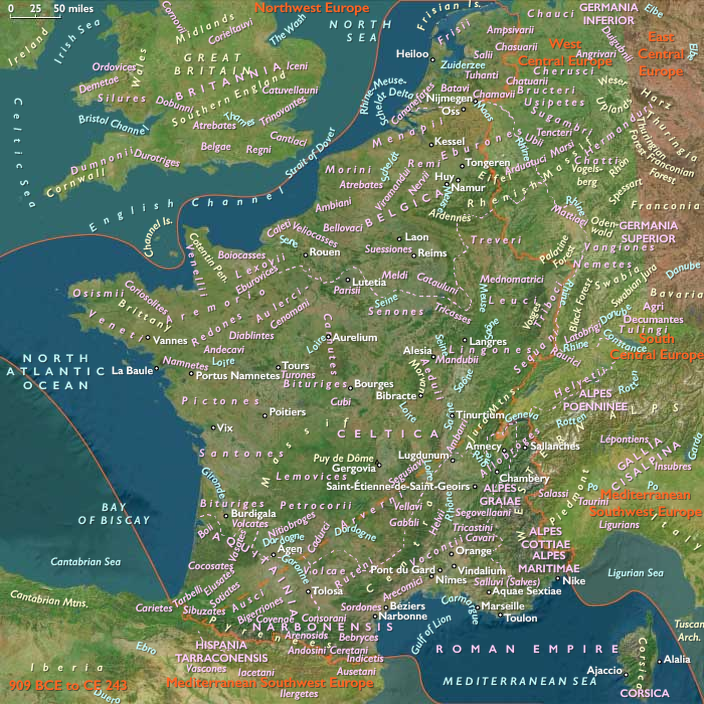
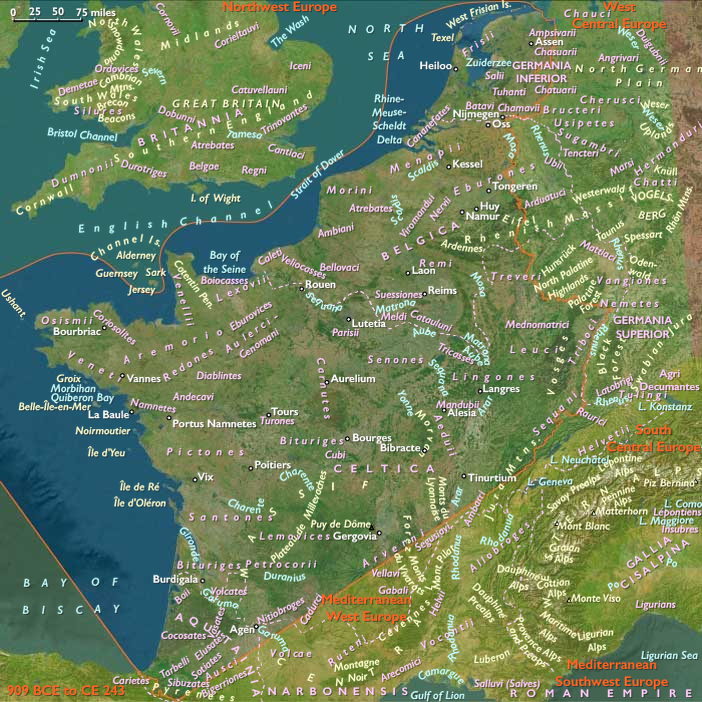
The Veneti rebellion in 56 BCE posed a major challenge to Julius Caesar’s forces, as their strongholds were heavily fortified by geography and their naval superiority in the Atlantic made them difficult to subdue. The Romans, unaccustomed to open-sea warfare, struggled against the Veneti’s tactical advantage but ultimately prevailed through perseverance and ingenuity.
The Geographic and Naval Advantages of the Veneti
- Veneti strongholds were built on natural defensive positions, becoming islands at high tide and peninsulas at low tide, making land-based sieges nearly impossible.
- Roman naval forces attempting amphibious assaults risked being trapped on the rocks when the tide ebbed, further complicating operations.
- The Veneti's superior ships were:
- Larger and stronger than Roman galleys, built of thick oak planks resistant to ramming.
- Taller, allowing them to rain down projectiles on attacking Roman vessels.
- Highly maneuverable under sail, making boarding impossible for the Romans.
- Crewed by expert sailors, with intimate knowledge of tides and coastal waters, further frustrating Roman tactics.
Caesar’s Engineering and Tactical Adaptation
- Recognizing that sieging individual strongholds was ineffective, Caesar ordered the construction of moles and siegeworks to serve as permanent bases of operations.
- However, whenever one stronghold was threatened, the Veneti would simply evacuate by sea and relocate to another, forcing the Romans to repeat their efforts.
- Realizing that eliminating the enemy fleet was the only way to win decisively, Caesar ordered his men to construct a fleet to challenge the Veneti at sea.
- However, direct combat proved futile, as:
- Ramming was ineffective due to the thick hulls of Veneti ships.
- Boarding attempts failed, as the Veneti’s superior ship height allowed them to repel attackers easily.
The Battle of Quiberon Bay: Roman Innovation Secures Victory
- Caesar’s legate Decimus Junius Brutus Albinus took command of the Roman fleet in a decisive naval battle off Quiberon Bay.
- Roman sailors used long billhooks to slash at the halyards of the enemy ships as they sailed past.
- Since the Veneti’s leather mainsails were fastened outboard, cutting the halyards caused the sails to collapse onto the deck, rendering the ships completely immobile.
- Now helpless, the Veneti ships were easily boarded, and the entire fleet fell into Roman hands.
The Fall of the Veneti and Roman Retribution
- With their naval supremacy lost, the coastal strongholds of the Veneti were stormed by Roman legions.
- Caesar executed or enslaved the entire population, demonstrating Rome’s ruthless response to rebellion.
- This brutal punishment served as a warning to other Gallic tribes, reinforcing Roman dominance in Gaul.
Significance of the Roman Victory
- The Veneti campaign was one of Rome’s first major naval engagements in the Atlantic, showcasing Roman adaptability in foreign warfare.
- The defeat of the Veneti eliminated a major obstacle to Roman control over western Gaul, allowing Caesar to turn his attention to other rebellious tribes.
- The harsh punishment inflicted on the Veneti set a precedent for Rome’s handling of future insurrections, ensuring that other Gallic tribes would think twice before resisting Roman rule.
The Battle of Quiberon Bay remains a testament to Roman persistence and tactical ingenuity, proving that even in unfamiliar waters, Rome could adapt and overcome seemingly superior enemies.
Locations
People
Groups
Topics
- Classical antiquity
- Pre-Roman Iron Age of Northern Europe
- Roman Age Optimum
- Roman Republic, Crisis of the
- Gallic Wars
Commodoties
Subjects
Regions
Subregions
Years: 56BCE - 56BCE
Locations
People
Groups
Topics
- Classical antiquity
- Pre-Roman Iron Age of Northern Europe
- Roman Age Optimum
- Roman Republic, Crisis of the
- Gallic Wars
Commodoties
Subjects
Regions
Subregions