
Ghazni, founded sometime in antiquity as a …
Years: 1151 - 1151
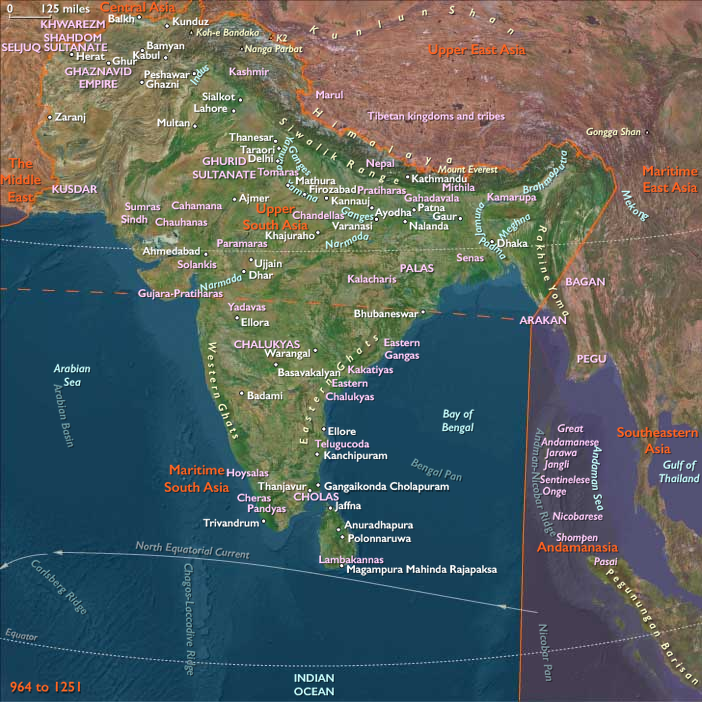
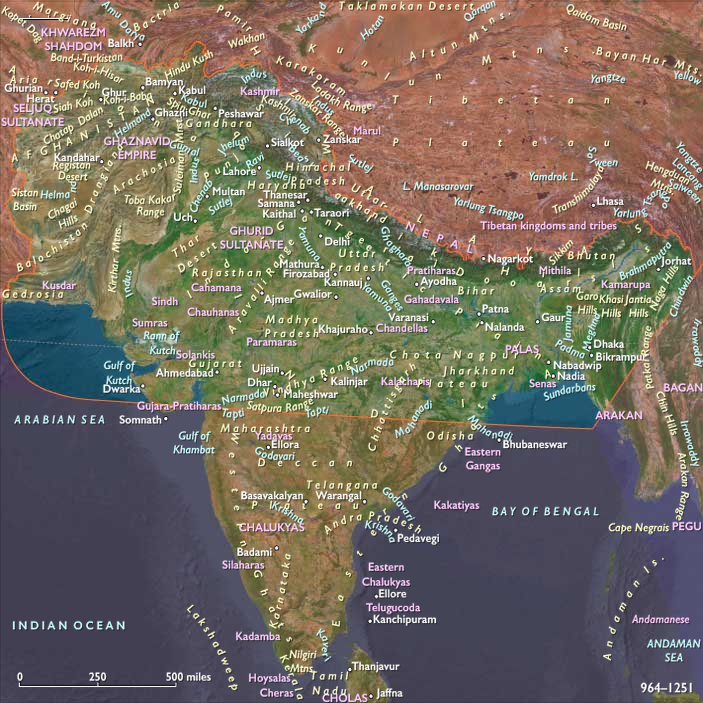
Ghazni, founded sometime in antiquity as a small market-town and mentioned by Ptolemy, had been a thriving Buddhist center before and during the seventh century CE.
In 683, Arab armies had brought Islam to the nearby regions.
Yaqub Saffari from Zaranj had reigned over the vast region.
After the city was rebuilt by Yaqub’s brother, it had become the dazzling capital of the Ghaznavid Empire from 994, encompassing much of northern India, Persia and Central Asia.
Many iconoclastic campaigns have been launched from Ghazni into India, resulting in large scale destruction of ancient temples, libraries and palaces.
The Ghaznavids had taken Islam to India and returned with fabulous riches taken from both Indian princes and temples.
Contemporary visitors and residents at Ghazni write with wonder of the ornateness of the buildings, the great libraries, the sumptuousness of the court ceremonies and of the wealth of precious objects owned by Ghazni’s citizens.
In order to avenge the death of his brothers, Ala al-Din Husayn, king of the Ghurid dynasty had launched a campaign against sultan Bahram-Shah of Ghazna in 1150 he Ghaznavid and Ghurid armies had met at Tiginabad and through the heroic efforts of Kharmil Sam-i Husain and Kharmil Sam-i Banji the Ghaznavid army was routed.
Bahram had rallied elements of his army at the hot springs, Jush-i Ab-i Garm, but was again routed and fled back to Ghazn.
Bahram had rallied the remaining elements of his army with the addition of the city's garrison, but again his army is routed and the city burned by the Ghurids.
Following this defeat, Bahram flees to the Ghaznavid territories in India.
Ghazna is now subjected to seven days of pillage and rapine, in which sixty thousand residents of the city are killed.
All the tombs of the Ghaznavid rulers, with the exception of Mahmud, Mas'ud and Ibrahim, are broken open and the remains burned.
Ala al-Din also destroys the city of Bust.
From these events, he gains the nickname, Jahānsūz (meaning the World Burner).
Locations
People
Groups
- Tajik people
- Persian people
- Muslims, Sunni
- Ghaznavids
- Turkmen people
- Seljuq Empire, Eastern capital
- Ghurid Sultanate
Topics
Commodoties
Subjects
Regions
Subregions
Related Events
Showing 10 events out of 48700 total
Years: 1151 - 1151
Locations
People
Groups
- Tajik people
- Persian people
- Muslims, Sunni
- Ghaznavids
- Turkmen people
- Seljuq Empire, Eastern capital
- Ghurid Sultanate
Topics
Commodoties
Subjects
Regions
Subregions