
Ghazan changes his first name to the …
Years: 1296 - 1296
Ghazan changes his first name to the Arab Mahmud as part of his conversion to Islam, and Islam gains popularity within Mongol territories.
Privately, Ghazan still practices Mongol Shamanism and worships Tengri, honoring his ancestors' worship of heaven as a kind of proto-Islamic monotheism.
He shows tolerance for multiple religions, encourages the original archaic Mongol culture to flourish, tolerates the Shiites, and respects the religions of his Georgian and Armenian client kings.
Ghazan therefore continues his forefather's approach toward religious tolerance.
When Ghazan learns that some Buddhist monks had feigned conversion to Islam due to their temples being earlier destroyed, he grants permission to all who wish to return to Tibet where they can freely follow their faith and be among other Buddhists.
The Mongol Yassa code remains in place and Mongol Shamans will remain politically influential throughout the reign of both Ghazan and his brother and successor Oljeitu, but ancient Mongol traditions will eventually go into decline after Oljeitu's demise.
Other religious upheaval in the Ilkhanate during Ghazan's reign is instigated by Nawruz, who issues a formal edict in opposition to other religions in the Ilkhanate.
Nawruz loyalists persecute Buddhists and Christians to such an extent that Iranian Buddhism never recovers, the Christian cathedral in the Mongol capital of Maragha is looted, and churches in Tabriz and Hamadan are destroyed.
Ghazan puts a stop to these exactions by issuing an edict exempting the Christians from the jizya (tax on non-Muslims), and reestablishes the Christian Patriarch Mar Yaballaha III in 1296.
Locations
People
Groups
- Buddhism
- Christians, Eastern (Diophysite, or “Nestorian”) (Church of the East)
- Islam
- Muslims, Shi'a
- Mongols
- Mongol Empire
- Chagatai Khanate
- Il-khanate
Topics
Commodoties
Subjects
Regions
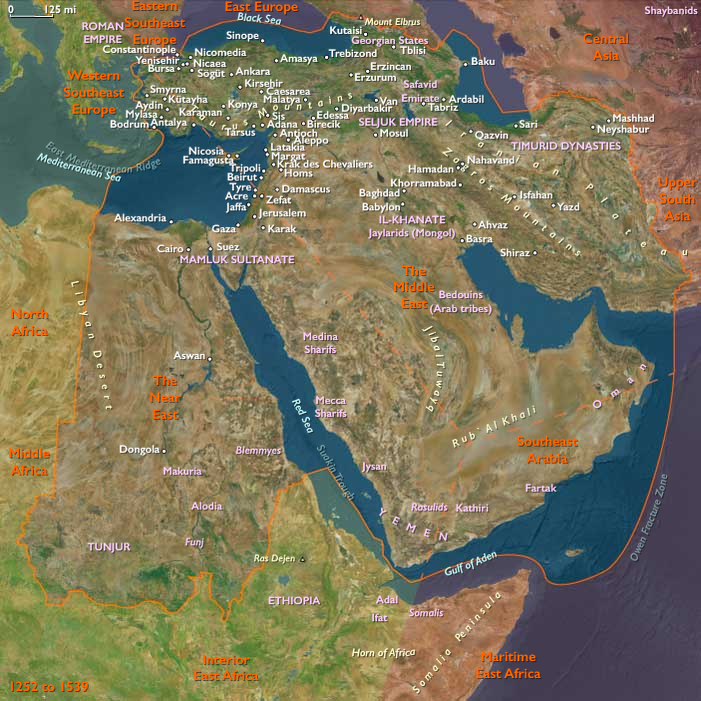
Subregions
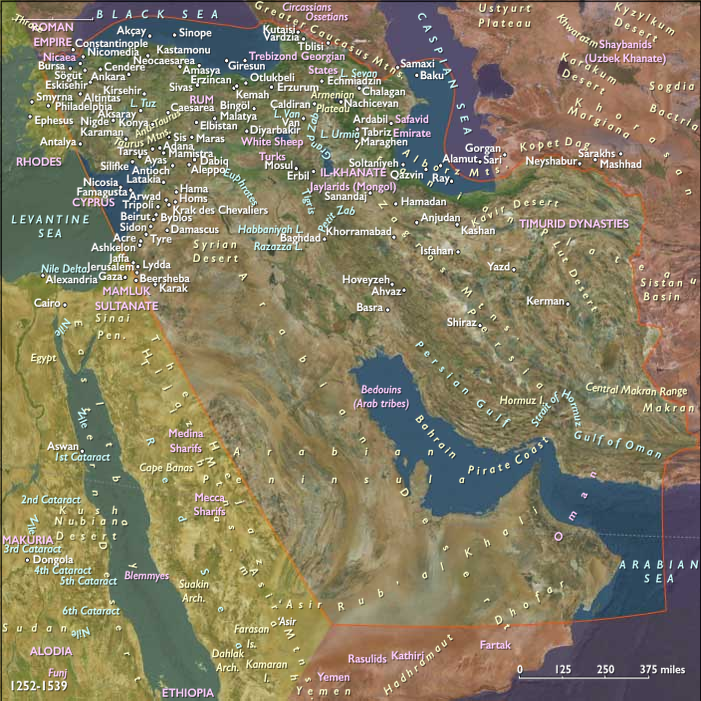
Related Events
Showing 10 events out of 45219 total
Years: 1296 - 1296
Locations
People
Groups
- Buddhism
- Christians, Eastern (Diophysite, or “Nestorian”) (Church of the East)
- Islam
- Muslims, Shi'a
- Mongols
- Mongol Empire
- Chagatai Khanate
- Il-khanate
Topics
Commodoties
Subjects
Regions
Subregions