
Gero, called the Great, had ruled an …
Years: 965 - 965
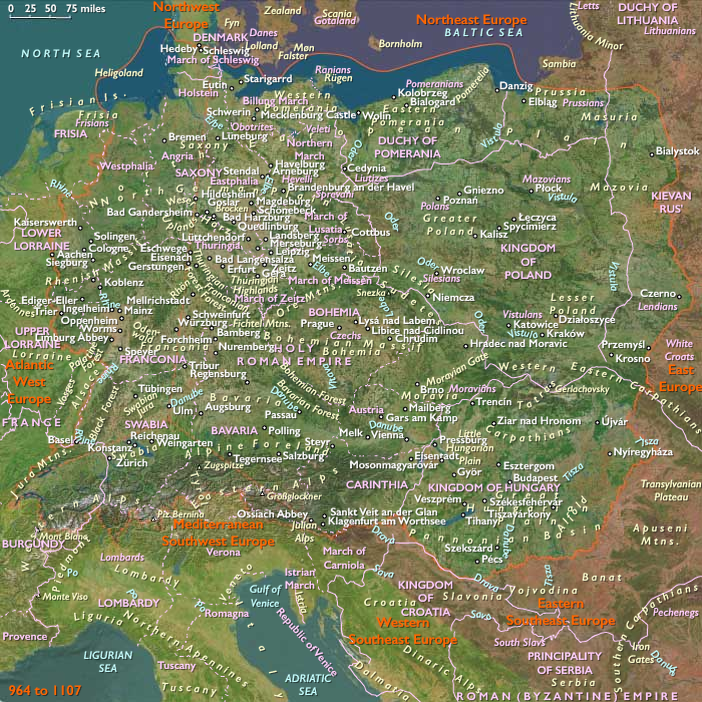
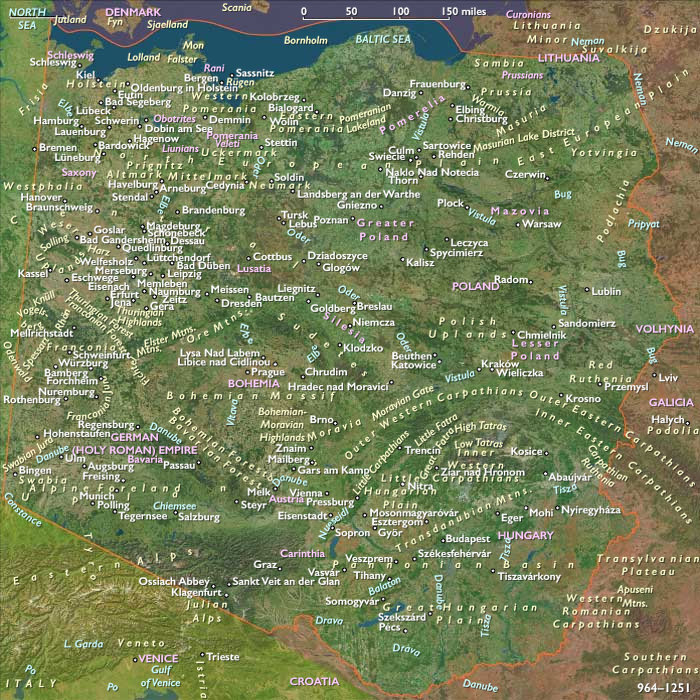
Gero, called the Great, had ruled an initially modest march centered on Merseburg, created probably for Thietmar (in the 920s) and passed to his two sons consecutively: Siegfried and Gero, who has expanded it into a vast territory named after him the marca Geronis.
During the mid-tenth century, he has been the leader of the Saxon Drang nach Osten, participating in general Saxon campaigns against the Slavs in 957, 959, and 960, as well as campaigning against the Wends and forcing Mieszko I of the Polans to pay tribute, grant land lien, and recognize German sovereignty during Otto's absence in Italy (962–963).
Lusatia, according to Widukind, had been subjected "to the last degree of servitude."
Gero is responsible for subjecting the Liutizi and Milzini (or Milciani) and extending German suzerainty over the whole territory between the Elbe and the Bober, reducing the native Slavic populace to serfdom and converting "tribute-paying peoples" into "census-paying peasants."
After his death in May, 965, the huge territory he had conquered is divided by the Emperor Otto into several different marches: the Northern March (under Dietrich of Haldensleben), the Eastern March (under Odo I), the March of Meissen (under Wigbert), the March of Merseburg (under Günther) and the March of Zeitz (under Wigger I).
Later, the Northern March will be subdivided into the marches of Landsberg, Lusatia, and Brandenburg.
Locations
People
Groups
- Polabian Slavs (West Slavs)
- March of Gero, or Marca Geronis
- Northern March
- Eastern March
- Meissen, March of
- Zeitz, March of
- Merseburg, March of
Subjects
Regions
Subregions
Related Events
Showing 10 events out of 27 total
Years: 965 - 965
Locations
People
Groups
- Polabian Slavs (West Slavs)
- March of Gero, or Marca Geronis
- Northern March
- Eastern March
- Meissen, March of
- Zeitz, March of
- Merseburg, March of
Subjects
Regions
Subregions