
As Germanic, Alanic, and Hunnic peoples in …
Years: 412 - 423
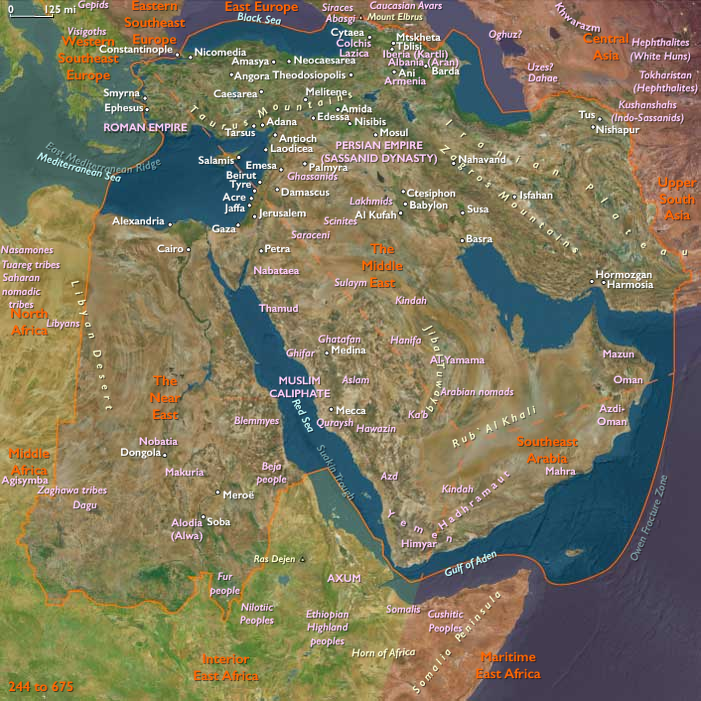
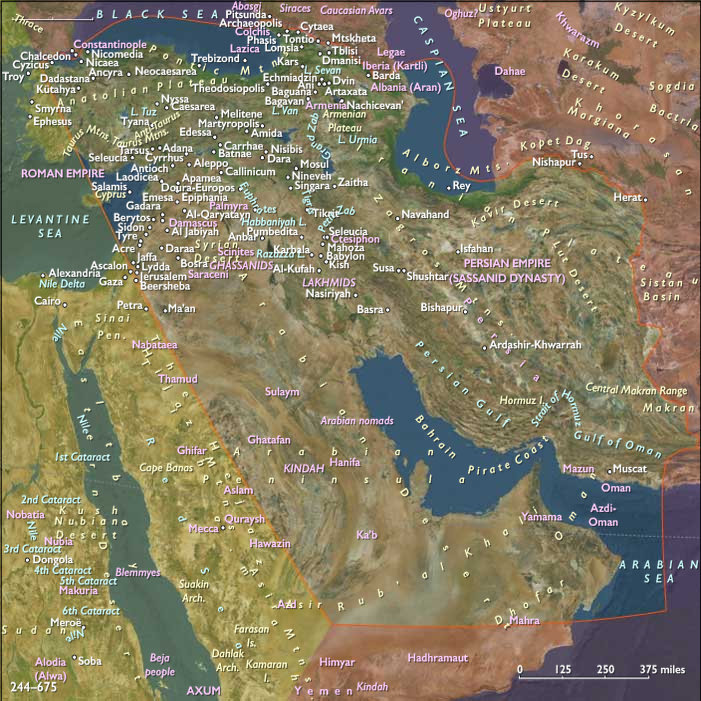
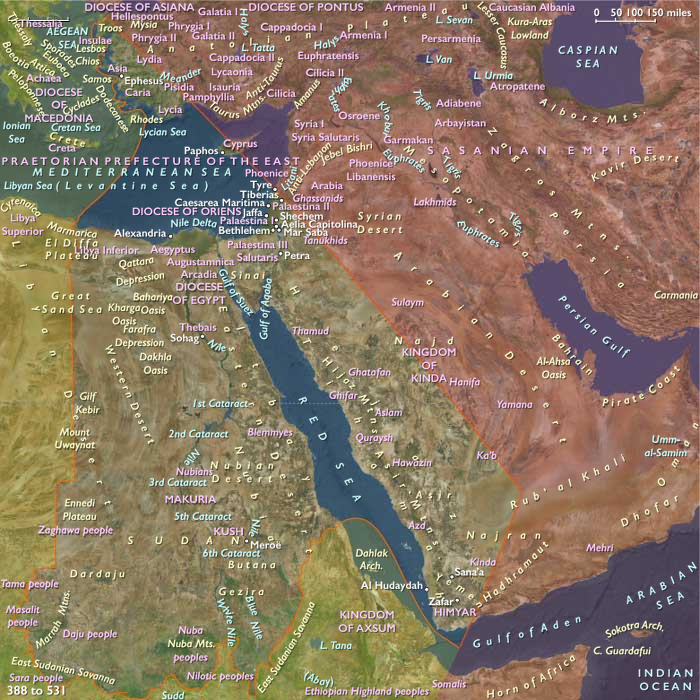
As Germanic, Alanic, and Hunnic peoples in invade the northern territories of the Roman Empire, Persia's northern borders are threatened first by a number of Hunnic peoples and then by the Hephthalites.
With both empires preoccupied by these threats, a largely peaceful period follows, interrupted only by two brief wars, the first in 421–422; the second will occur in 440.
Following the persecution of Christians in the Persian Empire by the Sassanid king Bahram V, which had come as a response to attacks by Christians against Zoroastrian temples; the Christian Eastern Roman Emperor Theodosius II declares war in 421 and obtains some victories, but in the end the two powers agree in 422 to sign a peace on the status quo ante.
Communication between Constantinople and Ctesiphon results in a one hundred-year peace, wherein the Persian ruler agrees to tolerate Christianity throughout the Sasanid empire; the Romans reciprocate by agreeing to tolerate Zoroastrianism throughout the Roman empire.
People
Groups
- Zoroastrians
- Alans (Sarmatian tribal grouping)
- Vandals (East Germanic tribe)
- Goths (East Germanic tribe)
- Germans
- Huns
- Persian Empire, Sassanid, or Sasanid
- Christianity, Nicene
- Hunnic Empire
- Roman Empire: Theodosian dynasty (Constantinople)
- Visigoths, Realm of the
- Gaul, Praetorian prefecture of
- Roman Empire, Western (Ravenna)
- Hephthalite Empire
- Visigothic Kingdom of Toulouse
Topics
- Migration Period
- Hun Raids on the Roman Empire
- Fall of the Western Roman Empire
- Vandal Raids on the Roman Empire
- Visigothic Raids on the Roman Empire, Later
- Roman–Sassanid War (421–422)
Subjects
Regions
Subregions
Years: 412 - 423
People
Groups
- Zoroastrians
- Alans (Sarmatian tribal grouping)
- Vandals (East Germanic tribe)
- Goths (East Germanic tribe)
- Germans
- Huns
- Persian Empire, Sassanid, or Sasanid
- Christianity, Nicene
- Hunnic Empire
- Roman Empire: Theodosian dynasty (Constantinople)
- Visigoths, Realm of the
- Gaul, Praetorian prefecture of
- Roman Empire, Western (Ravenna)
- Hephthalite Empire
- Visigothic Kingdom of Toulouse
Topics
- Migration Period
- Hun Raids on the Roman Empire
- Fall of the Western Roman Empire
- Vandal Raids on the Roman Empire
- Visigothic Raids on the Roman Empire, Later
- Roman–Sassanid War (421–422)
Subjects
Regions
Subregions