
Filters:
The Decline of Geoffrey III of Anjou: …
Years: 1065 - 1065
The Decline of Geoffrey III of Anjou: Military Failures and Excommunication (1062–1065)
By the mid-1060s, Geoffrey III of Anjou had proven incapable of defending his territory, suffering multiple territorial losses and political failures. His weak leadership led to the gradual erosion of Angevin power, culminating in his excommunication in 1065.
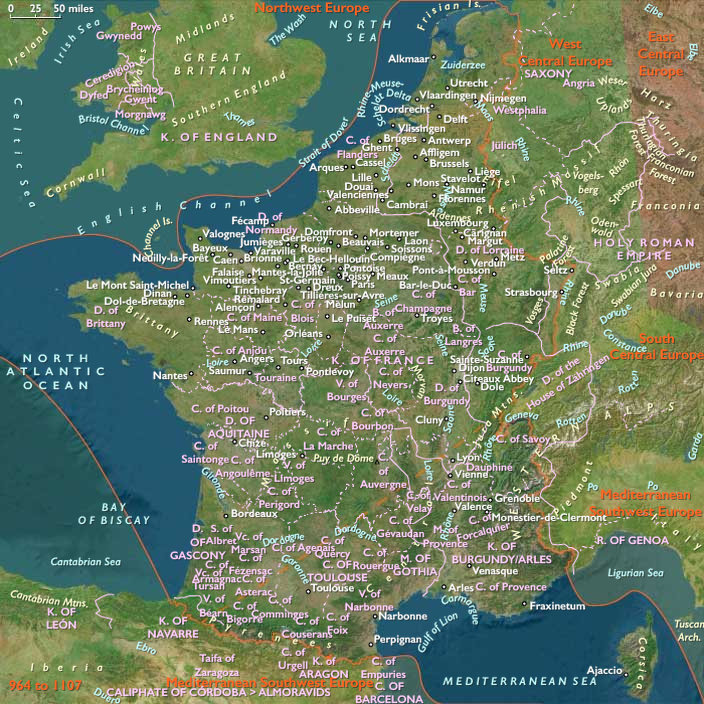
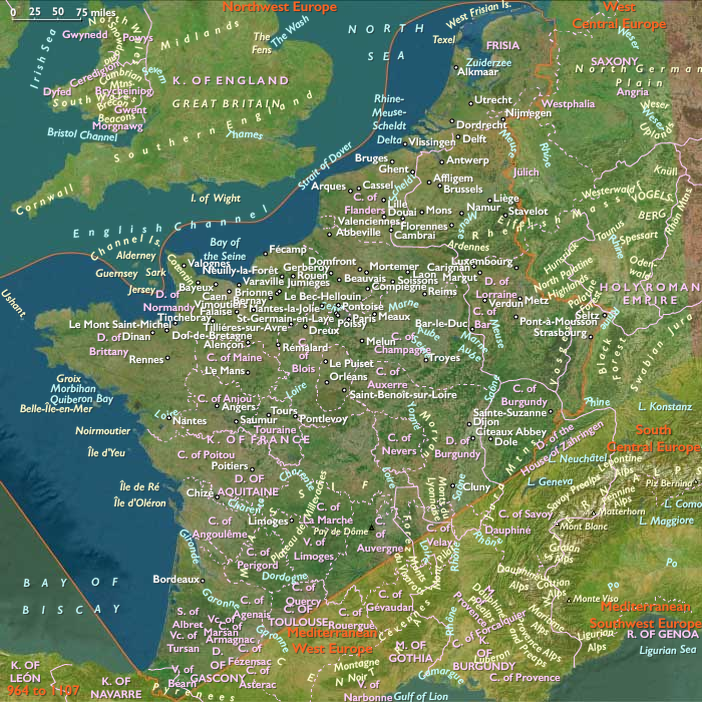
Failure to Defend Saintonge (1062)
- Geoffrey had granted Saintonge to his younger brother, Fulk IV ("le Réchin"), as an appanage.
- When Count Guy-Geoffroy of Poitou (William VIII of Aquitaine) attacked Saintonge in 1062, Geoffrey failed to intervene, leading to its loss.
- This betrayal alienated Fulk, further weakening Angevin internal unity.
The Loss of Maine (1063)
- In 1063, the County of Maine fell to Duke William of Normandy, further diminishing Angevin influence in northern France.
- Geoffrey, despite being the nominal overlord of Maine, failed to contest William’s conquest, reinforcing the perception that he was weak and ineffective.
Failure to Support His Vassals (1064)
- In 1064, Geoffrey abandoned Rainaldus of Château-Gontier, a loyal vassal, who had been captured by the Bretons.
- His failure to act led to growing discontent among the Angevin nobility, who increasingly saw him as an unreliable ruler.
Excommunication by Archbishop Barthelemy (1065)
- In 1065, Geoffrey attempted to interfere in the election of the Bishop of Le Mans, seeking to force his own candidate on the Church.
- This act angered Archbishop Barthelemy, who responded by excommunicating Geoffrey.
- Geoffrey’s conflict with the Church further isolated him politically, reinforcing his declining authority in Anjou.
Consequences and the Rise of Fulk IV ("le Réchin")
- By 1065, Geoffrey had lost key territories, failed his vassals, and been excommunicated, making his rule increasingly unsustainable.
- His brother, Fulk IV ("le Réchin"), began plotting against him, leading to Geoffrey’s eventual overthrow in 1068.
- The decline of Geoffrey III marked the beginning of internal strife in Anjou, weakening it as a regional power.
Legacy
- Geoffrey III’s military and political failures led to the gradual collapse of Angevin authority.
- His alienation of key vassals, failure to protect his lands, and opposition to the Church made him one of the weakest counts in Angevin history.
- His excommunication in 1065 was a final humiliation, demonstrating his waning power.
Geoffrey III’s mismanagement of Anjou paved the way for his downfall and the rise of his more capable brother, Fulk IV, who would take control of the county in 1068.
Locations
People
Groups
Commodoties
Subjects
Regions
Subregions
Years: 1065 - 1065
Locations
People
Groups
Commodoties
Subjects
Regions
Subregions