
Geneva is one of the last European …
Years: 1602 - 1602
December
Geneva is one of the last European strongholds where Protestants of other lands successfully seek refuge from persecution.
If Geneva, as a Protestant bastion, can be defeated, it will mean a great deal to Catholic hegemony of Europe.
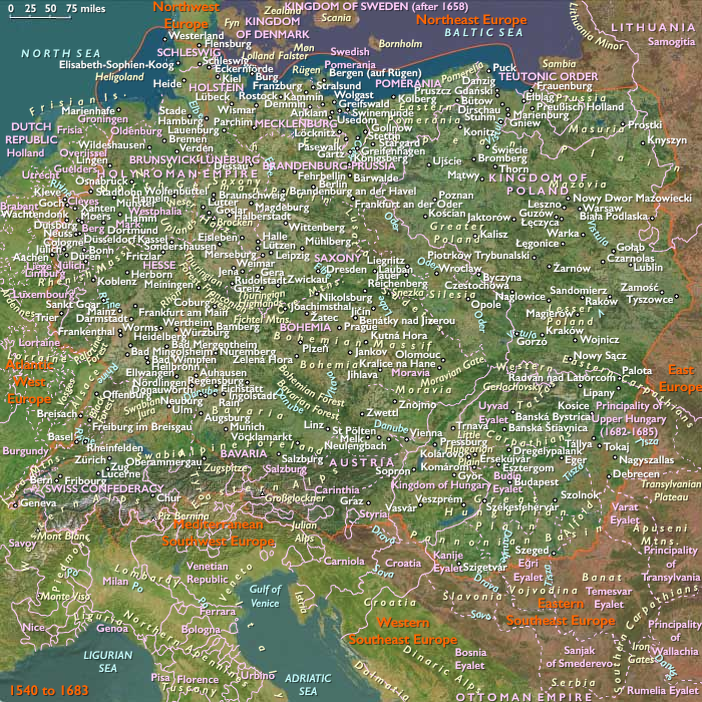
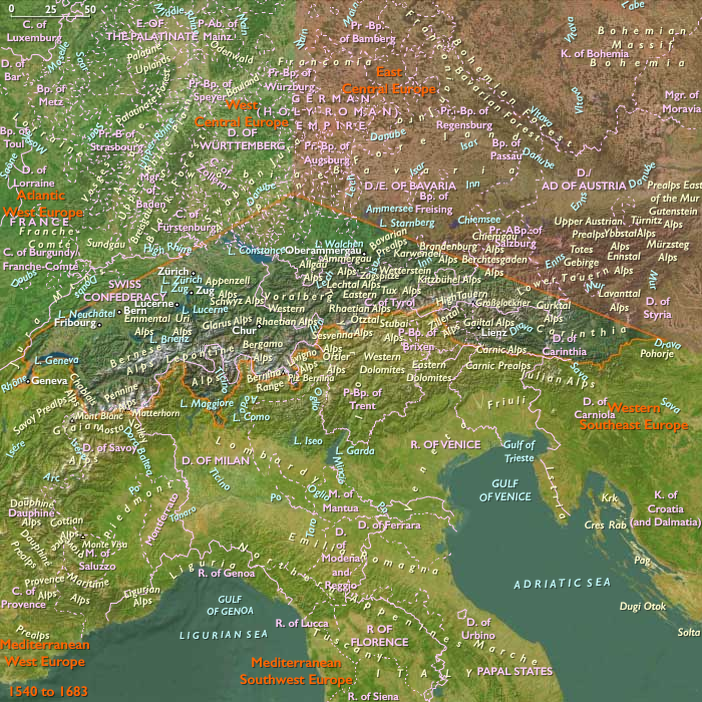
Charles Emmanuel, Duke of Savoy, has for years coveted the wealth of Geneva, which is not a member of the Swiss Confederation.
When Charles Emmanuel came to the throne of the House of Savoy in 1580, he longed to make Geneva his capital north of the Alps and crush Protestantism.
Pope Clement VIII has offered encouragement; in 1602 he appoints as Catholic bishop of Geneva Francis de Sales, an effective preacher who had recently been successful in re-Catholicizing the Chablais district of Savoy on the south side of Lake Geneva.
The forces of the Duke of Savoy, under the command of the seigneur d'Albigny, and those of Charles Emmanuel's brother-in-law, Philip III of Spain, launch an attack on the city-state on December 11 and December 12 (Old Style) 1602—the longest night of the year.
The troops march along the Arve River at night and assemble at Plainpalais, just outside the walls of Geneva, at 2 o'clock in the morning.
The original plan had been to send in a group of commandos to open the gate door and let the other troops in.
The Geneva citizens defeat the men by preventing them from scaling the wall (a climb in French is an escalade).
The night guard Isaac Mercier raises the alarm, church bells are rung, and the Genevois are alerted.
The populace fights alongside their town militia.
The duke's two thousand-plus mercenaries are beaten.
The Genevois lose eighteen men in the fighting; the Savoyards suffer fifty-four fatalities and the troops have to retreat.
Thirteen invaders who had been taken prisoner, including several well-born gentlemen, are summarily hanged the following day as thieves, since they cannot be treated as prisoners of war, peace having been repeatedly sworn on the part of Savoy.
Locations
People
Groups
Topics
Subjects
Regions
Subregions
Related Events
Showing 10 events out of 33859 total
Years: 1602 - 1602
December
Locations
People
Groups
Topics
Subjects
Regions
Subregions