
Union troops win a strategic victory over …
Years: 1863 - 1863
July
Union troops win a strategic victory over the Confederates on July 17 at the Battle of Honey Springs for control of Indian Territory north of the Arkansas River.
At the start of the American Civil War, for cultural and economic reasons, all of the Five Civilized Tribes in Indian Territory had opted to side with the Confederate States of America, raising native troops under the leadership of General Douglas H. Cooper.
They had driven out pro-Union Creek Indian forces after a short campaign culminating in the Battle of Chustenahlah.
However, by 1863, Confederate fortunes in the region had sunk.
A Union campaign launched from Kansas led by Major General James G. Blunt has driven Confederacy forces from the north of the region, and many of the Cherokee switch sides to support the Union.
Union forces led by Colonel William A. Phillips had reoccupied Fort Gibson in Indian Territory during April, threatening Confederate forces at Fort Smith.
However, Phillips' supply line stretches from Fort Gibson to Fort Scott, Kansas, one hundred and seventy-five miles (two hundred and eighty two kilometers) to the north along the old Texas Road cattle trail.
Confederate cavalry, operating from Cooper's encampment at Honey Springs, frequently harass Fort Gibson and attack its supply trains.
At the start of the American Civil War, for cultural and economic reasons, all of the Five Civilized Tribes in Indian Territory had opted to side with the Confederate States of America, raising native troops under the leadership of General Douglas H. Cooper.
They had driven out pro-Union Creek Indian forces after a short campaign culminating in the Battle of Chustenahlah.
However, by 1863, Confederate fortunes in the region had sunk.
A Union campaign launched from Kansas led by Major General James G. Blunt has driven Confederacy forces from the north of the region, and many of the Cherokee switch sides to support the Union.
Union forces led by Colonel William A. Phillips had reoccupied Fort Gibson in Indian Territory during April, threatening Confederate forces at Fort Smith.
However, Phillips' supply line stretches from Fort Gibson to Fort Scott, Kansas, one hundred and seventy-five miles (two hundred and eighty two kilometers) to the north along the old Texas Road cattle trail.
Confederate cavalry, operating from Cooper's encampment at Honey Springs, frequently harass Fort Gibson and attack its supply trains.
Locations
People
Groups
- Muscogee, or Creek, people (Amerind tribe)
- Cherokee, or Tsalagi (Amerind tribe)
- Choctaw (Amerind tribe)
- Chickasaw (Amerind tribe)
- United States of America (US, USA) (Washington DC)
- Indian Territory
- Arkansas, State of (U.S.A.)
- Confederate States of America (C.S.A.)
Topics
- American Civil War (War between the States, War of the Rebellion, War of Secession, War for Southern Independence)
- Trans-Mississippi Theater of the American Civil War
- Honey Springs, Battle of
Subjects
Regions
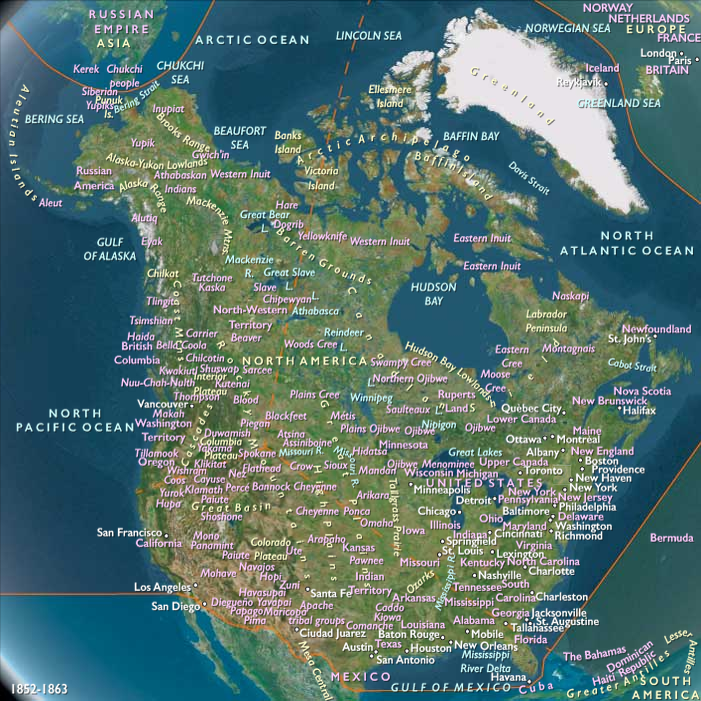
Subregions
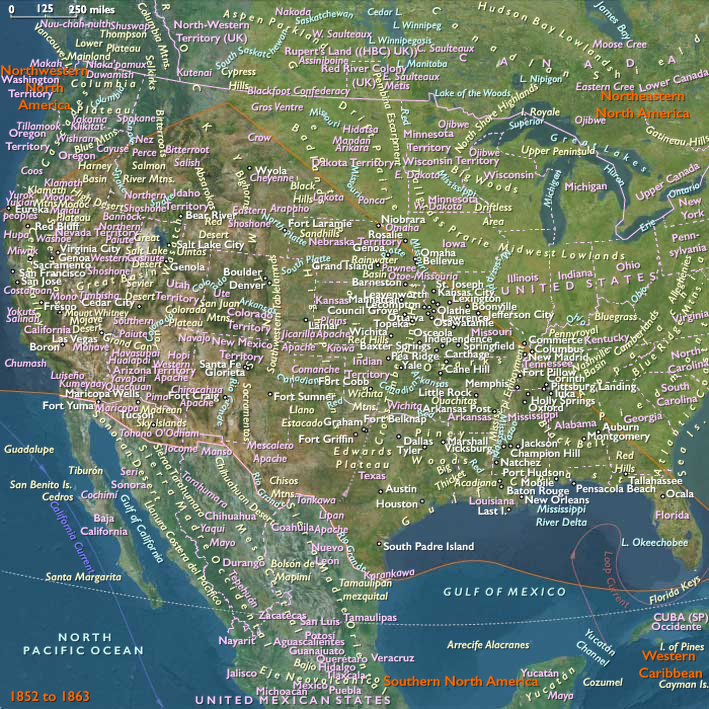
Related Events
Showing 10 events out of 14479 total
Years: 1863 - 1863
July
Locations
People
Groups
- Muscogee, or Creek, people (Amerind tribe)
- Cherokee, or Tsalagi (Amerind tribe)
- Choctaw (Amerind tribe)
- Chickasaw (Amerind tribe)
- United States of America (US, USA) (Washington DC)
- Indian Territory
- Arkansas, State of (U.S.A.)
- Confederate States of America (C.S.A.)
Topics
- American Civil War (War between the States, War of the Rebellion, War of Secession, War for Southern Independence)
- Trans-Mississippi Theater of the American Civil War
- Honey Springs, Battle of
Subjects
Regions
Subregions