
Gascony and the Growing Anglo-French Tensions Under …
Years: 1336 - 1336
Gascony and the Growing Anglo-French Tensions Under Edward III (1327–1330s)
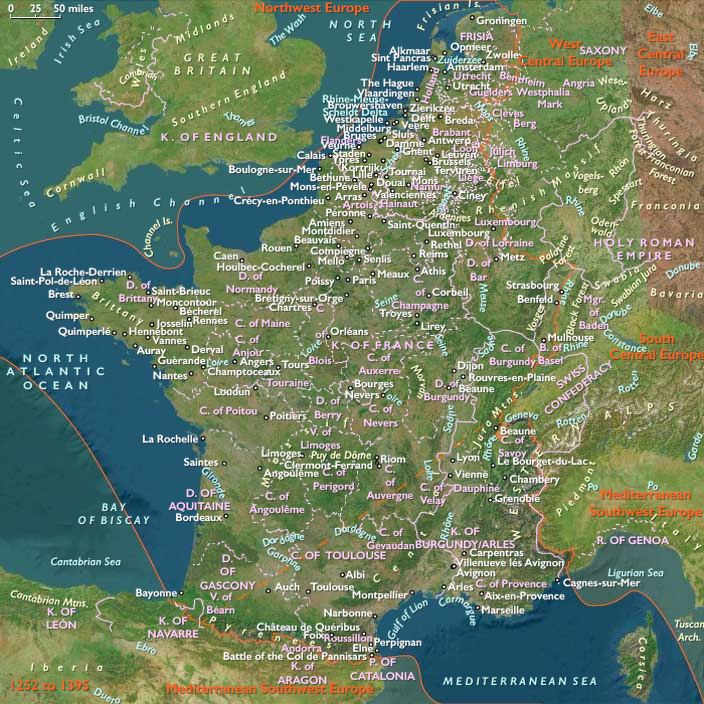
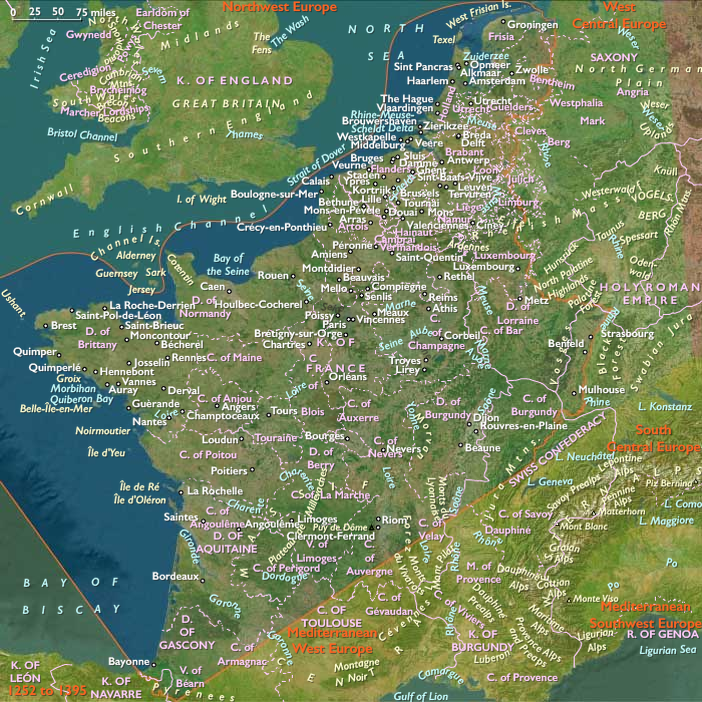
By the early 14th century, Gascony, once part of the broader Duchy of Aquitaine, had become a major flashpoint in Anglo-French relations. Though nominally under English control, the duchy remained a vassal territory of the French Crown, creating continuous friction between the two kingdoms.
The Status of Gascony in Edward III’s Early Reign (1327–1329)
- Gascony had been incorporated into Aquitaine (also called Guyenne or Guienne) in the 11th century, and by the 13th century, the terms Aquitaine, Guyenne, and Gascony were nearly interchangeable.
- The Angevin kings of England had ruled Aquitaine as Dukes of Aquitaine since Henry II’s marriage to Eleanor of Aquitaine in 1152, but they held these lands as vassals of the French king.
- By the time Edward III ascended the English throne on February 1, 1327, the only remaining English possession in Aquitaine was Gascony.
French Pressure and Edward III’s Reluctant Homage (1329)
- The first decade of Edward III’s reign saw constant French pressure on Gascony’s administration, straining Anglo-French relations.
- The English argued that Charles IV of France (d. 1328) had acted improperly toward his vassal (Edward)and that the duchy should be free of French suzerainty.
- However, this claim could not be maintained politically, forcing the seventeen-year-old Edward III to pay homage to the new French king, Philip VI, in 1329.
The Symbolic Protest at the Homage Ceremony
- French tradition dictated that a vassal should approach their liege lord unarmed and bareheaded to signify submission.
- Edward III, reluctant to acknowledge Philip VI’s authority, attended the ceremony wearing his crown and sword, signaling his discontent and defiance.
- Despite complying with feudal custom, French pressure on Gascony continued, keeping tensions high.
Beyond Gascony: The Role of Robert III of Artois in Anglo-French Relations
- Gascony was not the only issue fueling conflict—one of Edward III’s closest advisers, Robert III of Artois, played a critical role in escalating tensions.
- Robert had been exiled from the French court after falling out with Philip VI over an inheritance dispute.
- Seeking revenge against Philip, Robert encouraged Edward to press a claim to the French throne, providing intelligence on the French court and fueling English hostility.
Toward War: The Road to the Hundred Years’ War
- Though Edward reluctantly paid homage in 1329, French policies in Gascony and Robert III of Artois’ influence ensured that Anglo-French tensions did not subside.
- Over the next decade, Philip VI’s interference in Gascony and Edward’s growing sense of injustice would push both kingdoms toward war.
- By 1337, Edward III would formally challenge Philip VI’s legitimacy, launching the Hundred Years’ War (1337–1453), the longest and most significant conflict of medieval Europe.
Conclusion
The struggles over Gascony in the late 1320s were not just territorial disputes but part of a broader contest for power between England and France. Edward III’s reluctant homage in 1329 and Robert III of Artois’ influence were key stepping stones toward the Hundred Years’ War, as tensions over feudal allegiance, inheritance, and royal ambition made conflict inevitable.
Locations
People
Groups
- Gascony, Duchy of
- Aquitaine, (Angevin) Duchy of
- England, (Plantagenet, Angevin) Kingdom of
- France, (Valois) Kingdom of
Topics
Commodoties
Subjects
Regions
Subregions
Related Events
Showing 10 events out of 44539 total
Years: 1336 - 1336
Locations
People
Groups
- Gascony, Duchy of
- Aquitaine, (Angevin) Duchy of
- England, (Plantagenet, Angevin) Kingdom of
- France, (Valois) Kingdom of
Topics
Commodoties
Subjects
Regions
Subregions