
Gandhara falls to the Kushans in 48. …
Years: 48 - 48
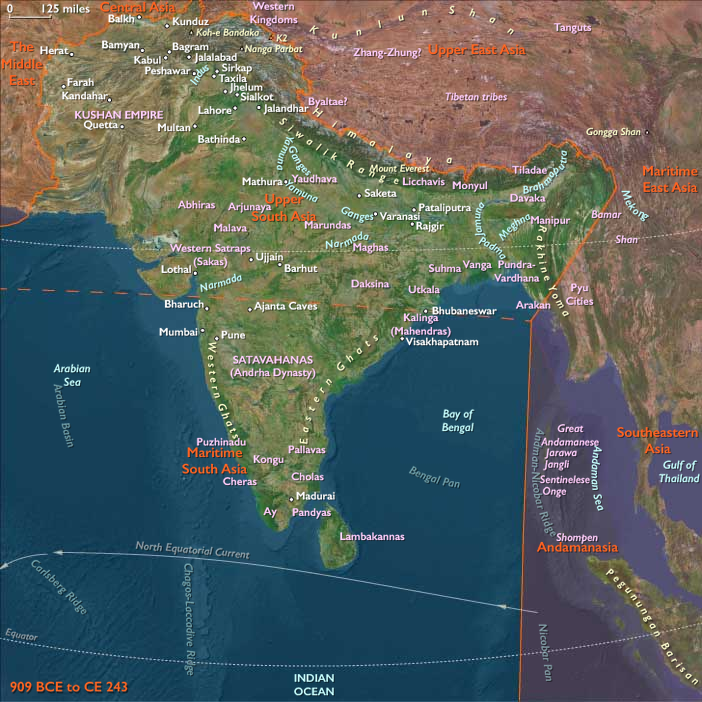
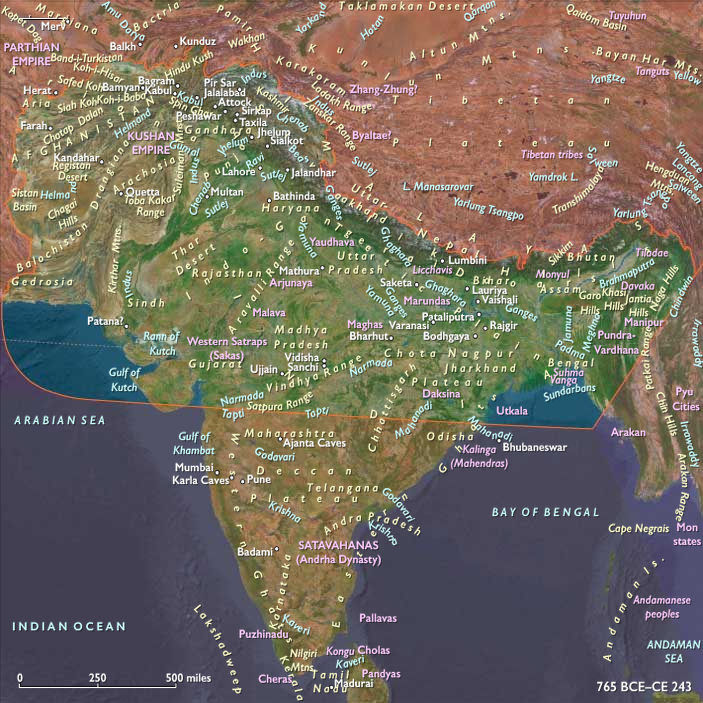
Gandhara falls to the Kushans in 48.
The conquest of northwest India led by Kujula Kadphises lays the basis for the Kushan Empire which will be rapidly expanded by his descendants.
The origins of Kujula Kadphises are obscure, and it is usually considered he was a descendant of the Kushan ruler Heraios, or even identical with him.
Interestingly however, Kujula shares his name (on some of his "Hermaeus" coins, or on his "Augustus" coins) with some of the last Indo-Scythian rulers, such as Liaka Kusulaka, or his son Patika Kusulaka, which might suggest some family connection.
In the process of their expansion eastward, Kujula Kadphises and his son Vima Takto seem to have displaced the Indo-Parthian kingdom, established in northwestern India by the Parthian Gondophares since around CE 20.
This invasion of Kujula Kadphises is thought to have occurred during the reign of Abdagases and Sases, the successors of Gondophares, after 45 CE.
Most of Kujula's coins are Hellenic or Roman in inspiration.
Some coins use the portrait, name and title of the Indo-Greek king Hermaeus on the obverse, indicating Kujula's wish to relate himself to the Indo-Greek king.
Since the Kushans and their predecessors the Yuezhi were conversant with the Greek language and Greek coinage, the adoption of Hermaeus cannot have been accidental: it either expresses a filiation of Kujula Kadphises to Hermaeus by alliance (possibly through Sapadbizes or Heraios), or simply a wish to show himself as heir to the Indo-Greek tradition and prestige, possibly to accommodate Greek populations.
These coins bear the name of Kujula Kadphises with representations of the Greek demi-god Heracles on the back, and titles ("Yavugasa") presenting Kujula as a "ruler" (not actual king), and a probable Buddhist ("Dharmathidasa", follower of the Dharma).
Later coins, possibly posthumous, do describe Kujula as "Maharajasa", or "Great King.
Some fewer coins of Kujula Kadphises also adopted a Roman style, with effigies closely resembling Caesar Augustus, although all the legends were then associated with Kujula himself.
Such influences are linked to exchanges with the Roman Empire around that date.
Locations
People
Groups
- Indo-Scythians
- Indo-Parthians, Kingdom of the
- Roman Empire (Rome): Julio-Claudian dynasty
- Kushan Empire
Topics
Commodoties
Subjects
Regions
Subregions
Years: 48 - 48
Locations
People
Groups
- Indo-Scythians
- Indo-Parthians, Kingdom of the
- Roman Empire (Rome): Julio-Claudian dynasty
- Kushan Empire
Topics
Commodoties
Subjects
Regions
Subregions