
Gaius Julius Caesar ends his consulship in …
Years: 58BCE - 58BCE
Gaius Julius Caesar ends his consulship in Rome in 58 BCE.
Due to the costs of consulship, Caesar is still deeply in debt, and there is money to be made as a governor, whether by extortion or by military adventurism.
Having secured the governorship of both Cisalpine Gaul and Transalpine Gaul, Caesar initially has four veteran legions under his direct command: Legio VII, Legio VIII, Legio IX Hispana, and Legio X.
As he had been governor of Hispania Ulterior in 61 BCE and had campaigned successfully with them against the Lusitanians, Caesar knows personally most (perhaps even all) of these legions.
Caesar also has the legal authority to levy additional legions and auxiliary units as he sees fit.
His ambition is to conquer and plunder some territories to get himself out of debt, and it is likely Gaul was not his initial target, but that he was instead planning a campaign against the kingdom of Dacia located in the Balkans.
The nations of Gaul are civilized and wealthy.
Most have contact with Roman merchants and some, particularly those that are governed by Republics such as the Aedui and Helvetii, have enjoyed stable political alliances with Rome in the past.
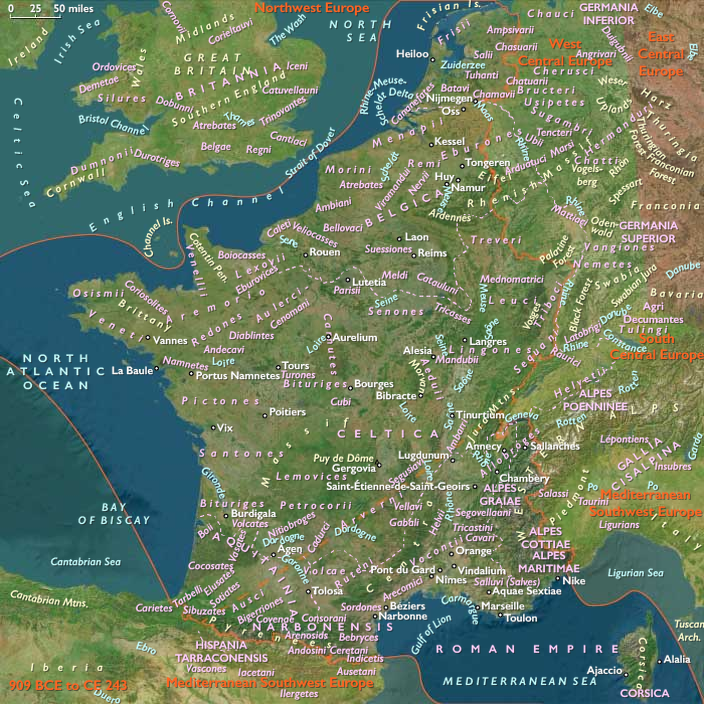
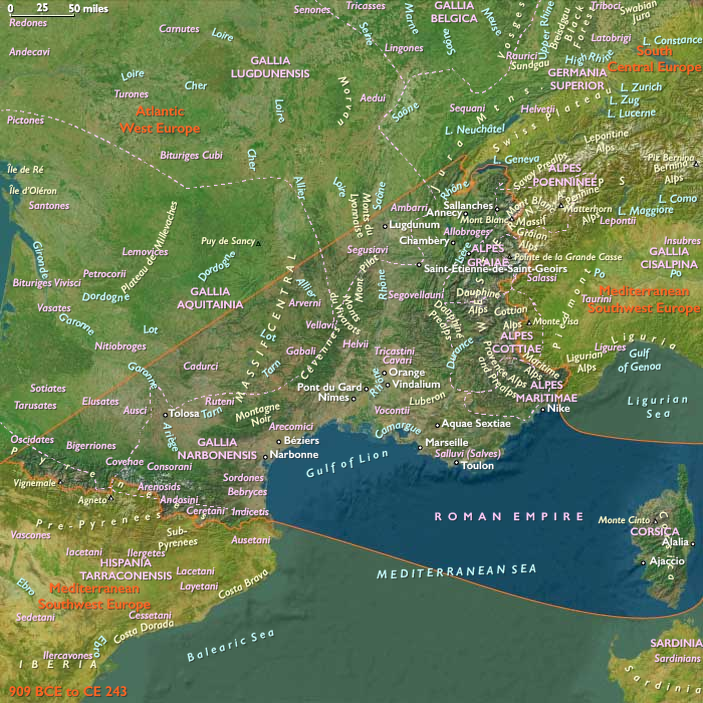
Two of Caesar’s provinces border on unconquered territory, and parts of Gaul are known to be unstable.
Some of Rome's Gallic allies have been defeated by their rivals, with the help of a contingent of Germanic tribes.
The Romans fear these tribes are preparing to migrate south, closer to Italy, and that they have warlike intent.
The threat of invasion by the Helvetii, a German-Celtic tribe from the area that is now Switzerland, gives Caesar a pretext to advance his career through war.
His personal ambitions extending far beyond his proconsulship of Cisalpine and Transalpine Gaul, Caesar goes to war in Gaul, ostensibly to protect the Roman republic's Mediterranean holdings.
Locations
People
Groups
- Dacians, or Getae, or Geto-Dacians
- Lusitanians, or Lusitani
- Gauls
- Roman Republic
- Aedui (Gaulish tribe)
- Helvetii
- Dacia, Kingdom of
Topics
- Classical antiquity
- Roman Republic, Crisis of the
- Gallic Wars
- Bibracte, Battle of
- Arar, Battle of the
Commodoties
Subjects
Regions
Subregions
Related Events
Showing 1 events out of 1 total
Years: 58BCE - 58BCE
Locations
People
Groups
- Dacians, or Getae, or Geto-Dacians
- Lusitanians, or Lusitani
- Gauls
- Roman Republic
- Aedui (Gaulish tribe)
- Helvetii
- Dacia, Kingdom of
Topics
- Classical antiquity
- Roman Republic, Crisis of the
- Gallic Wars
- Bibracte, Battle of
- Arar, Battle of the
Commodoties
Subjects
Regions
Subregions