
Fujiwara no Kiyohira, the son of Fujiwara …
Years: 1087 - 1087
Fujiwara no Kiyohira, the son of Fujiwara no Tsunekiyo and a daughter of Abe no Yoritoki whose name is not known, was born somewhere in the Kitakami Basin in 1056.
His father was of the Hidesato branch of the Fujiwara clan, which is known for their fighting ability.
Even so, Tsunekiyo had been a mid-level bureaucrat at Fort Taga in present day Sendai, Miyagi Prefecture when he married his Emishi wife, left his position and went to live with his wife's family in present day Iwate Prefecture.
Thus, Kiyohira was born in an Emishi household in Emishi territory to a father who was considered a traitor by the Japanese authorities.
Much of Kiyohira’s early life had been spent spent in a community at war with the Japanese central authorities.
The Earlier Nine Years War (Zenkunen War) had been fought on and off from 1050 to 1062 while the Latter Three Years War (Gosannen War) had begun in 1083.
He had lost his grandfather, Abe no Yoritoki, in battle in 1057, his uncle Sadato in 1062 and all of his mother's brothers had been deported to Kyūshū in the same year.
His own father had been personally beheaded by Minamoto no Yoriyoshi with a blunt sword.
These events will shape his life and influence his decisions as long as he lives.
After he lost his father in the Earlier Nine Wars, his mother had become the concubine of his enemy, Kiyohara no Takehira, who had helped Minamoto no Yoriyoshi in the last war.
Kiyohira had been brought up in this enemy clan as Kiyohara no Kiyohira, with his elder stepbrother Sanehira and younger half-brother Iehira.
The Later Three Years War involves a struggle among the three brothers in this complex relationship.
Kiyohira has lost his wife and son during the war, killed by his half-brother Iehira.
Kiyohira wins the final victory in the war in 1087, with the aid of Minamoto no Yoshiie, the son of another of his old enemies, Minamoto no Yoriyoshi.
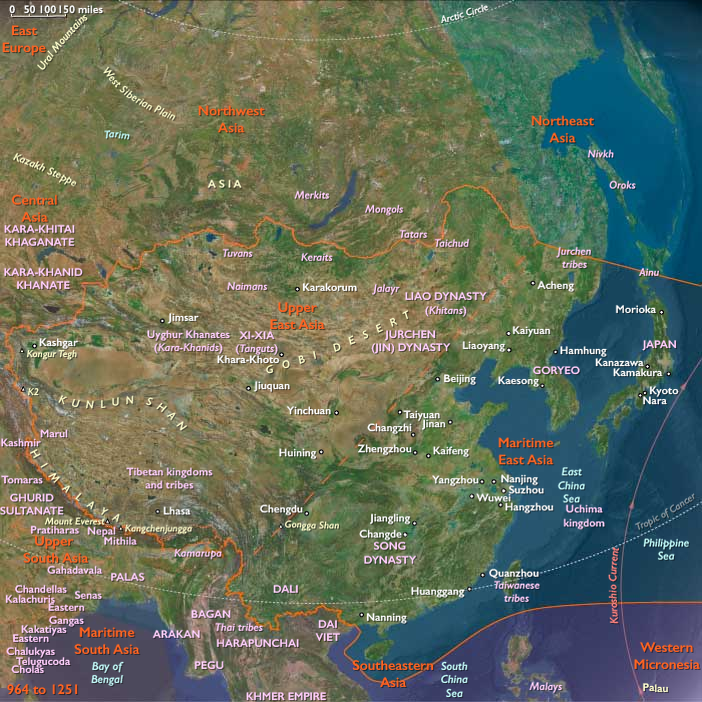
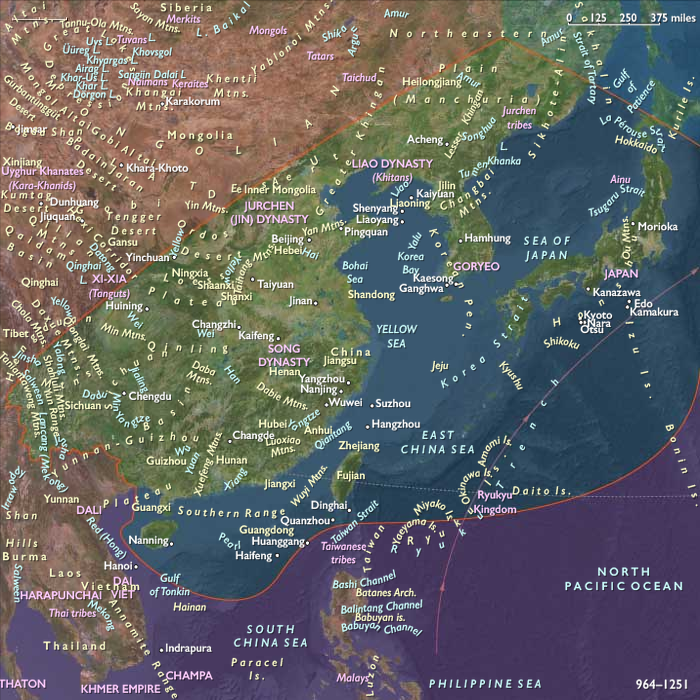
Yoshiie assembles a new army, reinforcing it with troops brought by his younger brother and the Fujiwara clan, and lays siege to the Kiyowara fortress at Kanazawa.
The defenders surrender after four months; the Kiyowara leaders are killed while attempting to escape from their burning stockade.
The conflict becomes known—misleadingly, as the actual periods of fighting spanned a mater of months—as the Later Three Years’ War.
Much of the war is depicted in an e-maki narrative handscroll, the Gosannen Kassen E-maki, which was created in 1171.
The artwork is owned today by the Watanabe Museum in Tottori city, Japan.
Locations
People
Groups
Topics
Commodoties
Subjects
Regions
Subregions
Years: 1087 - 1087
Locations
People
Groups
Topics
Commodoties
Subjects
Regions
Subregions