
Fruela I of Asturias: Marriage Alliance, Border …
Years: 761 - 761
Fruela I of Asturias: Marriage Alliance, Border Conflicts, and the Founding of Oviedo
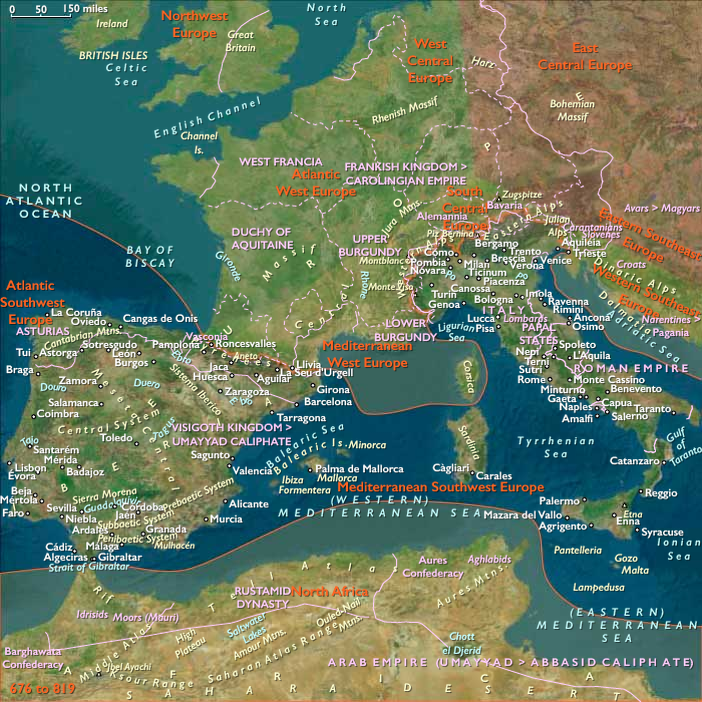
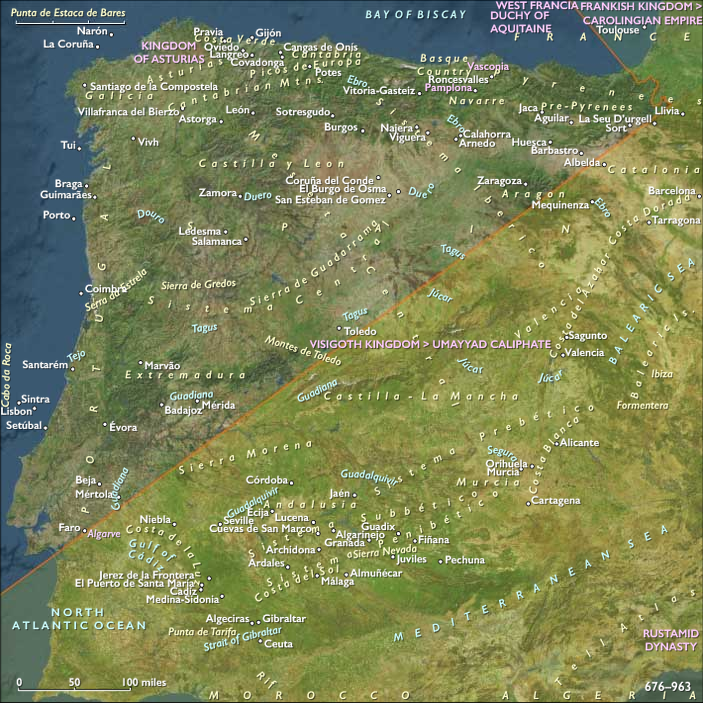
During his reign, King Fruela I of Asturias successfully suppresses a Basque uprising, after which he takes the noblewoman Munia (or Munina) as his wife. The circumstances of their marriage are debated:
- Some accounts suggest that Munia was taken as a bride following his victory, marking a diplomatic triumphover the independent Basque Duchy.
- Others interpret the union as a strategic marriage alliance, intended to strengthen ties between the ruling housesof Asturias and the Basques of Álava, preventing their defection to the Banu Qasi in the Ebro Valley.
It remains unclear whether territory in Álava or other Basque lands were part of Munia’s dowry, but over the coming centuries, Asturias and Pamplona will continue to struggle for dominance over the border region, which remains culturally Basque until it is gradually integrated into the Crown of Castile under the Jimena dynasty.
Munia’s Legacy and Fruela’s Successor
Munia becomes the mother of Fruela’s successor, Alfonso II of Asturias, and, according to legend, also the mother of Jimena, who in turn is said to be the mother of Bernardo del Carpio, the legendary Asturian hero.
The Founding of Oviedo and Church Relations
During Fruela’s reign, the city of Oviedo is founded when Abbot Máximo and his uncle Fromestano construct a church dedicated to Saint Vincent on November 25, 761.
Like his father, Alfonso I "the Catholic", Fruela maintains strong ties with the Church, continuing a close alliance between the monarchy and religious institutions in the growing Christian kingdom of Asturias.
Locations
People
Groups
Topics
Commodoties
Subjects
Regions
Subregions
Related Events
Showing 10 events out of 55163 total
Years: 761 - 761
Locations
People
Groups
Topics
Commodoties
Subjects
Regions
Subregions