
Gnaeus Julius Agricola, a general who had …
Years: 77 - 77
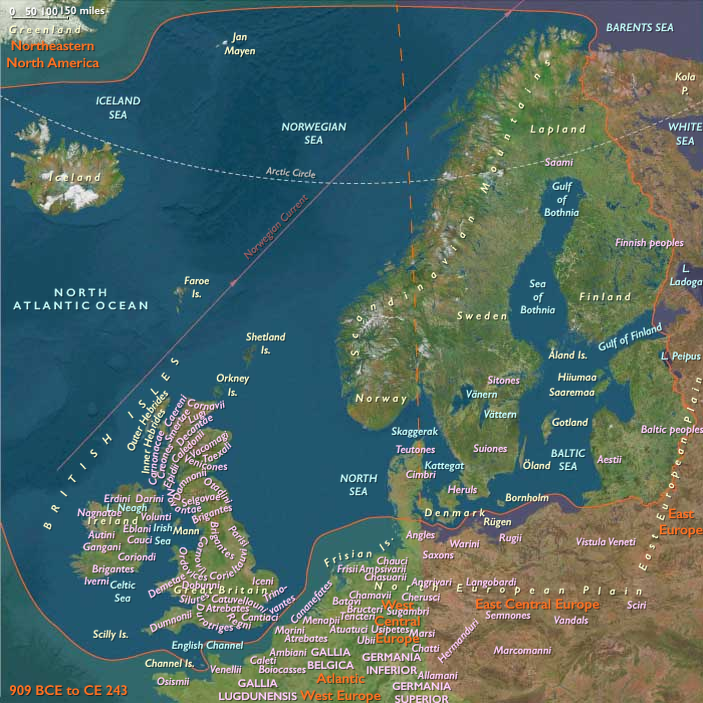
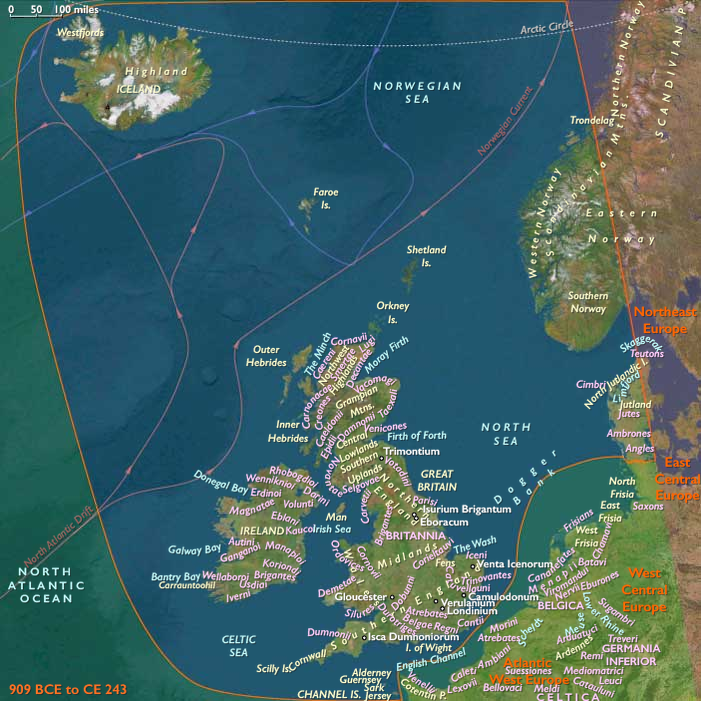
Gnaeus Julius Agricola, a general who had begun his career in Roman public life as a military tribune, serving in Britain under Gaius Suetonius Paulinus from 58 to 62, is Frontinus’ replacement as governor of Britannica in 78.
He was probably attached to the Legio II Augusta, but had been chosen to serve on Suetonius's staff and thus almost certainly had participated in the suppression of Boudica's uprising in 61.
Returning from Britain to Rome in 62, he had married Domitia Decidiana, a woman of noble birth.
Their first child was a son.
Agricola was appointed to the quaestorship for 64, which he served in the province of Asia under the corrupt proconsul Salvius Titianus.
While he was there his daughter, Julia Agricola, was born, but his son died shortly afterwards.
He was tribune of the plebs in 66 and praetor in 68, during which time he was ordered by Galba to take an inventory of the temple treasures.
In June 68, when the emperor Nero was deposed and committed suicide, and the period of civil war known as the Year of the Four Emperors began, Galba had succeeded Nero, but was murdered in early 69 by Otho, who took the throne.
Agricola's mother was murdered on her estate in Liguria by Otho's marauding fleet.
Hearing of Vespasian's bid for the empire, Agricola had immediately given him his support.
After Vespasian had established himself as emperor, Agricola had been appointed to the command of the Legio XX Valeria Victrix, stationed in Britain, in place of Marcus Roscius Coelius, who had stirred up a mutiny against the governor, Marcus Vettius Bolanus.
Britain had suffered revolt during the year of civil war, and Bolanus was a mild governor.
Agricola had reimposed discipline on the legion and helped to consolidate Roman rule.
Bolanus had been replaced in 71 by the more aggressive Quintus Petillius Cerialis, and Agricola had been able to display his talents as a commander in campaigns against the Brigantes.
When his command ended in 75, Agricola had been enrolled as a patrician and appointed to govern Gallia Aquitania.
He had been recalled to Rome in 76 or 77 and been appointed suffect consul, and had betrothed his daughter to Tacitus.
The following year Tacitus and Julia marry; Agricola is appointed to the College of Pontiffs, and returns to Britain for a third time, as its governor.
Locations
People
Groups
Topics
- Classical antiquity
- Roman colonization
- Pre-Roman Iron Age of Northern Europe
- Roman Age Optimum
- Pax Romana
- Roman Conquest of Britain
Commodoties
Subjects
Regions
Subregions
Related Events
Showing 10 events out of 61526 total
Years: 77 - 77
Locations
People
Groups
Topics
- Classical antiquity
- Roman colonization
- Pre-Roman Iron Age of Northern Europe
- Roman Age Optimum
- Pax Romana
- Roman Conquest of Britain
Commodoties
Subjects
Regions
Subregions