
Filters:
Friar Augustine Rodriguez, stationed near the mining …
Years: 1581 - 1581
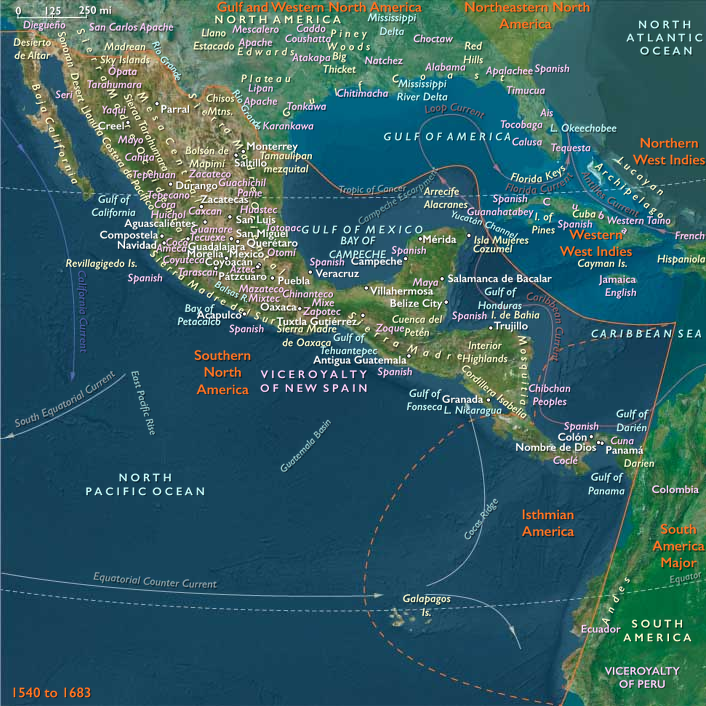
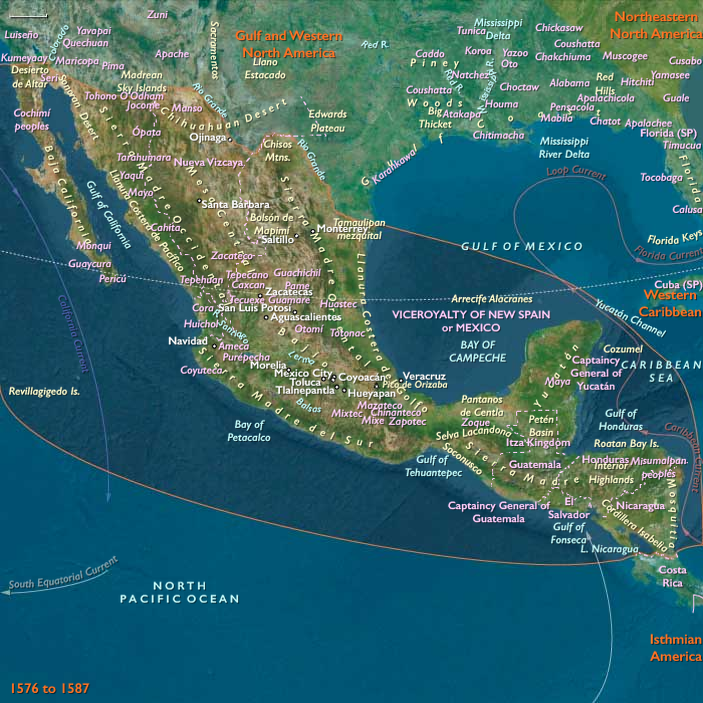
Friar Augustine Rodriguez, stationed near the mining town of Santa Barbara, Chihuahua, the northernmost outpost of New Spain, had become interested in 1579 when an Indian told him of settlements to the north in which the Indians grew cotton and wove cloth.
To the Spanish this meant that the Indians were civilized beings who might be made Christian. Rodriguez got permission from Spanish authorities "for the purpose of preaching the Holy Gospel."
Rodriguez apparently has little familiarity with Coronado's expedition but has read the account of Cabeza de Vaca.
The expedition leaves Santa Barbara on June 5, 1581.
The appointed leader is Francisco Sanchez, called El Chamuscado (Spanish for "scorched") because of his flaming red beard.
The expedition includes nine Spanish soldiers, three Catholic clerics, including Friar Augustin, and nineteen Indian servants, including two women. The soldiers are well armed and mounted; the expedition takes along ninety horses and six hundred sheep, goats, cattle and pigs. The expedition is also authorized to explore the country for valuable minerals.
To the Spanish this meant that the Indians were civilized beings who might be made Christian. Rodriguez got permission from Spanish authorities "for the purpose of preaching the Holy Gospel."
Rodriguez apparently has little familiarity with Coronado's expedition but has read the account of Cabeza de Vaca.
The expedition leaves Santa Barbara on June 5, 1581.
The appointed leader is Francisco Sanchez, called El Chamuscado (Spanish for "scorched") because of his flaming red beard.
The expedition includes nine Spanish soldiers, three Catholic clerics, including Friar Augustin, and nineteen Indian servants, including two women. The soldiers are well armed and mounted; the expedition takes along ninety horses and six hundred sheep, goats, cattle and pigs. The expedition is also authorized to explore the country for valuable minerals.
Locations
Groups
- Chichimeca (Amerind peoples)
- La Junta Indians
- Pueblo IV culture
- Jumano (Amerind tribe)
- New Spain, Viceroyalty of
- Spain, Habsburg Kingdom of
Topics
Commodoties
Subjects
Regions
Subregions
Related Events
Showing 1 events out of 1 total
Years: 1581 - 1581
Locations
Groups
- Chichimeca (Amerind peoples)
- La Junta Indians
- Pueblo IV culture
- Jumano (Amerind tribe)
- New Spain, Viceroyalty of
- Spain, Habsburg Kingdom of
Topics
Commodoties
Subjects
Regions
Subregions