
Filters:
Philip IV's Seizure of Gascony and the …
Years: 1295 - 1295
Philip IV's Seizure of Gascony and the Anglo-French War (1294–1297)
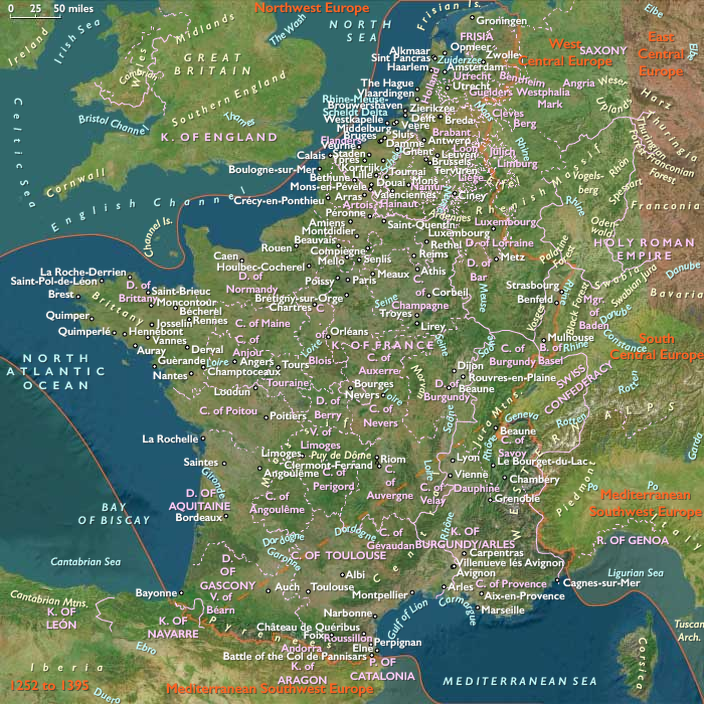
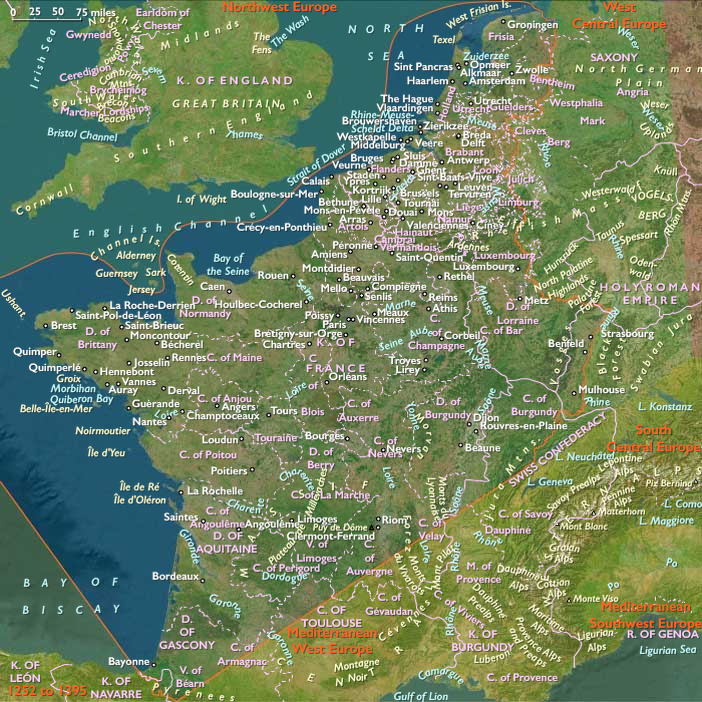
In 1294, tensions between Philip IV of France and Edward I of England escalated when French troops, under Philip’s direction, occupied English strongholds in Gascony—a fief held by Edward I as a vassal of the French Crown. This aggressive move led Edward to repudiate his vassalage and marked the beginning of a new phase in the long-running conflict between England and France.
Causes of the Conflict
- Gascony was a key English possession in southwestern France, held as part of the Duchy of Aquitaine. Although it was formally a vassal territory under the French Crown, its rulers—English kings—frequently acted independently, leading to recurring disputes over sovereignty.
- The immediate cause of the war was a maritime dispute between English and French sailors, which escalated into a full-blown diplomatic crisis.
- In 1294, Philip IV summoned Edward I to appear before him as his vassal to answer for alleged violations in Gascony.
- When Edward refused, Philip declared the duchy forfeited, allowing French troops to seize English-held towns and castles in 1294–1295.
Philip’s War Measures and the Alliance with Scotland
- To finance the war, Philip IV attempted new fiscal measures, including heavy taxation and the debasement of coinage, which proved deeply unpopular and led to widespread discontent.
- Seeking to undermine England further, Philip forged an alliance with Scotland, taking advantage of John Balliol’s conflicts with Edward I.
- In 1295, Philip pushed deep into Gascony, launching a successful campaign to retake Guienne, dealing a major blow to English control in France.
Consequences of the Conflict
- The war drained both kingdoms financially, forcing both monarchs to seek extraordinary revenues from their subjects, provoking internal unrest.
- Although the war did not result in a decisive victory for either side, Philip IV’s seizure of Guienne in 1295 temporarily strengthened French royal authority over its southwestern territories.
- The conflict set the stage for ongoing Anglo-French rivalry, which would ultimately culminate in the Hundred Years' War (1337–1453).
Philip IV’s aggressive expansion in Gascony and his alliance with Scotland demonstrated his ambition to weaken England and centralize French power, while Edward I’s repudiation of vassalage foreshadowed the long-term breakdown of feudal ties between England and France.
Locations
People
Groups
- Scottish people
- Gascony, Duchy of
- French people (Latins)
- France, (Capetian) Kingdom of
- English people
- Anglo-Normans
- England, (Plantagenet, Angevin) Kingdom of
- Scotland, Kingdom of
Topics
Commodoties
Subjects
Regions
Subregions
Years: 1295 - 1295
Locations
People
Groups
- Scottish people
- Gascony, Duchy of
- French people (Latins)
- France, (Capetian) Kingdom of
- English people
- Anglo-Normans
- England, (Plantagenet, Angevin) Kingdom of
- Scotland, Kingdom of
Topics
Commodoties
Subjects
Regions
Subregions