
Frenchman Jean-Baptiste Camille Corot, now thirty-two, has …
Years: 1828 - 1828
Frenchman Jean-Baptiste Camille Corot, now thirty-two, has worked in Italy for the past three years, sketching the Italian countryside.
Rejecting neoclassical techniques in favor of heavy brushstrokes and dense impasto, Corot combines white lead paint with other hues to produce an extraordinary luminosity in his landscapes.
Though intended as studies, the plein-air Italian paintings’ avoidance of academic values, coupled with Corot’s faithfulness to natural light, anticipates Impressionism, which some decades on is to revolutionize art by a taking a similar approach—quick, spontaneous painting done in the out-of-doors.
However, where the Impressionists will use rapidly applied, unmixed colors to capture light and mood, Corot usually mixes and blends his colors to achieve his dreamlike effects.
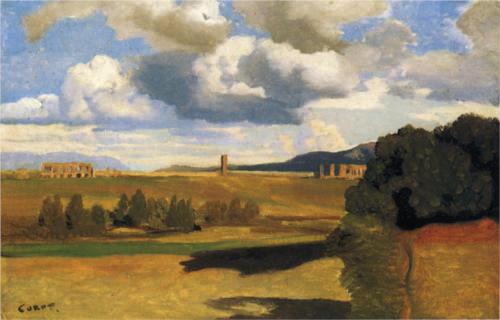
Camille Corot: The Roman Campagna with the Claudian Aqueduct (826- 1828) oil on paper, 21.6 x 33 cm; National Gallery, London, UK
Locations
People
Groups
Topics
Subjects
Regions
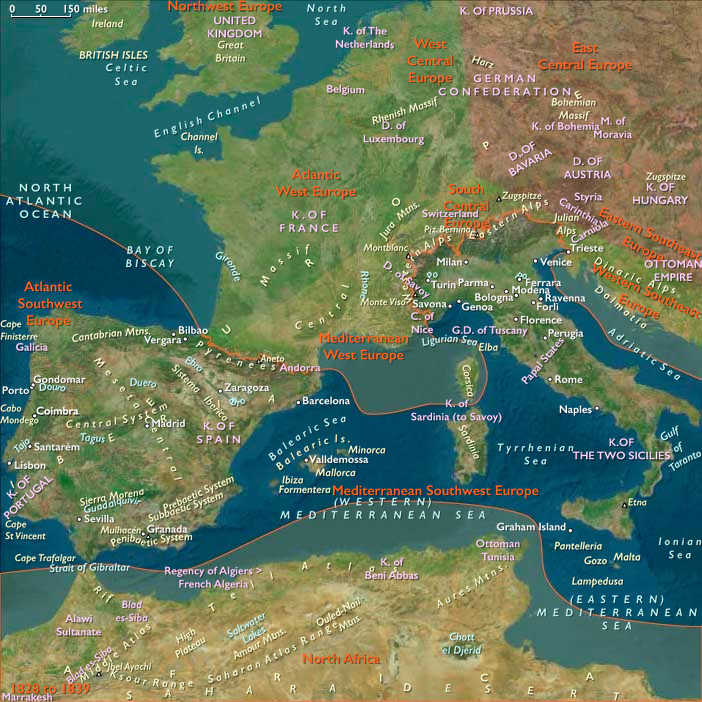
Subregions
Years: 1828 - 1828
Camille Corot: The Roman Campagna with the Claudian Aqueduct (826- 1828) oil on paper, 21.6 x 33 cm; National Gallery, London, UK
Locations
People
Groups
Topics
Subjects
Regions
Subregions