
Filters:
Adam de la Halle: Trouvère, Poet, and …
Years: 1262 - 1262
Adam de la Halle: Trouvère, Poet, and Early Founder of Secular Theater in France
Adam de la Halle, also known as Adam le Bossu ("Adam the Hunchback"), was a French trouvère, poet, and composer, widely regarded as an early founder of secular theater in France. Despite his nickname, he was not actually hunchbacked—the title likely originated from an affiliation with a scholarly or clerical group rather than a physical trait.
A Pioneer of Secular Drama: Le Jeu de la Feuillée (c. 1262)
- Around 1262, Adam composed Le Jeu de la Feuillée ("The Play of the Greenery"), a satirical drama that stands as one of the earliest known secular French plays.
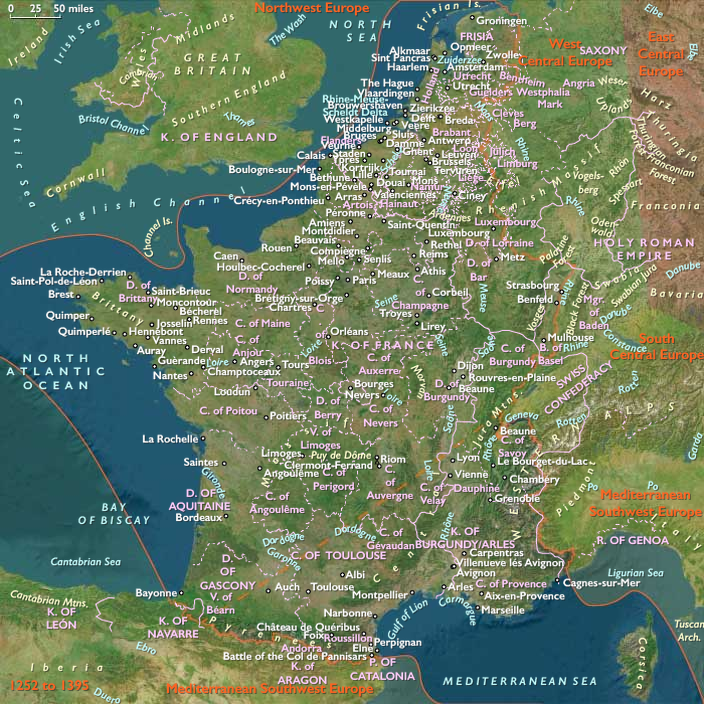
- In this comic and autobiographical work, Adam introduces himself, his father, and the citizens of Arras, portraying their quirks and peculiarities with sharp wit and humor.
- The play is notable for its lively dialogue, blending realism with fantasy, and for its early use of character-driven satire, making it a precursor to later French comedic traditions.
Adam’s Contribution to Medieval Performing Arts
- As a trouvère, Adam composed lyric poetry and music, combining courtly love themes with more earthly, humorous narratives.
- He was one of the first medieval poets to compose both music and dramatic texts, paving the way for the development of secular theater in medieval France.
- His works, including Le Jeu de Robin et Marion (c. 1283), fused lyric poetry, drama, and song, influencing later pastoral and comedic traditions.
Legacy
Adam de la Halle's innovative fusion of drama, music, and satire positioned him as a key transitional figure in the history of French medieval literature and theater. His works anticipated the development of farce, comic theater, and secular performance traditions, which flourished in France during the later Middle Ages and Renaissance.
Locations
People
Groups
Subjects
Regions
Subregions
Related Events
Showing 1 events out of 1 total
Years: 1262 - 1262
Locations
People
Groups
Subjects
Regions
Subregions