
Simon de Montfort and the Conflict with …
Years: 1253 - 1253
Simon de Montfort and the Conflict with Henry III
Simon de Montfort, Sixth Earl of Leicester, was a hardened and ruthless soldier, much like his father, the infamous leader of the Albigensian Crusade. Yet he was also a capable administrator and, through his association with Oxford scholars such as Robert Grosseteste, had been exposed to idealistic political theories that would later shape his career.
By the early 1250s, Montfort had entered into a deepening conflict with his brother-in-law, King Henry III of England. This dispute arose in part from Henry’s refusal to address growing domestic discontent, which stemmed from multiple factors, including famine, financial mismanagement, and the English barons’ resentment over the king’s favoritism toward his Poitevin and Savoyard relatives.
The Gascony Controversy
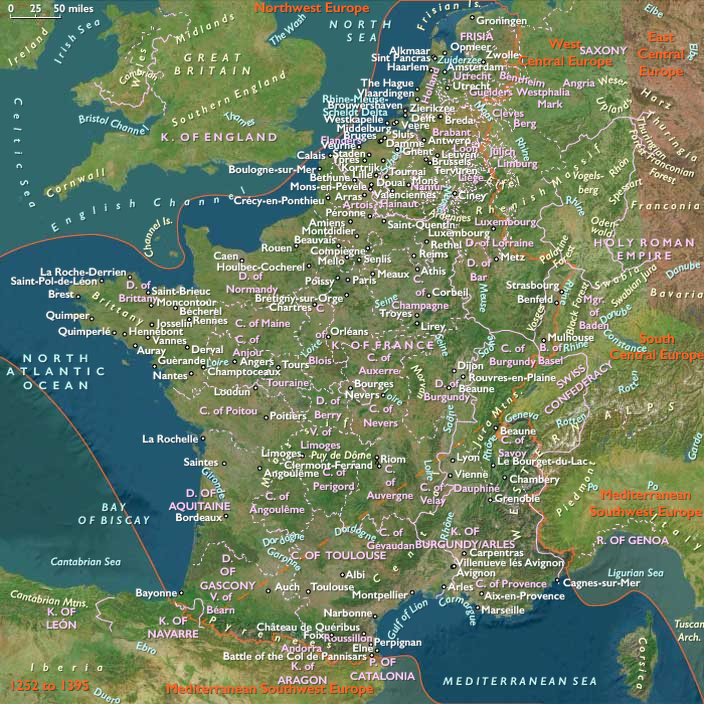
In 1248, Montfort had taken the cross with the intent of joining Louis IX of France on the Seventh Crusade in Egypt. However, at the repeated requests of Henry and the English Council, he abandoned his crusading plans and was instead dispatched as Governor of Gascony, a politically unstable and rebellious province. As England’s first foreign colony, Gascony was the last remaining Plantagenet possession in France, and maintaining control over it was a strategic priority for Henry.
Montfort’s administration was marked by harsh suppression of the excesses of local seigneurs and the turbulent communal factions that dominated the region’s towns. His rigorous enforcement of order provoked bitter complaints, particularly from the Gascon aristocracy, who accused him of oppression and brutality. Yielding to their outcry, Henry ordered a formal inquiry into Montfort’s rule.
Though formally acquitted of the charges by the Peers of the Realm, Montfort’s financial accounts were challenged by Henry, and in 1252, disgusted by the king’s hostility, he retired to France in self-imposed exile.
The Offer of the French Regency and His Reconciliation with Henry
While in France, Montfort was offered the Regency of France, a position left vacant following the death of Queen Mother Blanche of Castile in 1252. However, instead of accepting this powerful role, he chose to seek reconciliation with Henry III, an act influenced by the dying exhortations of his mentor, Robert Grosseteste.
By 1253, Montfort had made his peace with Henry, setting the stage for his later involvement in the English baronial opposition—a struggle that would culminate in the Second Barons' War (1264–1267) and his eventual role as the de facto ruler of England before his downfall.
Locations
People
Groups
Topics
Commodoties
Subjects
Regions
Subregions

Related Events
Showing 10 events out of 46220 total
Years: 1253 - 1253
Locations
People
Groups
Topics
Commodoties
Subjects
Regions
Subregions