
Filters:
Bernard of Clairvaux’s Crusade Against Heresy and …
Years: 1145 - 1145
Bernard of Clairvaux’s Crusade Against Heresy and the Rise of Eugenius III (1145 CE)
By 1145, Bernard of Clairvaux, the primary architect of the Cistercian monastic expansion, had spread his influence throughout Europe, founding new monasteries in Germany, Sweden, England, Ireland, Portugal, Switzerland, and Italy. His monastic movement was reshaping Christian spirituality and reinforcing papal authority through rigorous discipline and reformist zeal.
Bernard’s Influence in the Papacy: The Election of Eugenius III
- Several of Bernard’s monks had been sent to Rome at the command of Pope Innocent II, taking possession of Three Fountains Abbey in Rome, a center of monastic reform.
- One of these monks, Bernard of Pisa, was elected pope in 1145 as Eugenius III, marking Bernard’s deep influence in the Church’s highest office.
- Eugenius III, recognizing Bernard as his mentor, requested spiritual guidance from him.
- In response, Bernard wrote the "Book of Considerations," which emphasized:
- The sanctity of the Pope as the foundation of Church reform.
- The priority of piety and meditation over temporal matters.
- The idea that spiritual reflection must precede action, reinforcing the Pope’s moral and religious responsibilities.
This work shaped Eugenius III’s papacy, setting a spiritual framework for papal governance in a turbulent time.
Bernard’s Campaign Against the Henricians and Petrobrusians (1145 CE)
- After previously helping end the papal schism, Bernard was now called upon to combat heresy, particularly against the Henricians and Petrobrusians.
- Henry of Lausanne, a former Cluniac monk, had adopted and modified the teachings of Peter of Bruys, who rejected:
- Infant baptism
- The veneration of saints
- The Eucharist
- Ecclesiastical authority
- Henry’s followers, known as Henricians, were especially numerous in southern France, where anti-clerical sentiment was rising.
Bernard’s Anti-Heresy Preaching Campaign
- At the insistence of Alberic, Cardinal Bishop of Ostia, Bernard embarked on a preaching tour through heretical strongholds:
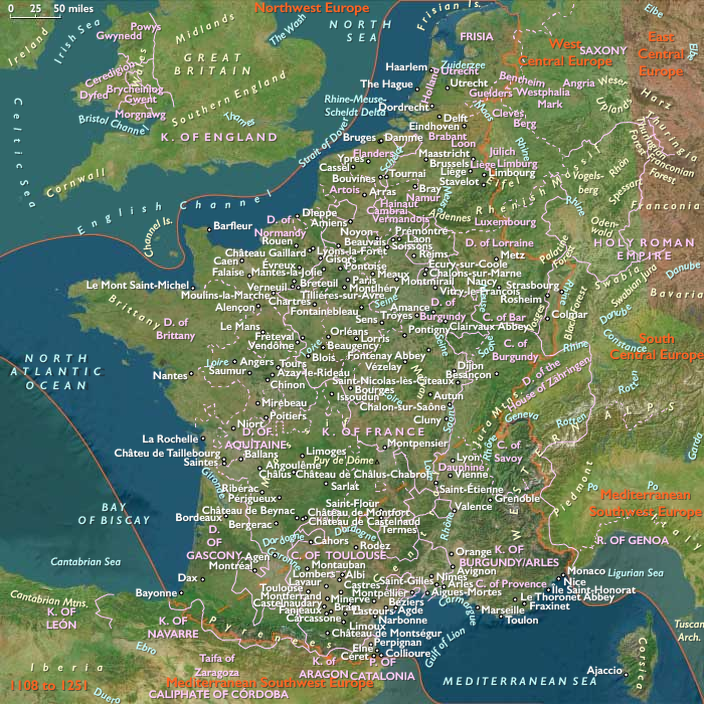
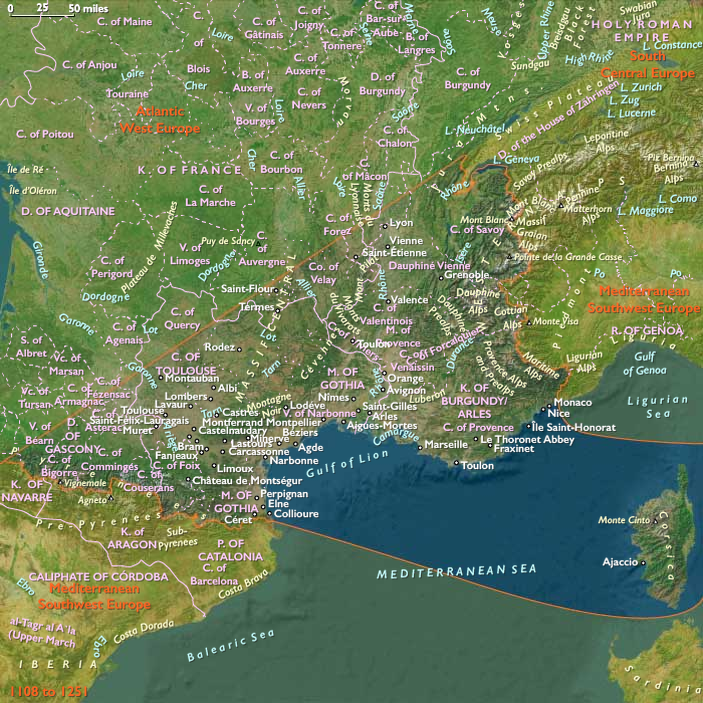
- Angoulême
- Limoges
- Bordeaux (where he stayed for some time)
- Bergerac, Périgueux, Sarlat, Cahors, and Toulouse
Impact of Bernard’s Mission
- At Bernard’s approach, Henry of Lausanne fled from Toulouse, leaving behind a significant number of adherents.
- Many converts returned to Roman orthodoxy, particularly in Toulouse and Albi, due to Bernard’s:
- Eloquent preaching
- Reputation for miracles
- Ascetic lifestyle and simplicity, which contrasted with the luxury of many prelates
- The Henrician and Petrobrusian sects began to decline rapidly, fading by the end of 1145.
Final Confrontation and Bernard’s Return to Clairvaux
- Bernard invited Henry of Lausanne to a disputation, which Henry refused to attend.
- With his mission accomplished, Bernard returned to Clairvaux, leaving a Church reinforced in its orthodoxybut still struggling with future waves of heretical movements, including the Cathars in later decades.
Legacy of Bernard’s 1145 Campaign
- Bernard’s combination of persuasive preaching, moral authority, and reported miracles made him one of the most effective anti-heretical figures of his time.
- His role in securing papal legitimacy through Eugenius III and his writings helped shape the moral vision of the papacy.
- His campaign against the Henricians and Petrobrusians set a precedent for future Church efforts to suppress heretical movements in medieval Europe.
Though Bernard’s personal efforts led to the decline of these particular sects, the underlying tensions between popular religious movements and the Catholic hierarchy would continue, leading to future conflicts such as the Cathar Crusade (1209–1229).
Locations
People
Groups
- Papal States (Republic of St. Peter)
- France, (Capetian) Kingdom of
- Christians, Roman Catholic
- Cistercians, Order of the (White Friars)
Topics
Commodoties
Subjects
Regions
Subregions
Years: 1145 - 1145
Locations
People
Groups
- Papal States (Republic of St. Peter)
- France, (Capetian) Kingdom of
- Christians, Roman Catholic
- Cistercians, Order of the (White Friars)
Topics
Commodoties
Subjects
Regions
Subregions