
Frederick II, Landgrave of Hesse-Kassel, had in …
Years: 1815 - 1815
June
Frederick II, Landgrave of Hesse-Kassel, had in 1747 left his wife and children and soon converted to Catholicism, and in 1755 formally ended the marriage.
His father, Landgrave William, had granted the newly acquired principality of Hanau to his daughter-in-law and grandsons, and young William, Frederick’s son, became technically the reigning prince of Hanau, though under his mother's regency.
The young prince William, together with his two younger brothers, were with their mother the landgravine Mary and from 1747 had been fostered by Protestant relatives and soon moved to Denmark, to the care of family of her sister Louise of Great Britain, who had died in 1751.
William of Hanau had married his first cousin Wilhelmina Caroline of Denmark and Norway (1747–1820), the second surviving daughter of Frederick V of Denmark and Norway, on September 1, 1764 at Christiansborg Palace.
William's younger brother Charles followed suit and in 1766 married another of their Danish first cousins.
William and Wilhelmina Caroline had remained mostly in Denmark until the death of his father on October 31, 1785, when he became William IX, Landgrave of Hesse-Kassel and as such, is said to have inherited one of the largest fortunes in Europe at the time, largely gained through the loan of Hessian mercenaries, not least to Great Britain during the American Revolution.
Already in the lifetime of his father, William had received the Principality of Hanau south of the Hessian territories, near Frankfurt, as successor of its newly extinct princes, since the Hanau people did not want to have a Catholic ruler.
Already at Hanau, William had utilized the financial skills of Mayer Amschel Rothschild, who resides in the nearby Frankfurt; the two had become acquainted in 1775, although William doesn’t formally designate Rothschild as overseer until 1801.
During the Napoleonic wars, William has seen the necessity of hiding his fortune from from Napoleon by using his long standing association with the Frankfurt Rothschilds.
This money had then seen its way through to Nathan Mayer, (N.M.) in London, where it had helped fund the British movements through Portugal and Spain.
The budding banker barons have used the interest made from this venture to swiftly develop their fortune and prestige in Europe and Britain.
It is not long before their riches outweigh that of their benefactor.
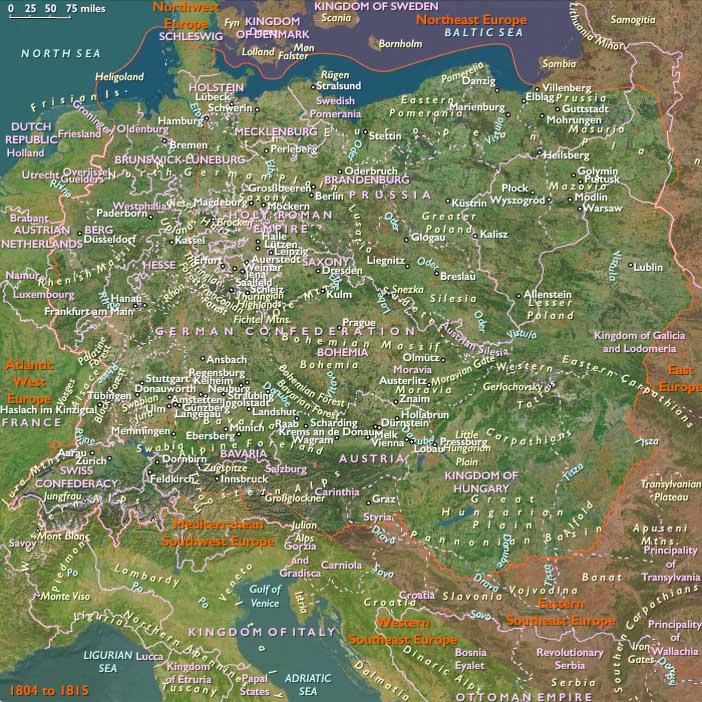
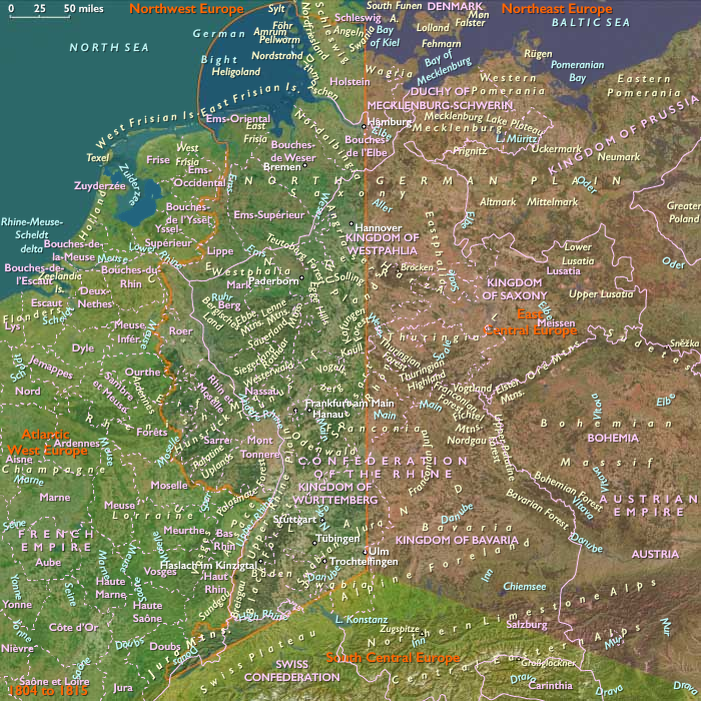
In 1803, Landgrave William had been created His Royal and Serene Highness The Prince-Elector of Hesse, but his electorate had been annexed in 1806 by the Kingdom of Westphalia, ruled by Jérôme Bonaparte, after Napoleon invaded Hesse in response to Wilhelm's support for Prussia.
The Landgrave went into exile with his family in Schleswig-Holstein, but Rothschild has been able to continue as his banker, investing funds in London.
He has also profited from importing goods in circumvention of Napoleon's continental blockade.
Following the defeat of the Napoleonic armies in the Battle of Leipzig, William had been restored in 1813; he will rule until his death in Kassel in 1821.
In the Congress of Vienna, his ambition is to get recognized as King like other prince-electors (his officials coin for him the title of king of Chattia), but this is not approved, purportedly because his principality had not been electorate in any of the imperial elections.
This leads to him holding extremely tightly the electoral rank, deeming it at least regal.
Locations
People
Groups
- Christians, Roman Catholic
- Protestantism
- Britain (United Kingdom of Great Britain and Ireland)
- Rothschild, N. M., and Sons
- Hesse (-Kassel), Electorate of
Topics
Commodoties
Subjects
Regions
Subregions
Years: 1815 - 1815
June
Locations
People
Groups
- Christians, Roman Catholic
- Protestantism
- Britain (United Kingdom of Great Britain and Ireland)
- Rothschild, N. M., and Sons
- Hesse (-Kassel), Electorate of
Topics
Commodoties
Subjects
Regions
Subregions