
Frederick begins his struggle for the old …
Years: 1153 - 1153
March
Frederick begins his struggle for the old goal of the predominance of the German Empire over the European monarchies with great political skill.
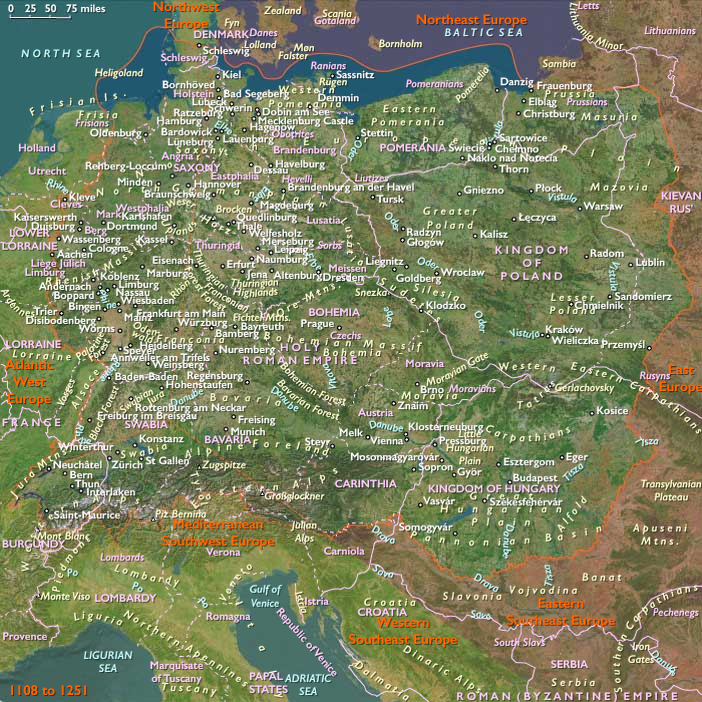
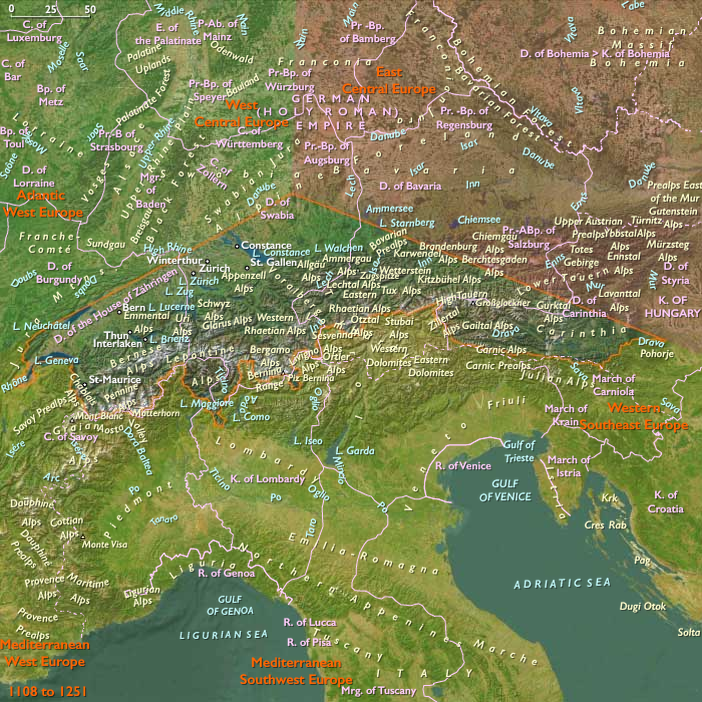
By not recognizing Conrad’s treaty of alliance with Manuel against Roger, and because the Pope is more exposed to pressure from the Norman kingdom to the south as well as from radical religious reformer Arnold of Brescia in Rome, Frederick forces Pope Eugenius III to sign with him the Treaty of Constance (March 23, 1153), negotiated by Frederick’s newly appointed papal chancellor, Orlando Bandinelli.
Frederick promises not to make peace with the Roman commune headed by Arnold or with the Normans without the agreement of the Pope.
He also promises not to concede any Italian land to Manuel and, finally, to maintain the position of the papacy (honor papatus).
Eugenius, on his part, promises that Frederick will receive the imperial crown and that the rights of the German empire will be maintained.
Manuel offers Frederick an imperial princess as wife and attempts to induce him to fight against the Norman kingdom, but Frederick refuses, quashing plans for the dual imperial alliance forming to invade Sicily.
Locations
People
- Arnold of Brescia
- Frederick I, Holy Roman Emperor
- Manuel I Komnenos
- Pope Eugene III
- Roger II of Sicily
Groups
- Germans
- Greeks, Medieval (Byzantines)
- Papal States (Republic of St. Peter)
- German, or Ottonian (Roman) Empire
- Roman Empire, Eastern: Komnenos dynasty, restored
- Italo-Normans
- Sicily, Kingdom of
Topics
Commodoties
Subjects
Regions
Subregions
Related Events
Showing 2 events out of 2 total
Years: 1153 - 1153
March
Locations
People
- Arnold of Brescia
- Frederick I, Holy Roman Emperor
- Manuel I Komnenos
- Pope Eugene III
- Roger II of Sicily
Groups
- Germans
- Greeks, Medieval (Byzantines)
- Papal States (Republic of St. Peter)
- German, or Ottonian (Roman) Empire
- Roman Empire, Eastern: Komnenos dynasty, restored
- Italo-Normans
- Sicily, Kingdom of
Topics
Commodoties
Subjects
Regions
Subregions