
The Death of Gregory of Tours and …
Years: 594 - 594
The Death of Gregory of Tours and His Legacy (November 17, 594 CE)
On November 17, 594 CE, Gregory of Tours, the bishop, historian, and leading advisor to King Guntram, dies, leaving behind his Historia Francorum (History of the Franks), the most important surviving historical source on Merovingian Gaul.
1. Gregory of Tours as a Political and Religious Leader
- Gregory had served as bishop of Tours since 573 CE, becoming a key political figure in the Frankish kingdom.
- He was a trusted advisor to King Guntram, assisting him in his struggles against rebellious aristocrats and rival factions.
- His influence helped strengthen the authority of the Catholic Church in the Merovingian world, promoting the veneration of saints and supporting monastic expansion.
2. Historia Francorum: The Most Influential Account of Merovingian Gaul
- Gregory’s Historia Francorum (History of the Franks) is the most detailed historical record of the sixth century.
- The work consists of ten books, chronicling:
- The Roman past and the early conversion of Gaul to Christianity.
- The rise of the Merovingians, focusing on Clovis I and his successors.
- The violent struggles between Frankish rulers, particularly the conflicts involving Brunhilda, Fredegund, and Guntram.
- Miracles, hagiographies, and Church politics, portraying Saint Martin of Tours as a key figure in Frankish Christianity.
3. Gregory’s Legacy: A Lasting Impact on Medieval Historiography
- His work shapes medieval European perceptions of the Merovingians, portraying Chilperic I as a tyrant, Fredegund as ruthless, and Brunhilda as ambitious.
- His vivid and often biased accounts influence later historians, including Bede and Carolingian chroniclers.
- He remains a crucial source for scholars today, providing unique insight into early medieval politics, society, and the role of the Church.
Conclusion: The End of an Era
The death of Gregory of Tours in 594 CE marks the loss of one of the greatest chroniclers of Merovingian Gaul. His Historia Francorum ensures that his influence endures, shaping both contemporary and modern understandings of the early medieval Frankish world.
Locations
People
Groups
Topics
Subjects
Regions
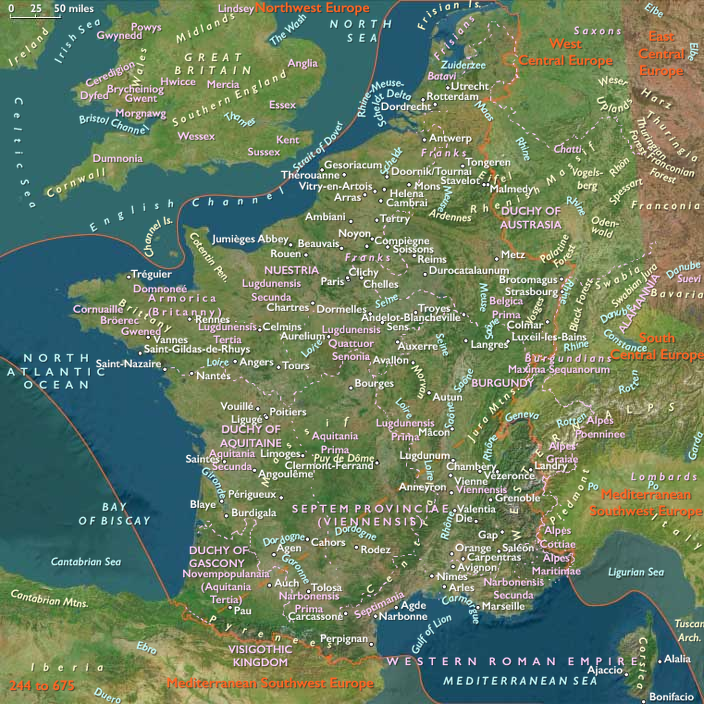
Subregions
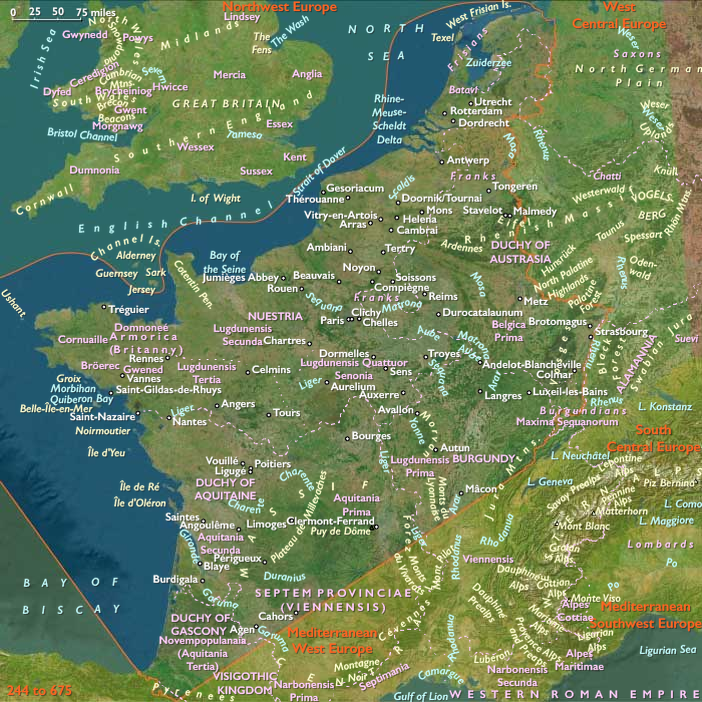
Related Events
Showing 10 events out of 57147 total
Years: 594 - 594
Locations
People
Groups
Topics
Subjects
Regions
Subregions