
Franciscans establish the Monti di pietá, pity …
Years: 1462 - 1462
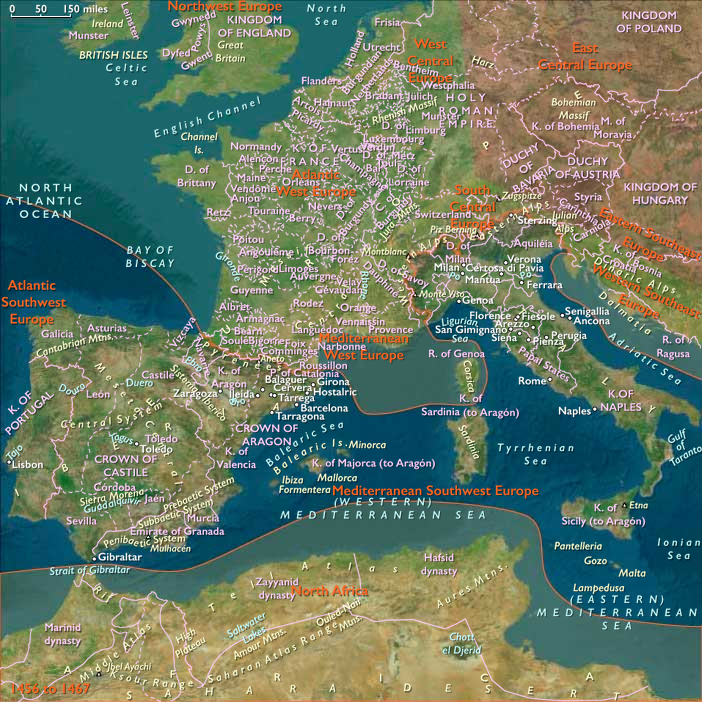
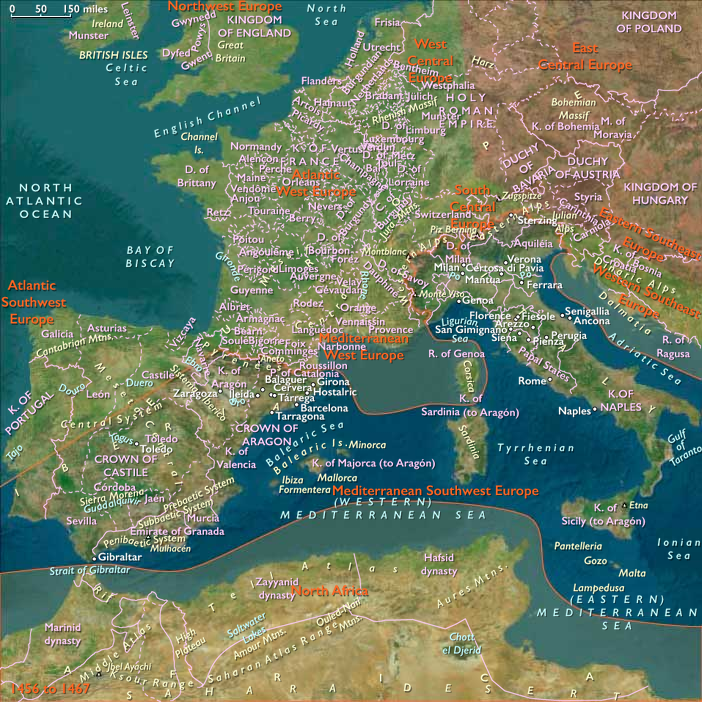
Franciscans establish the Monti di pietá, pity funds, to offer interest-free loans in direct competition with Jewish moneylenders, as a reform against moneylending.
(Both the Italian term monte di pietà and the French term mont de piété translate into English as mount of piety.)
The Franciscan Marco di Matteo Strozzi, who has preached about the benefits of a Monte di Pietà in combating usury, leaves a set of memoirs that outline his goal to rid Perugia of Jewish money lenders and to replace them with Christian pawn shops that allow the poor to acquire cheap credit.
The organization of the Monte di Pietà depends on acquiring a monte or a collection of funds from voluntary donations by financially privileged people who have no intentions of regaining their money.
The people in need would then be able to come to the Monte di Pietà and give an item of value in exchange for a monetary loan.
The term of the loan is to last the course of a year and only be worth about two-thirds of the borrower’s item value.
A predetermined interest rate is applied to the loan and these profits are to be used to pay the expenses of operating the Monte di Pietà.
Viewed as a lesser evil than money lending because the principle of the organization is based on the benefit of the borrower and not the profit of the lender, it is an example of one of the earliest forms of organized charity.
As a result, Jews begin to lose business, and therefore become subject to expulsion.
Locations
Groups
- Jews
- Papal States (Republic of St. Peter)
- Christians, Roman Catholic
- Franciscans, or Order of St. Francis
Topics
Subjects
Regions
Subregions
Years: 1462 - 1462
Locations
Groups
- Jews
- Papal States (Republic of St. Peter)
- Christians, Roman Catholic
- Franciscans, or Order of St. Francis
Topics
Subjects
Regions
Subregions