
Francis now embarks on a more dramatic …
Years: 1545 - 1545
August
Francis now embarks on a more dramatic attempt to force Henry's hand—an attack on England itself.
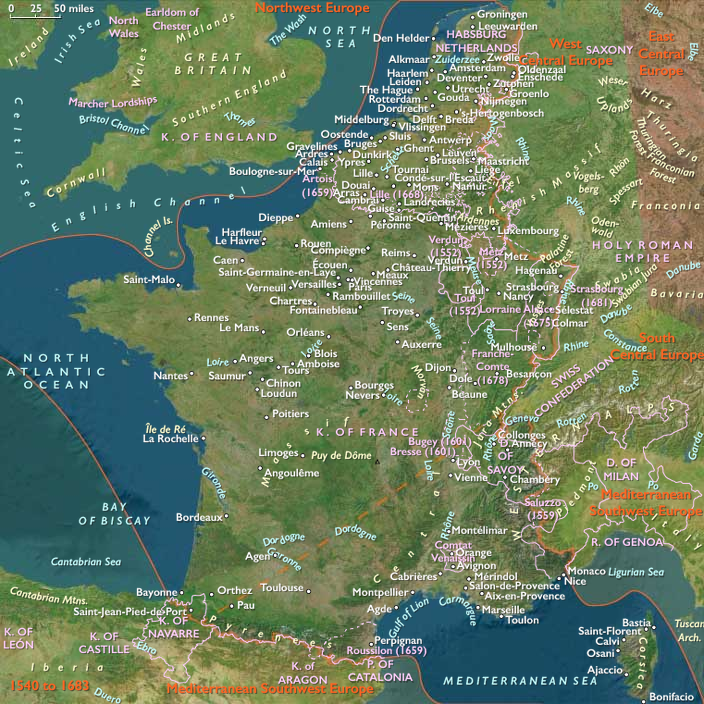
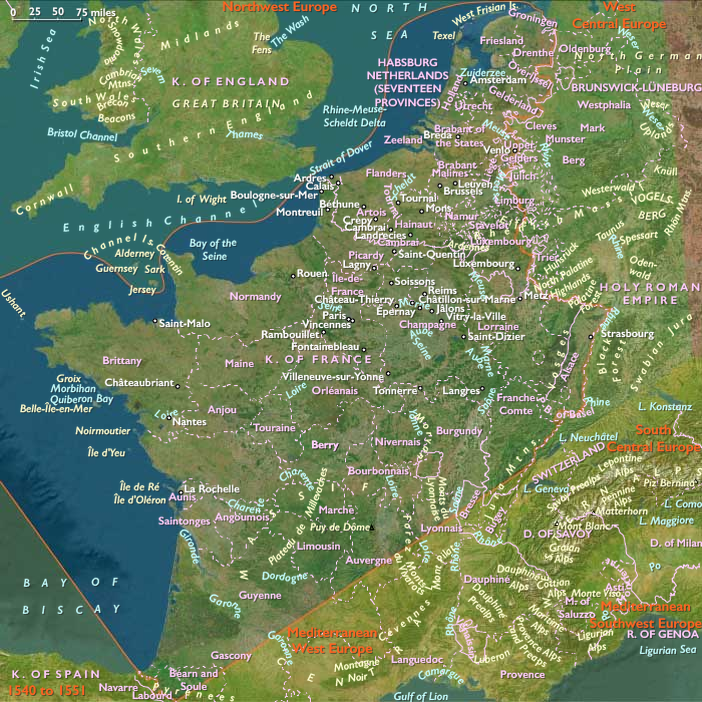
For this venture, an army of more than thirty thousand men is assembled in Normandy, and a fleet of some four hundred vessels prepares at Le Havre, all under the command of Claude d'Annebault.
A French expeditionary force had landed in Scotland on May 31, 1545.
The English under John Dudley, Viscount Lisle, had mounted an attack on the French fleet in early July, t, but had little success due to poor weather; nevertheless, the French had suffered from a string of accidents: d'Annebault's first flagship had burned, and his second had run aground.
Finally leaving Le Havre on July 16, the massive French fleet had entered the Solent on July 19 and briefly engaged the English fleet, to no apparent effect; the major casualty of the skirmish, the Mary Rose, sank accidentally.
The French had landed on the Isle of Wight on July 21, and again at Seaford on July 25, but these operations were abortive, and the French fleet had soon returned to blockading Boulogne.
D'Annebault makes a final sortie near Beachy Head on August 15, but retires to port after a brief skirmish.
Locations
People
- Charles V, Holy Roman Emperor
- Claude d'Annebault
- Francis I of France
- Henry VIII of England
- John Dudley
Groups
- France, (Valois) Kingdom of
- Saxony, Electorate of
- Brandenburg, (Hohenzollern) Margravate of
- Scotland, Kingdom of
- Ottoman Empire
- England, (Tudor) Kingdom of
- Habsburg Monarchy, or Empire
Topics
- Protestant Reformation
- Counter-Reformation (also Catholic Reformation or Catholic Revival)
- Anglo-French War of 1542-46
- Anglo-Scottish War of 1542-49 (War of The Rough Wooing)
- Italian War of 1542-6, or Italian War between Charles V and Francis I, Fourth
Commodoties
Subjects
Regions
Subregions
Years: 1545 - 1545
August
Locations
People
- Charles V, Holy Roman Emperor
- Claude d'Annebault
- Francis I of France
- Henry VIII of England
- John Dudley
Groups
- France, (Valois) Kingdom of
- Saxony, Electorate of
- Brandenburg, (Hohenzollern) Margravate of
- Scotland, Kingdom of
- Ottoman Empire
- England, (Tudor) Kingdom of
- Habsburg Monarchy, or Empire
Topics
- Protestant Reformation
- Counter-Reformation (also Catholic Reformation or Catholic Revival)
- Anglo-French War of 1542-46
- Anglo-Scottish War of 1542-49 (War of The Rough Wooing)
- Italian War of 1542-6, or Italian War between Charles V and Francis I, Fourth
Commodoties
Subjects
Regions
Subregions