
The Battle of Covadonga (722 CE) and …
Years: 722 - 722
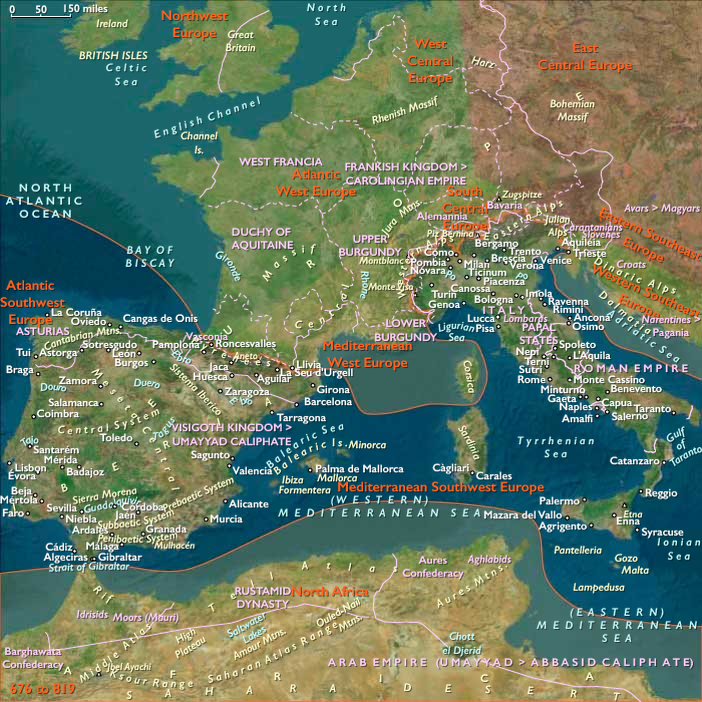
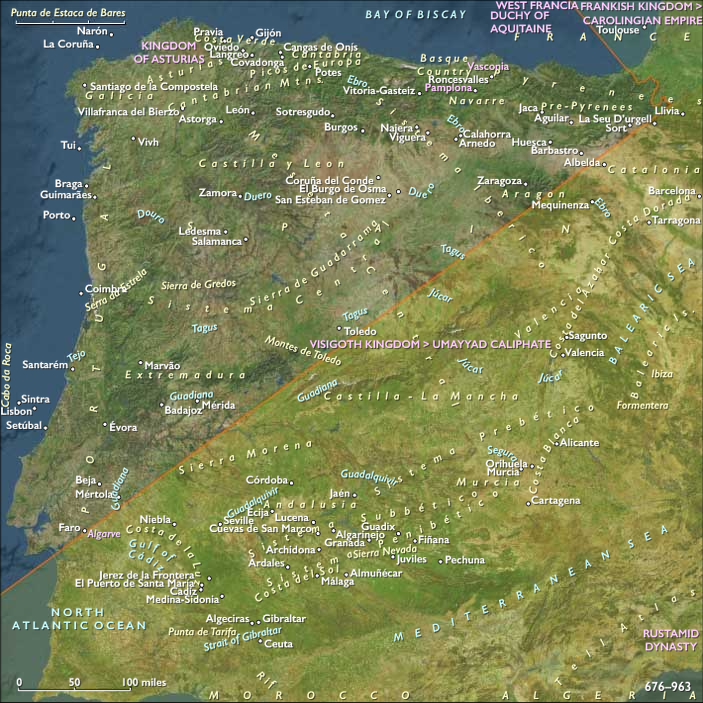
The Battle of Covadonga (722 CE) and the Birth of Christian Resistance
In 722 CE, the Umayyads send a military force under the command of Al Qama and Munuza, accompanied by Bishop Oppas of Seville, the brother of former Visigothic King Witiza, to suppress the Asturian resistance.
As Al Qama advances through Asturias, Oppas attempts to negotiate the surrender of his fellow Christians but fails. Meanwhile, Pelagius (Pelayo) and his small force retreat into the Asturian mountains, choosing a narrow valley flanked by steep cliffs as their defensive position, where a broad-fronted attack would be impossible.
Pelagius' army may have been as small as 300 men, yet they held a tactical advantage in the mountainous terrain.
The Battle of Covadonga
Upon reaching Covadonga, Al Qama sends an envoy demanding Pelagius' surrender, but Pelagius refuses. In response, Al Qama orders his elite troops into the valley to crush the resistance.
However, the Asturians, hidden in the mountain slopes, ambush the Umayyad forces, raining projectiles down from above. At the critical moment, Pelagius and a concealed unit—hiding in a cave—surge forward into the valley, catching the Umayyad forces by surprise.
According to Christian sources, the Muslims suffer heavy casualties, and Al Qama himself is killed. The remaining soldiers flee, only to be pursued and slaughtered by armed villagers emerging from nearby settlements.
Munuza’s Last Stand and the Aftermath
After learning of Al Qama's defeat, Munuza regroups with surviving forces and organizes another attack. However, at a later battle, near modern-day Proaza, he is once again defeated by Pelagius. Munuza may have been killed in the fighting, marking the final failure of Umayyad efforts to suppress Asturian resistance.
While Umayyad sources dismiss the battle as a minor skirmish, referring to Pelagius' men as “thirty infidels left, what can they do?”, Muslim forces never again seriously challenge the independence of the Kingdom of Asturias.
The victory at Covadonga is later commemorated at the shrine of Our Lady of Covadonga, and it is regarded as the first Christian victory over Muslim forces in Iberia, symbolizing the beginning of the Reconquista—the long process of Christian reclamation of Spain.
Locations
People
Groups
- Arab people
- Goths (East Germanic tribe)
- Moors
- Galicia, Kingdom of
- Christianity, Chalcedonian
- Muslims, Sunni
- Umayyad Caliphate (Damascus)
- al-Andalus (Andalusia), Muslim-ruled
- Asturias, Kingdom of
Topics
Commodoties
Subjects
Regions
Subregions
Years: 722 - 722
Locations
People
Groups
- Arab people
- Goths (East Germanic tribe)
- Moors
- Galicia, Kingdom of
- Christianity, Chalcedonian
- Muslims, Sunni
- Umayyad Caliphate (Damascus)
- al-Andalus (Andalusia), Muslim-ruled
- Asturias, Kingdom of
Topics
Commodoties
Subjects
Regions
Subregions