
Filters:
The End of the Reconquista and the …
Years: 1396 - 1539
The End of the Reconquista and the Rise of Spain and France as Dominant World Powers
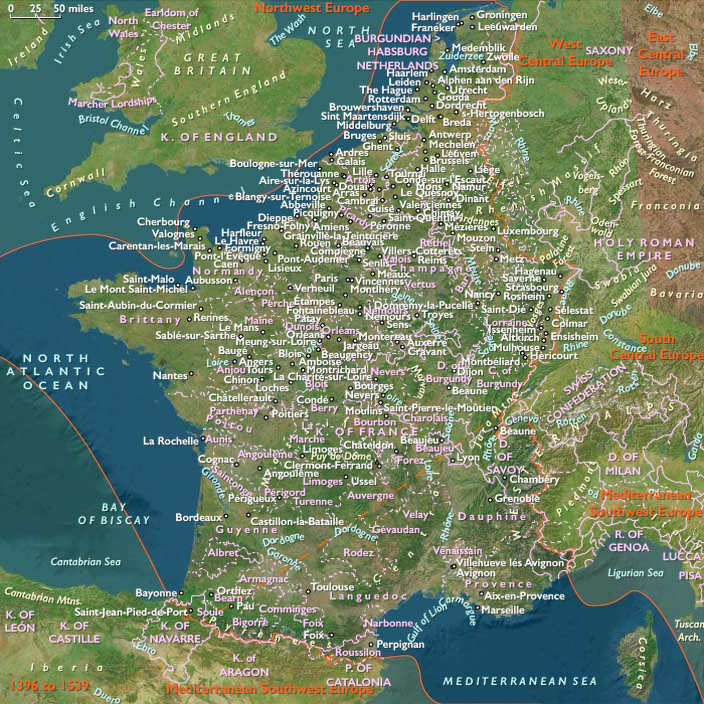
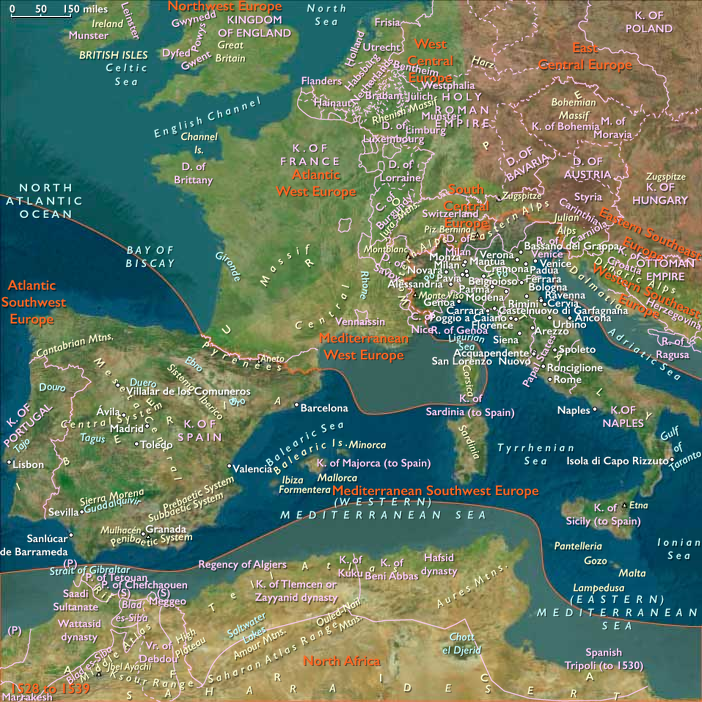
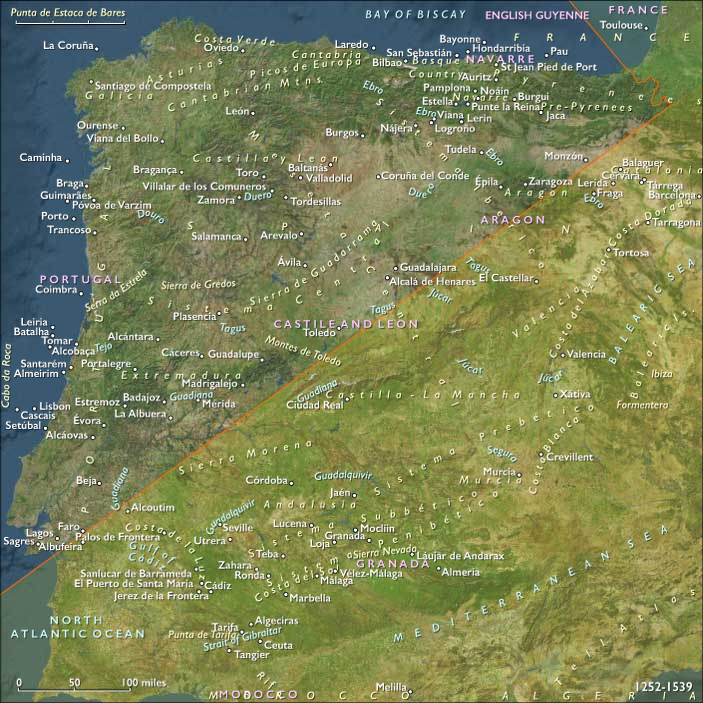
The Christian Reconquista, a centuries-long campaign to expel the Moors from the Iberian Peninsula, culminated in 1492 with the fall of Granada, marking the end of Muslim rule in Spain. This victory, alongside France’s consolidation of power, set the stage for both kingdoms to become dominant world powers in the early modern era.
The Completion of the Reconquista (711–1492)
- The Reconquista began in 711, following the Umayyad conquest of Hispania, and lasted nearly eight centuries.
- The major turning point came with the unification of Castile and Aragon under Isabella I and Ferdinand II, whose marriage in 1469 created a powerful Spanish state.
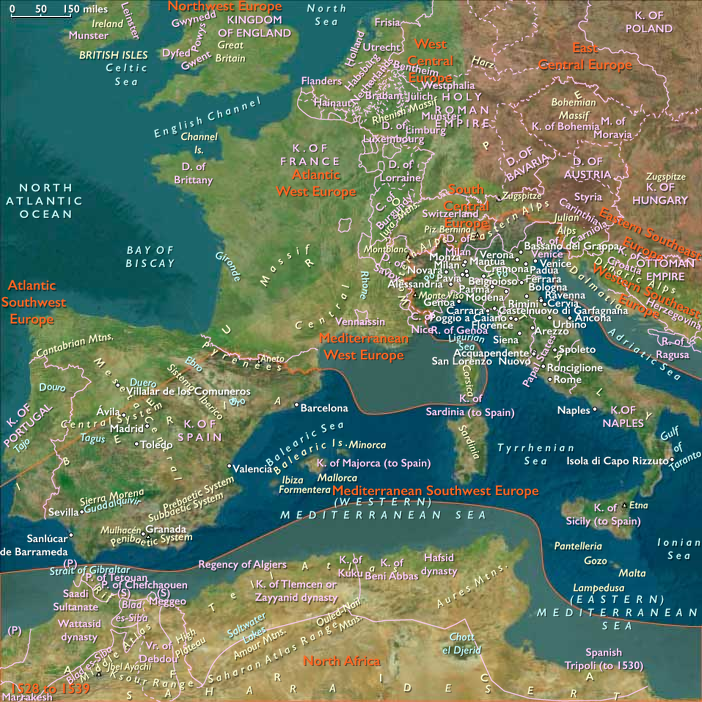
- The final victory occurred in 1492, when the Catholic Monarchs captured Granada, the last Muslim stronghold, completing the Christian reconquest of Iberia.
- With Muslim rule eliminated, Spain redirected its military and economic resources toward overseas expansion.
Spain’s Rise as a Global Superpower (16th Century)
- 1492: Columbus’s Voyage – The same year that Granada fell, Christopher Columbus reached the Americas, beginning Spain’s vast overseas empire.
- Wealth from the Americas – The discovery of gold and silver in the New World (Potosí, Zacatecas, and Mexico) made Spain the richest nation in Europe.
- Military Dominance – With its newfound wealth, Spain built the most powerful navy (the Spanish Armada)and maintained the best-trained professional army in Europe.
- Habsburg Empire – Through strategic marriages and conquests, Spain ruled vast territories across Europe, including the Netherlands, Austria, and parts of Italy.
- Religious Authority – Spain became the defender of Catholicism, leading the Counter-Reformation and fighting Protestant nations in the 16th and 17th centuries.
France: Consolidation and Emergence as a Power
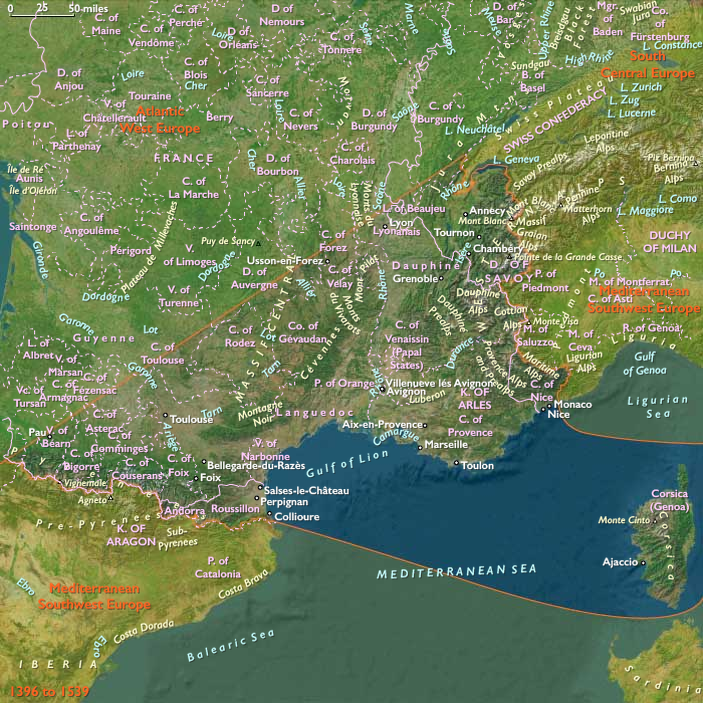
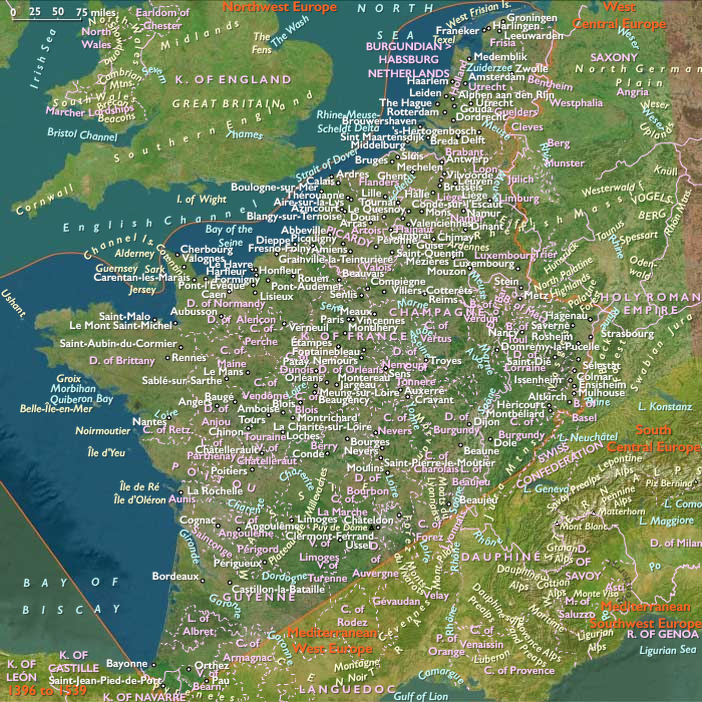
- End of the Hundred Years’ War (1453) – France’s victory against England strengthened royal power, allowing it to focus on internal stability and territorial expansion.
- Francis I and the Italian Wars (1494–1559) – France expanded its influence in Italy and became a major player in European diplomacy and warfare.
- Louis XIV and Absolutism (1643–1715) – By the 17th century, France became the dominant power in Europe, surpassing Spain under the rule of Louis XIV and his centralized monarchy.
The Legacy of the Reconquista: Spain’s and France’s Global Influence
- Spain’s empire extended across the Americas, parts of Europe, and Asia (the Philippines), creating a global trade network.
- France became the dominant power in continental Europe, shaping politics, culture, and warfare for centuries.
- The Iberian Peninsula was permanently Christianized, and the Muslim and Jewish populations were expelled or forced to convert (the Spanish Inquisition played a key role in this).
Thus, the end of the Reconquista in 1492 launched Spain onto the world stage, making it the first global superpower, while France, through military and political consolidation, emerged as a dominant European force, shaping the future of Western civilization.
Groups
Topics
Subjects
Regions
Subregions
- Mediterranean West Europe
- Mediterranean Southwest Europe
- Atlantic Southwest Europe
- Atlantic West Europe
Years: 1396 - 1539
Groups
Topics
Subjects
Regions
Subregions
- Mediterranean West Europe
- Mediterranean Southwest Europe
- Atlantic Southwest Europe
- Atlantic West Europe