
Fontainebleau: A Royal Residence by 1169 CE …
Years: 1169 - 1169
Fontainebleau: A Royal Residence by 1169 CE
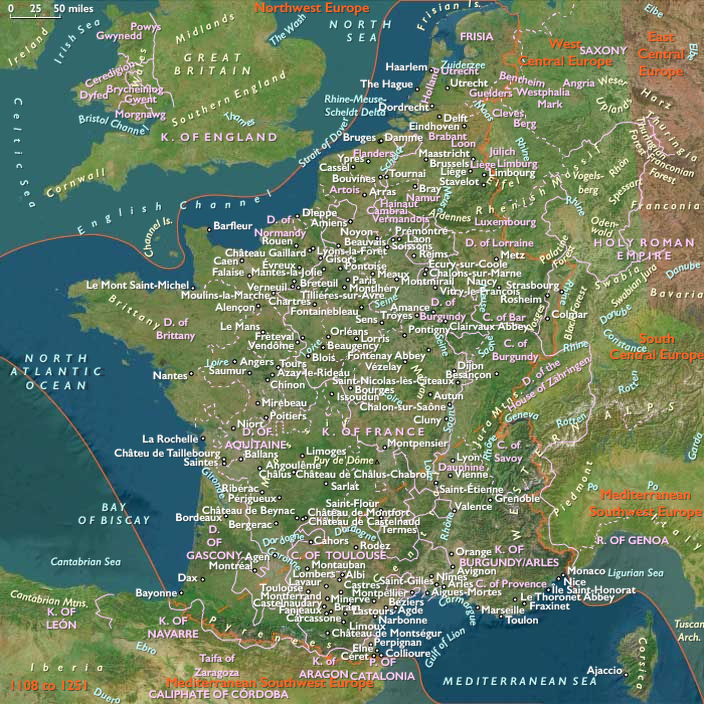
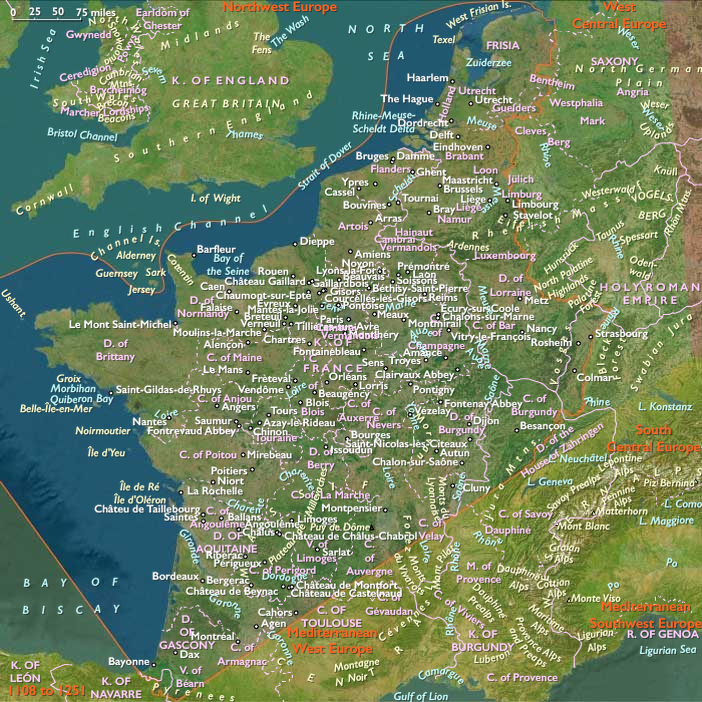
By 1169, Fontainebleau, located forty miles (sixty-four kilometers) southeast of Paris on the left bank of the Seine, had become a residence of the French kings. Its primary appeal was the surrounding forest, which provided excellent hunting grounds, a favored pastime of medieval monarchs.
Early Use as a Royal Hunting Lodge
- Fontainebleau’s dense woodlands made it an ideal retreat for Capetian kings, who frequently indulged in hunting as both recreation and military training.
- The earliest recorded reference to the site as a royal residence dates to 1169, during the reign of Louis VII, though it was likely used before this time.
The Foundations of a Future Palace
- While Fontainebleau was initially a modest hunting lodge, its proximity to Paris ensured it would play a growing role in royal affairs.
- It would later be expanded and transformed into a grand château, particularly under the Valois and Bourbon dynasties, becoming one of the most important royal residences of France.
Legacy
- Fontainebleau’s history as a royal retreat began in the 12th century, but it would go on to serve as a key residence for French monarchs, including Francis I, Henry IV, and Napoleon Bonaparte.
- Over the centuries, it would be greatly enlarged and remodeled, evolving into the magnificent Château de Fontainebleau known today.
- The hunting traditions established in the 12th century continued for centuries, reinforcing Fontainebleau’s status as a royal retreat and cultural landmark.
By 1169, Fontainebleau was already entwined with the French monarchy, a status it would maintain for centuries to come.
Locations
People
Groups
Subjects
Regions
Subregions
Related Events
Showing 10 events out of 48392 total
Years: 1169 - 1169
Locations
People
Groups
Subjects
Regions
Subregions